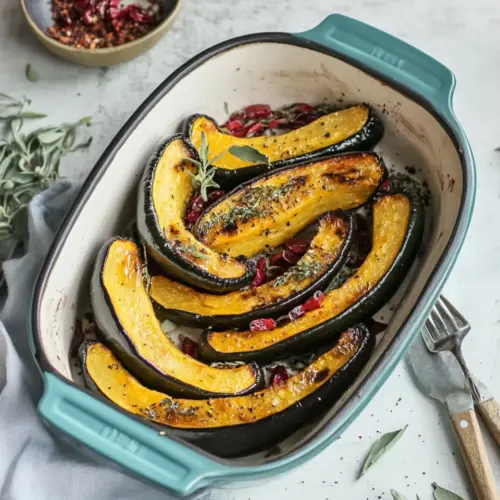
Roast Acorn Squash
Roast Acorn Squash delivers sweet, caramelized wedges with crisp edges and a tender interior, making it an easy weeknight side that still feels special. The interplay of olive oil, kosher salt, and a touch of maple syrup creates a cozy, seasonal flavor profile perfect for fall dinners and holiday spreads. Try it for a simple, impressive side that is reliably satisfying.
Equipment
- Baking Sheet
- Parchment Paper
- Chef's Knife
- Spoon
Ingredients
- 1 acorn squash Halve and seed to expose sweet, nutty flesh that becomes tender when roasted; provides the dish’s main body and visual appeal. Brush with oil and syrup so the interior caramelizes and develops deeper flavor during baking.
- 2 tablespoons olive oil Coats the squash to promote even browning and crisped edges while preventing sticking; carries fat-soluble flavor compounds and helps heat transfer. Use sparingly and distribute evenly for a glossy finish and enhanced mouthfeel.
- 1/2 teaspoon kosher salt Season to enhance and balance sweetness, drawing out the natural flavors of the roasted squash; helps elevate savory notes and tame excessive sweetness. Sprinkle evenly over cut surfaces before roasting to ensure uniform seasoning throughout.
- 2 tablespoons maple syrup Drizzles a sweet glaze that caramelizes on the surface, complementing the squash’s natural sweetness and adding a sticky, flavorful finish. Combine with oil to create a glossy coating that promotes Maillard browning and visual appeal.
Instructions
- Preheat oven to 400 degrees and line a baking sheet with parchment paper.: You will notice the warm hum of the oven as it reaches 400 degrees , and that preheated air is what gives the exterior of the squash a chance to crisp quickly. The parchment paper prevents sticking and simplifies cleanup, and it also promotes even browning by keeping the squash slightly lifted from the metal. A common mistake is not waiting for the oven to fully preheat, which yields a pale, softer edge rather than a golden one. If your oven runs hot or cool, an oven thermometer helps you adjust so the temperature is accurate; visual cues like a faint browning after the first 20 minutes indicate you are on track.
- Cut acorn squash length wise in half, then into wedges.: You will hear a firm, clean sound as the knife sinks through the tough skin into the dense flesh, and the halved squash reveals a pocket of seeds to scoop out. Cutting length wise creates larger, elegant wedges that hold shape while roasting. A common pitfall is using a dull knife, which makes the job harder and more dangerous; stabilize the squash on a flat end and use a heavy chef's knife for control. Look for even thickness across wedges so they cook uniformly; irregular pieces will result in some overly soft and some underdone portions.
- Place the squash wedges on a baking sheet, drizzle with olive oil and sprinkle with salt.: As you drizzle the olive oil , the wedges take on a faint sheen, and the salt crystals cling to the surface. Toss gently so each piece is coated, ensuring the oil reaches the cut faces where browning will occur. The oil is what encourages that sizzling edge in the oven, while the salt enhances the squash's natural sweetness. Avoid overcoating, which can lead to soggy edges; a light, even film is ideal. If you see pooled oil on the sheet, blot a bit with paper towel to keep the wedges from steaming instead of roasting.
- Bake for 30 minutes.: During this initial roast, the kitchen fills with toasty, nutty aromas as the squash begins to soften and its surface darkens. You may hear a gentle hiss as moisture evaporates, and the edges will gradually take on a deeper color. This stage is about developing texture and flavor, not finishing the squash, so expect tender but still slightly resistant flesh. A typical mistake is opening the oven too often to check, which drops the temperature and prolongs cooking; instead, use the oven light and give the full 30 minutes for reliable results.
- Drizzle the squash with maple syrup and toss to coat.: When you drizzle the maple syrup , you will notice a glossy, amber sheen forming on the wedges. Tossing ensures the syrup clings to the ridged surfaces and seeps into pockets, balancing savory notes with sweet. This addition before the final roast allows the sugars to caramelize slightly rather than burning into a hard glaze. A common error is adding too much syrup, which can cause burning or an overly sticky finish; use the stated amount and distribute it evenly for a delicate glaze.
- Bake for an additional 20 minutes or until tender.: In this final roast the aromas deepen further, and you should see edges that are golden to lightly charred, which adds complexity to the flavor. The flesh becomes easily pierced with a fork, and the surface may show small bubbles where the syrup has caramelized. This phase is about reaching the perfect tender interior while securing crisp edges, so test with a fork for doneness. A mistake to avoid is removing the squash too early; underdone pieces will be starchy and lack the desired sweetness that develops with longer roasting.
- Serve.: The first forkful offers a warm mix of textures and flavors, with crisped margins and silky centers buoyed by a hint of maple syrup and seasoning. Serve the wedges warm for the best mouth feel, and notice how the aroma lingers on the plate. A typical oversight is letting the squash sit too long before serving, which leads to softened edges and a less vibrant presentation; aim to plate right away for the most appealing contrast.
Notes
- Add warming spices: Sprinkle a small pinch of cinnamon or nutmeg on the wedges before the final roast to amplify the squash's natural sweetness and add autumnal depth.
- Boost umami: Finish with a light dusting of crushed toasted nuts on the plated wedges to introduce crunch and a savory contrast to the sweet glaze.
- Switch the oil: Use a neutral oil if you prefer less fruitiness than olive oil provides, which will let the maple notes shine more clearly.
- Adjust sweetness: Reduce the maple syrup by half if you prefer a subtler sweetness, or swap for a milder syrup for a different flavor profile.
- Scale easily: Double the quantities and use two baking sheets arranged on separate racks to cook larger batches without crowding the pan.