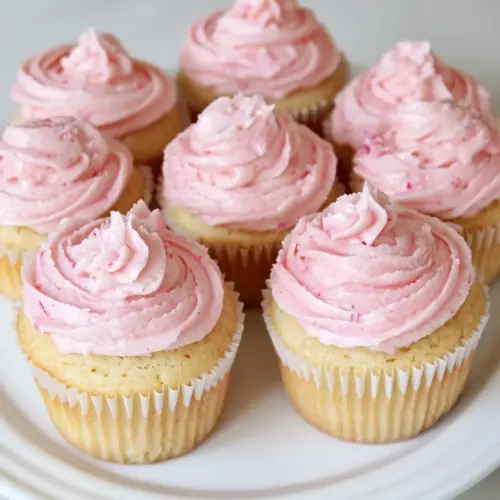
Rhubarb Cupcakes
Rhubarb Cupcakes combine tangy stewed rhubarb with a tender, buttery crumb and a silky rhubarb tinted buttercream. These cupcakes are bright, slightly floral, and perfect for spring gatherings or an easy weeknight bake. The subtle ginger lift and lemon kissed frosting make them memorable, so make a batch to share the seasonal charm.
Equipment
- Medium Saucepan
- Fine-mesh strainer
- Stand mixer
- Paddle attachment
- Cupcake Tin
- Offset Spatula
- Cooling rack
Ingredients
- 11 oz . rhubarb, rough ends trimmed Trimmed and sliced into pieces, provides the tart, fibrous base that softens during cooking and adds bright flavor to the cupcakes. Combines with sugar and water to create a compote that keeps the crumb moist and adds textural contrast. Releases juices that balance the sweetness of the cake and frosting.
- 1 cup water Simmered with rhubarb to gently extract flavor and soften fibers without diluting the compote’s taste. Acts as the poaching liquid that helps break down the rhubarb into a spreadable consistency for folding into batter or topping cupcakes. Regulates the cooking temperature and prevents burning.
- 3 tablespoons white sugar Dissolved into the poaching liquid to sweeten the rhubarb and mellow its tartness while helping the fruit break down. Provides structure to the compote and contributes to caramelization when cooked briefly. Balances acidity and enhances overall flavor.
- 1 stick (1/2 cup) unsalted butter, room temperature Softened at room temperature to allow easy creaming with sugar and incorporate air into the batter for a tender crumb. Supplies rich, buttery flavor and moisture while aiding in leavening through creamed air pockets. Helps deliver a smooth texture in the finished cupcakes.
- 1 cup plus 2 tablespoons white sugar Creamed with butter and eggs to provide bulk sweetness and tenderize the cake crumb while contributing to rise and browning. Used in larger quantity to balance the rhubarb’s tartness and ensure the cupcakes are sweet and flavorful. Dissolves into batter to create an even, homogeneous mixture.
- 2 large eggs Beaten into the creamed butter and sugar to emulsify fats and sugars, adding moisture, structure, and lift to the cupcakes. Adds richness and helps stabilize the batter so it holds air during baking. Contributes to a fine, tender crumb when properly incorporated.
- 1 cup all-purpose flour Sifted and folded into the batter to provide the primary structure and protein needed for the cupcake crumb. Works with eggs and liquids to form the batter matrix that traps air and sets during baking. Contributes to texture and helps prevent over-dense results when measured accurately.
- 1 cup plus 1 tbsp. self-rising flour Added alongside all-purpose flour to contribute a lighter, self-raising component that supplies additional leavening agents for taller cupcakes. Blends with other flours to balance texture and ensure the cakes rise evenly. Helps achieve a softer, airier crumb without extra baking powder.
- 1 teaspoon ground ginger Ground and mixed into the batter to impart warm, spicy notes that complement the rhubarb’s tartness while adding aromatic depth. Enhances overall flavor complexity and pairs well with butter and lemon in the frosting. Should be measured precisely to avoid overpowering the delicate fruit.
- 1/3 cup milk Combined with wet ingredients to adjust batter consistency and provide moisture for proper mixing and gluten development control. Tempered into eggs or batter to ensure smooth incorporation and even texture. Can slightly enrich the batter depending on milk fat percentage.
- 1 stick (1/2 cup) unsalted butter, room temperature Creamed like the first butter to create a silky, spreadable frosting base that lends richness and stability to the icing. Provides the fat needed to suspend powdered sugar and lemon juice for a smooth, pipeable consistency. Adds buttery flavor that balances the sweetness of the frosting.
- 5 cups powdered sugar Whisked into the frosting to give structure, sweetness, and body, producing a smooth, pipeable icing that crowns the cupcakes. Dissolves into butter and lemon juice to create a stable, satiny texture and achieve desired sweetness level. Can be sifted to prevent lumps and ensure a fine finish.
- Juice of half a small lemon Squeezed fresh to add bright acidity that cuts through the frosting’s sweetness and enhances overall flavor balance in the icing. Reacts with butter and powdered sugar to provide a fresher taste and slight tang, preventing the dessert from feeling cloying. Use sparingly and taste to adjust sweetness.
Instructions
- Slice rhubarb widthwise, then place in a medium-sized saucepan with water and 3 tablespoons white sugar. Cook over medium heat until the rhubarb starts to soften and break up, stirring occasionally (6 – 8 minutes). Pour the mixture through a fine-mesh strainer into a clean bowl. Reserve the stewed rhubarb for the cupcakes. Return the stewing liquid to the saucepan and increase the heat to medium-high. Reduce mixture to just under 1/4 cup liquid (9 – 11 minutes). Reserve liquid for the frosting.: As the rhubarb begins to warm, you will notice its color deepen and a faint fruity aroma rising, almost floral with a green edge, which signals the gentle release of juices. The pieces should soften and begin to break apart, making a soft bubbling sound rather than a violent boil, which means the heat is right. This slower simmer helps the rhubarb maintain some texture instead of turning to complete mush, which is important so you still get little specks of fruit in the batter. A common mistake is using too high a flame, which can make the fruit disintegrate and scorch the sugars, so keep the heat moderate and stir occasionally to prevent sticking. You will cook for about six to eight minutes, watching for tender pieces that yield to a fork.
- Preheat oven to 350°F and place a rack in the center of the oven. In the bowl of a stand mixer fitted with the paddle attachment, cream butter and white sugar on medium until pale and smooth (about 5 minutes). Add one egg, mixing until incorporated. Repeat with the other egg.: When you strain, press gently with the back of a spoon to extract the bright pink juices; these will carry concentrated rhubarb flavor and will later be reduced for the frosting. The strained solids should be pulpy and aromatic, with pieces that retain shape. The liquid you collect will look translucent and rosy, and it will smell intensely fruity and slightly tart. Avoid forcing solids through the strainer aggressively because that can make the juice cloudy with fibers. If your liquid seems too thin, it is fine, since you will reduce some of it, but if it is grainy or has burnt bits, discard and start over to avoid off flavors.
- Sift all-purpose flour, self-rising flour and ground ginger into a clean bowl. With the mixer off, add half of the dry ingredients to the bowl with the wet ingredients. Mix on low speed for a few moments then increase to medium and mix until just incorporated. Mix in half of the milk. Repeat with remaining dry ingredients and milk, mixing until well combined. Do not over-mix here.: As the liquid warms, you will hear a livelier simmer and see the surface tighten as evaporation begins. Reduce it until just under one quarter cup remains, roughly nine to eleven minutes, and you will notice the aroma intensify and the color deepen to a syrupy hue. This reduction concentrates sweetness and rhubarb notes so the frosting gets a real identity rather than a hint. A common misstep is reducing too far, which creates an overly thick syrup that will make the frosting runny when added, so remove it just shy of a thick syrup consistency.
- Using a spatula, gently fold in the stewed rhubarb. Line a cupcake tin with twelve cupcake wrappers. Spoon the batter into the wrappers, making them about 2/3 full. Bake in the preheated oven until golden (22 – 24 minutes). Let the cupcakes cool for 10 minutes then transfer to a cooling rack.: You will smell the faint warmth as the oven approaches temperature, and the even heat is essential for uniform rising. Center placement helps the cupcakes brown evenly on top without the bottoms scorching. If your oven runs hot or cool, consider checking with an oven thermometer because temperature variance can change bake time and texture. Do not skip preheating, since batter put into a cold oven will spread rather than rise properly, producing dense cupcakes.
- While the cupcakes are cooling, prepare the frosting. In the bowl of a stand mixer fitted with the paddle attachment, combine butter and half of the powdered sugar. Beat on low for a few moments then increase to medium and mix until smooth. Add the reserved rhubarb juice and mix until incorporated. Mix in remaining sugar on low at first then medium until smooth. Add lemon juice then beat on medium until smooth and fluffy. Add more lemon juice to taste. Frost cooled cupcakes with an offset spatula or butter knife.: As you cream, the mixture should lighten in color and become fluffy, with a soft, cloud like texture. You will hear the motor ease as the crystals incorporate into the fat, and the creamed mixture should leave faint trails when you lift the paddle. Proper creaming traps tiny air pockets that help the cupcakes rise; under creaming leads to dense cake, while over creaming can warm the butter and make the batter greasy. Aim for about five minutes and scrape the bowl to ensure even texture before adding eggs.
- Enjoy! Store cupcakes in an airtight container at room temperature for up to four days.: Each egg should be mixed until the white streaks disappear and the batter appears glossy, which indicates proper emulsification. You will notice the mixture become slightly looser and silkier as eggs bind fat and sugar. If you add eggs that are too cold straight from the fridge, the batter may seize slightly, so I let mine sit at room temperature briefly. If separation occurs, pause mixing, scrape the bowl, and beat gently on low to bring it back together. Adding eggs too quickly is a common error because it prevents steady incorporation and can cause splitting.
- Sift all purpose flour self rising flour and ground ginger into a clean bowl: The sifted dry mix should smell faintly of warm spice, and sifting ensures no lumps remain so the batter mixes evenly. Combining the two flour types gives structure plus lift, while the ginger adds aromatic warmth. Avoid clumping by sifting directly over the mixing bowl or using a whisk to aerate. If you skip sifting, you risk pockets of flour in the final cupcakes which create a gritty texture.
- With the mixer off add half of the dry ingredients to the bowl with the wet ingredients: Adding the dry in portions helps maintain a tender crumb and prevents overworking the batter. After adding, mix on low briefly then increase to medium until just incorporated, observing the batter become smoother and slightly thicker. Then add half the milk , which loosens the batter and helps hydrate the flour for a moist crumb. A frequent mistake is over mixing at this stage, which develops gluten and yields a tough cupcake, so stop as soon as there are no dry streaks.
- Mix in half of the milk then repeat with remaining dry ingredients and milk mixing until well combined: The batter should have a spoonable thickness and a satiny sheen, not runny nor rock hard. You will notice a balanced rhythm as the mixer works, and the aroma of ginger will lift. Proper mixing ensures even crumb structure; if you see streaks of flour, fold them in gently by hand with a spatula to finish. Over mixing here is the most common error, leading to dense texture, so be gentle for best results.
- Using a spatula gently fold in the stewed rhubarb: Folding preserves the air you created while still incorporating the fruit, which should appear as soft pink flecks and small pieces throughout the batter. The fruit will add moist pockets and little bursts of tartness, offering contrast to the sweet cake. Fold with patience so you do not deflate the batter, and avoid aggressive stirring that evenly pulverizes the fruit. If the rhubarb was too watery, blot it briefly before folding to prevent thinning the batter.
- Line a cupcake tin with twelve cupcake wrappers spoon the batter into the wrappers making them about two thirds full: As you fill each cup, you will see the batter settle into a smooth dome and the surface should look slightly glossy. Filling to about two thirds provides room for the cupcakes to rise without spilling over. Tap the pan gently on the counter to release large air pockets and ensure even surfaces. Overfilling will lead to spillover and uneven bake, so resist the urge to top the cups higher than recommended.
- Bake in the preheated oven until golden: While baking for about twenty two to twenty four minutes, watch for the tops to take on a warm golden hue and to spring back slightly when touched. You may also test with a toothpick which should come out cleanish with a few moist crumbs but not wet batter. The kitchen will fill with a buttery fruity scent that signals readiness. Removing cupcakes too early yields a gummy center, while leaving them too long dries them out, so aim for that gentle springiness.
- Let the cupcakes cool for ten minutes then transfer to a cooling rack: Cooling in the pan for a short period helps them set so they do not break when removed, but transferring to a rack prevents soggy bottoms by allowing air circulation. You will feel residual warmth and notice the steam fade as they cool. Frosting hot cupcakes will cause the buttercream to melt, so patience here keeps a tidy finish.
- Prepare the frosting in the bowl of a stand mixer fitted with the paddle attachment combine butter and half of the powdered sugar: As you begin to beat, the mixture will look a bit grainy until the sugar softens into the fat, then it will smooth into a pale cream. Adding the reserved rhubarb juice brings a floral tang and a pretty rose color, and you will see the texture loosen slightly as juice integrates. Mix in remaining sugar gradually to avoid a dust cloud and beat until the frosting achieves a spreadable, fluffy consistency. If the frosting seems too soft, chill briefly; if too stiff, add a touch of juice or lemon.
- Add lemon juice then beat on medium until smooth and fluffy: The citrus brightens the frosting and balances the powdered sugar, creating a clean finish. When beaten to the right point the frosting should hold soft peaks and spread easily with an offset spatula. Taste and add more lemon if you want a sharper note. Over beating for extended periods can incorporate too much air and make the frosting fragile, so stop once it is smooth and light.
- Frost cooled cupcakes with an offset spatula or butter knife: The final touch is spreading a generous swirl of frosting that clings to the cupcake top and reveals faint pink streaks from the rhubarb juice. The visual contrast between pale frosting and blush swirls is appealing, and the first bite will marry the tender cake with the tangy buttercream. A common mistake is applying frosting to warm cupcakes, which causes slipping and a messy finish, so ensure they are fully cool.
- Enjoy store cupcakes in an airtight container at room temperature for up to four days: Proper storage preserves texture and flavor, and over time the flavors meld, often improving slightly after a day. If you live in a warm climate, a cool pantry is best to avoid softening the frosting excessively. Avoid refrigerating unless necessary because refrigeration can dry the crumb, but if you must chill, bring to room temperature before serving.
Notes
- Rhubarb Swirl Fold slightly larger pieces of stewed rhubarb into the batter for visible pink ribbons through the crumb, which makes each slice attractive and offers varied texture.
- Ginger Boost Increase the ground ginger by a small amount for a warmer spice profile that complements the tart fruit, especially if serving in cooler weather.
- Lemon Brightened Frosting Add an extra splash of lemon juice to the frosting for a sharper finish that offsets the sweetness, tasting as you go until you hit the balance you like.
- Textured Tops Sprinkle a few finely chopped, lightly toasted nuts on the frosted cupcakes for crunch, if you want a nutty contrast to the soft cake and creamy buttercream.
- Smaller Portions Bake in mini muffin tins for bite sized treats, reducing baking time and making them perfect for parties or a sampling plate.