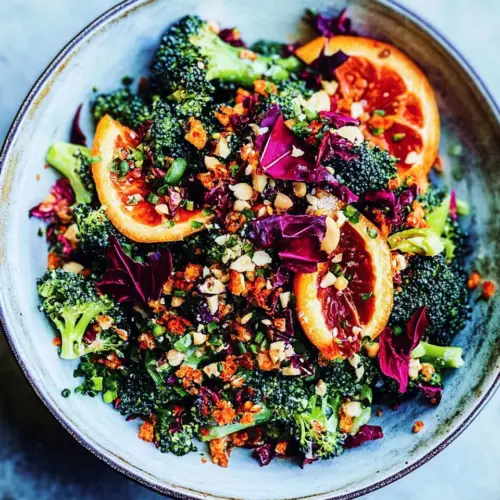
Rejuvenating Winter Broccoli Salad
Rejuvenating Winter Broccoli Salad is a crunchy, citrus kissed winter salad with toasted sesame warmth and bright pomegranate pops. It blends crisp broccoli, hearty kale, and creamy avocado for an easy weeknight side or a colorful holiday dish. The warm garlic and ginger dressing makes it feel comforting yet fresh, a perfect reason to make it when you want something restorative.
Equipment
- Large Bowl
- Medium skillet
- Peeler
- citrus zester
Ingredients
- 3 heads broccoli, roughly chopped Roughly chopped to provide a crunchy, nutrient-dense base for the salad; offers fiber, vitamin C, and a satisfying texture that stands up to bold dressings. Allows florets and stems to trap dressing and mix with other vegetables for balanced bites. Retains bright green color and crunch when served chilled or at room temperature.
- 1/2 bunch Tuscan kale, roughly chopped Roughly chopped to add hearty, leafy texture and deep, earthy flavor that complements the broccoli; contributes vitamins A, C, and K. Massaging-friendly when dressed to soften slightly and meld with other greens without becoming limp. Adds visual contrast and a slightly bitter counterpoint to sweeter elements.
- 1/3 cup extra virgin olive oil Used as the primary neutral fat to emulsify the dressing and coat vegetables; lends a fruity, smooth mouthfeel that carries flavors across the salad. Helps mellow sharper notes from citrus and vinegar while contributing healthy monounsaturated fats. Combines easily with aromatics and flavorings to create a cohesive dressing.
- 1 clove garlic, minced or grated Minced or grated to infuse the dressing with a pungent, savory kick and aromatic depth; enhances umami and pairs well with ginger and sesame. Small amounts brighten the overall flavor profile and help bind oil and acid. Provides a subtle heat and complexity when distributed evenly through the salad.
- 1 inch piece fresh ginger, grated Grated to contribute warm, zesty spice and bright, aromatic freshness that lifts the dressing; balances richness from oils and avocado. Works especially well with garlic and citrus to create an energetic Asian-inspired flavor profile. Fresh ginger also aids digestion and adds a fragrant finish.
- 1 -2 tablespoons toasted sesame oil Measured to introduce intense, toasty flavor and a sesame aroma that amplifies the salad's Asian-leaning notes; use 1–2 tablespoons depending on desired nuttiness. Adds depth to the dressing and complements toasted sesame seeds for cohesion. A small amount goes a long way, so adjust to taste.
- zest and juice of 1 lemon Zest and juice used to provide bright acidity and citrus perfume that brightens and balances the dressing; zest adds concentrated citrus oils while juice adds tang. Helps cut through rich components like olive oil and avocado, and enhances herbaceous notes. Also contributes a fresh, lively finish to each bite.
- 1 tablespoon low sodium soy sauce or tamari Added to contribute a savory, umami backbone and mild salinity that rounds out the dressing; low-sodium option maintains control over overall saltiness. Helps meld sweet and acidic elements while offering a subtle fermented complexity if using tamari. Blends seamlessly into vinaigrette-style dressings.
- 1 tablespoon honey Used to provide gentle sweetness that balances citrus and savory flavors while helping to emulsify the dressing; dissolves into warm or room-temperature liquids. Enhances the salad’s overall harmony without overpowering other components. Provides subtle sheen and mouth-coating richness when mixed into the dressing.
- 1 teaspoon kosher salt Measured to season and enhance all flavors throughout the salad while ensuring proper seasoning balance; kosher salt dissolves readily into dressings and vegetables. Helps lift sweetness, acidity, and umami so each ingredient reads clearly. Adjust quantity if using different salts or reduced-sodium components.
- 1 pinch crushed red pepper flakes Included sparingly to introduce a background heat and lively kick that punctuates bites without overwhelming other flavors; crushed flakes distribute easily. Complements the warmth of ginger and the richness of sesame oil while adding complexity. Provides an optional spicy lift for heat lovers.
- 3 large carrots, shaved into ribbons Shaved into ribbons to add sweet, crunchy texture and vibrant orange color; carrots contribute beta-carotene and a pleasant toothsomeness. Thin ribbons mingle well with kale and broccoli, absorbing dressing and offering crisp contrast. Serve raw for maximum crunch and freshness.
- 2 bell peppers, thinly sliced Thinly sliced to provide colorful, crisp sweetness and juicy crunch that brightens the salad visually and texturally; bell peppers add vitamin C and a fresh snap. Slices integrate with leafy greens and ribbons, absorbing dressing while maintaining structure. Use variety of colors for added visual appeal.
- 1/4 cup each fresh cilantro and basil, chopped Chopped to add fresh herbal brightness and aromatic complexity that lifts the salad; cilantro brings citrusy, peppery notes while basil contributes sweet, anise-like depth. Fresh herbs provide bursts of flavor in each bite and help unify the dressing and vegetables. Add near service to preserve their vibrancy.
- arils from 1 pomegranate Arils included to contribute jewel-like bursts of sweet-tart juice and poppable texture that contrast crunchy vegetables and creamy avocado. Add vibrant color and antioxidant-rich flavor that complements citrus and herbs. Sprinkle gently to distribute their bright acidity and sweetness throughout.
- 1 blood orange or grapefruit Sliced to offer juicy, citrus sweetness and additional acidity when segmented over the salad; choice of blood orange or grapefruit adds distinctive flavor and color. Citrus segments enhance the dressing and echo the lemon zest and juice for layered brightness. Provides refreshing, aromatic juices when squeezed or mixed in.
- 1 avocado, sliced Sliced to impart creamy, buttery texture and subtle, nutty flavor that balances crunchy components and tart fruits; avocado adds healthy monounsaturated fats. Provides a smooth mouthfeel that contrasts with crisp broccoli and pomegranate arils, elevating the salad’s richness. Add just before serving to maintain shape and color.
- 2 tablespoons toasted sesame seeds Toasted to sprinkle over the finished salad for crunchy texture and an accent of nutty, sesame flavor that reinforces the sesame oil in the dressing. Seeds add visual finish and small bursts of toasted fat on the palate. Toast lightly for maximum aroma before garnishing.
Instructions
- In a large bowl, toss together the broccoli and kale. In a medium skillet, combine the olive oil, garlic, and ginger over medium heat. Simmer 5 minutes or until the garlic is fragrant. Remove from the heat and add the sesame oil, lemon juice and zest, soy sauce, honey, salt, and a large pinch of crushed red pepper flakes. Pour the warm dressing over the broccoli and kale, massaging it into the the greens. Add the carrots, bell peppers, cilantro, basil, and pomegranate arils, and toss to combine. Taste and season with salt. If time allows, let the salad sit 30 minutes or up to overnight in the fridge to allow the salad to marinate. Just before serving, add the orange and avocado. Sprinkle with toasted sesame seeds. Eat!: The moment you combine the chopped broccoli and roughly chopped kale you should notice the contrasting greens and a subtle earthy aroma. Use your hands to lift and turn them, feeling the heft and slightly waxy texture of the leaves. This tactile step helps distribute the greens so they catch dressing evenly later. If the kale feels particularly coarse, give it a light tear to help it soften. A common pitfall is overcrowding the bowl which prevents even coating, so use a large bowl and space to work comfortably.
- In a medium skillet, combine the olive oil, garlic, and ginger over medium heat: As the olive oil warms, you will smell the sharp, bright notes of grated ginger and minced garlic releasing into the oil. Keep the temperature moderate so the garlic sweats rather than browns, which preserves its sweet pungency. You'll hear a soft sizzle as the aromatics hit the oil, and the surface will shimmer slightly when it is ready. Avoid turning up the heat too high, which can make the garlic bitter rather than fragrant.
- Simmer 5 minutes or until the garlic is fragrant: During this brief simmer the kitchen fills with a savory steam that signals the aromatics have softened and infused the oil. The oil will carry a golden hue and the garlic will seem translucent rather than raw. This step is important because warmed aromatics produce a rounder, more integrated dressing. Watch carefully, stirring occasionally; burning here is the most common mistake and will add an unpleasant bitterness.
- Remove from the heat and add the sesame oil, lemon juice and zest, soy sauce, honey, salt, and a large pinch of crushed red pepper flakes: Once off the heat incorporate toasted sesame oil to preserve its nutty fragrance, then add the fresh lemon zest and juice to brighten the mixture. The soy sauce and honey will emulsify slightly, creating a glossy, aromatic dressing. You should notice immediate steam as the lemon hits the warm oil, and the scent will shift to a balanced sweet salty profile. Stir until combined, tasting as you go. Over seasoning can happen quickly, so add salt slowly and adjust after tossing with the greens.
- Pour the warm dressing over the broccoli and kale, massaging it into the the greens: As you pour, the warm dressing softens the kale and tints the broccoli with flavor. Use your hands to gently massage the dressing into the leaves and florets, which helps break down fiber and promotes even coverage. You will feel the kale relax and the broccoli take on a faint sheen. This technique matters because it melds flavors and improves texture. Avoid massaging too aggressively which can make the greens limp and soggy.
- Add the carrots, bell peppers, cilantro, basil, and pomegranate arils, and toss to combine: When you add the shaved carrots , thinly sliced bell peppers , chopped cilantro and basil , and bright pomegranate arils, notice how the color palette changes and the aroma becomes herbaceous and fruity. Toss gently so the delicate herbs and arils distribute without crushing. This step introduces contrast in texture and flavor which is crucial for an engaging salad. The biggest mistake here is over tossing which can bruise herbs and break arils, releasing juice prematurely.
- Taste and season with salt: After the initial toss, pause and taste a small portion to check balance. The layers of citrus, umami from soy sauce , and sweetness from honey should be present, but you may need a dab more salt or a squeeze more lemon to lift the whole salad. Season gradually because the flavors concentrate as the salad sits. Over salting at this stage is easy to do, so add sparingly and revisit the seasoning after a brief rest.
- If time allows, let the salad sit 30 minutes or up to overnight in the fridge to allow the salad to marinate: Resting lets the dressing penetrate the broccoli and kale , softening textures and unifying flavors. Chill in an airtight container; you will notice the dressing mellows and the herbs infuse the greens over time. This waiting period deepens the overall profile, making the salad more cohesive. Avoid leaving it too long uncovered which can dry out components, and be aware that very long storage may make the greens less crisp.
- Just before serving, add the orange and avocado: Adding segmented blood orange or grapefruit and sliced avocado at the last minute preserves their vivid texture and fresh flavors. The citrus segments bring a burst of juice and bright color, while the creamy avocado tempers acidity. Add them gently to avoid mashing the avocado, which can make the salad look less vibrant. A common mistake is adding these too early which leads to browning and loss of fresh textural contrast.
- Sprinkle with toasted sesame seeds: Finish with toasted sesame seeds to introduce a warm, nutty crunch. As you sprinkle them, you will smell an earthy toastiness that complements the dressing. This final touch gives a satisfying textural punctuation to each bite. Watch seeds closely during toasting as they can shift from fragrant to burnt within seconds, which will impart a bitter note if overdone.
- Eat!: Bring everything to the table and enjoy the mix of textures and bright flavors. Serve immediately if you prefer crisp contrast, or allow leftovers to rest for an even more integrated flavor. Notice how the elements play off each other, from tart citrus to nutty sesame. The only real misstep here is hesitating; this salad rewards sharing and sitting down with good company.
Notes
- Adjust sesame intensity — If you want a more pronounced nutty note, increase the toasted sesame oil slightly but add it off heat to preserve aroma; too much will overwhelm the citrus and herbs.
- Control the heat — Start with a small pinch of crushed red pepper flakes and taste before adding more; heat builds as the salad rests, so gradual increments prevent overpowering the other flavors.
- Marinating time — Let the dressed salad rest for at least 30 minutes for best flavor integration, but if you prefer crunch serve it within 10 to 20 minutes to retain maximum crispness from the broccoli and carrots.
- Herb timing — Add chopped cilantro and basil with the vegetables for freshness, but reserve a small handful to scatter on top at serving for fragrance and visual lift.
- Pomegranate handling — Seed the pomegranate carefully to keep arils intact; broken arils will release juice and can color the dressing, changing its appearance and texture.