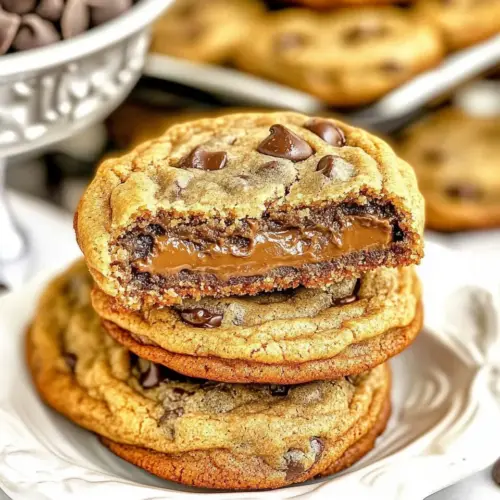
Reese’s Stuffed Giant Chewy Chocolate Chip Cookies
Reese’s Stuffed Giant Chewy Chocolate Chip Cookies deliver a buttery, chewy cookie studded with melty chocolate and a hidden peanut butter cup center. The texture is soft in the middle with golden edges, making them an easy crowd pleaser for parties or cozy weekends. Simple ingredients and forgiving technique mean you will want to make them again and again.
Equipment
- Mixing Bowl
- Sifter
- Measuring Cups
- Baking Sheet
- Parchment Paper
- Wire Rack
Ingredients
- 2 cups all purpose flour Provide structure and bulk to the cookie dough, forming the base that holds other ingredients together. Combine with leavening and fats to create the proper crumb and chewiness. Use measured scoops to maintain consistent cookie size and bake times.
- 1/2 tsp baking soda Leaven gently by reacting with acidic components to create a slight lift and tender crumb in the cookies. Balance must be struck to avoid over-rising, which can cause thin, flat cookies. Dissolve evenly into the dry mixture for uniform texture.
- 1/2 tsp salt Season subtly to enhance overall flavor while balancing the sweetness of sugars and chocolate. Help strengthen gluten development slightly when mixed with flour, contributing to the cookie's structure. Use the listed amount to avoid an overly salty taste.
- 2 tsp corn starch Tenderize the final texture by inhibiting gluten formation and retaining moisture, resulting in a softer, chewier cookie. Disperse evenly with the dry ingredients to ensure consistent results throughout the dough. Use corn starch particularly for a pillowy interior.
- 1 tbsp vanilla Provide aromatic depth and a warm, sweet perfume that complements chocolate and peanut butter flavors. Add to the wet ingredients to evenly distribute flavor throughout the dough. Use pure vanilla for the most pronounced, natural taste.
- 3/4 cup unsalted buttermelted Add rich fat that contributes to flavor, tenderness, and mouthfeel while aiding spread during baking; melted form blends easily with sugars and eggs. Ensure it is unsalted to control overall saltiness, and incorporate at the listed temperature for proper emulsion. Adjust mixing technique to avoid overbeating, preserving chewiness.
- 1 cup brown sugar Impart deep, caramel-like sweetness and moisture, helping create a chewy texture and rich flavor profile. Work well creamed with the fat to incorporate air and develop the cookie's lift and softness. Pack firmly when measuring for accurate sweetness and moisture balance.
- 1/2 cup white sugar Deliver clean, crystalline sweetness and contribute to caramelization and spreading during baking. Combine with brown sugar to balance moisture and texture while enhancing crisp edges. Measure precisely to avoid overly thin cookies.
- 1 egg plus 1 egg yolk, room temperature Bind ingredients and provide moisture, richness, and structure while contributing to chewiness; the extra yolk increases fat for a tender crumb. Bring eggs to room temperature for better incorporation and emulsification with fats and sugars. Beat appropriately to avoid overmixing the dough.
- 1 1/2 cups semi-sweet chocolate chips or milk chocolate chips or a combination of chips Introduce pockets of melted chocolate that provide bursts of sweetness and texture contrast throughout the cookies. Choose semi-sweet, milk, or a combination to control overall chocolate intensity and sweetness level. Fold in gently to distribute chips without overworking the dough.
- 12 snack size Reese's Peanut Butter Cups Add rich peanut butter centers that offer a salty-sweet contrast and a distinctive Reese's flavor when enclosed in the dough. Nest each snack-size cup in the dough to create a filled cookie experience and prevent excessive leakage by wrapping dough completely. Chill if needed to maintain shape during baking.
Instructions
- Combine the dry ingredients (flour, baking soda, salt, corn starch) and sift together.: The airiness after sifting is immediately noticeable, and the flour smells faintly of grain while the mixture feels light between your fingers, which aids even mixing later. Sifting eliminates lumps and blends the leaveners into the flour uniformly, ensuring consistent rise and texture across all cookies. If you skip sifting, you may see pockets of unincorporated baking soda, which can create small, bitter-tasting spots. A visual cue that you are done is a uniform pale color and a fine, powdery texture. For troubleshooting, if the dough later seems too dense, double check that you did not compact the flour when measuring.
- Cream butter with sugars together in a large mixing bowl.: When creaming, you should hear a soft scraping and see the mixture go from glossy to pale and slightly fluffy, and the scent changes to a warm, buttery sweetness that hints at caramel. This step incorporates air which helps the cookies lift and creates a tender crumb. Use room temperature butter so it blends easily; cold butter will not cream and melted butter will not trap air. A common error is over beating, which can lead to overly soft cookies that spread too much. Stop when the texture looks lighter and holds a ribbon for a second when lifted.
- Beat in the vanilla and then add in the egg and egg yolk and continue beating until the mixture is light and creamy.: As you add the vanilla , the aroma brightens and becomes more complex. The emulsifying action of the egg and egg yolk creates a smoother, almost glossy batter feel. This step ensures flavors meld and the fats and proteins bind, which helps the dough hold together when wrapping the peanut butter cups. If eggs are cold they may not incorporate fully and can lead to a curdled look, so room temperature is important. If the mix looks separated, stop and scrape the bowl, then beat gently until cohesive.
- Add in the dry ingredients and mix just until combined.: You will notice the dough take on a firmer texture as the dry ingredients absorb moisture; it should come away from the sides of the bowl but remain soft and pliable. Mixing just until combined prevents overdevelopment of gluten, keeping the cookies tender rather than tough. Over mixing here is the most common mistake and will yield chewier but denser cookies. The visual cue is that streaks of flour disappear and the dough looks uniform, with no visible dry bits.
- Stir in the chocolate chips.: The chocolate chips should be evenly distributed, creating little islands of chocolate throughout the dough that will soften and ooze as they bake. You can hear a slight clinking as chips mingle into the batter, and the scent begins to promise chocolate with every stir. Folding is preferable to vigorous stirring to avoid breaking the chips and to maintain dough texture. A troubleshooting note is to avoid adding chips when the batter is too warm, which could make them sink or smear.
- Scoop out about 1/4 cup of dough and wrap around a Reese's peanut butter cup making sure to seal the edges.: The dough ball should feel dense yet pliable, and when you press it around the Reese's Peanut Butter Cups it should conform smoothly without tearing. Sealing the edges fully prevents the filling from leaking during baking. If the dough is sticky and refuses to shape, chill it briefly to firm up. A common error is leaving gaps which allow the peanut butter cup to escape and create a melt on the pan. The correct feel is a cohesive dough sphere with no visible gap where the candy is enclosed.
- Continue until all dough has been used.: Keep an eye on uniformity so cookies bake evenly; each should be approximately the same size and weight. A tray with uniform mounds produces consistent browning and texture across the batch. If some mounds are much larger, they may need longer baking and can burn on the edges before the center sets. I recommend weighing or using the same scoop for consistency.
- Place cookies on a parchment lined baking sheet and refrigerate for 20-30 minutes.: Chilling firms the dough and solidifies the fats, which reduces spread and yields a chewier center. You will notice the surface become less glossy and more matte as they chill. If you skip this, the cookies will likely flatten and the filling may break through. For troubleshooting, if your fridge is very cold and the dough becomes rock hard, let it sit a few minutes before baking so it will start to relax into the oven properly.
- Preheat oven to 325 degrees.: The oven should be fully heated so the cookies begin setting immediately, forming a defined edge and a tender center. A properly preheated oven encourages even color and texture, and you will smell a faint buttery warmth when it reaches temperature. Using a thermometer to verify accuracy is helpful, as an oven running hot will brown edges too fast while leaving centers underdone. If you are unsure of your oven calibration, reduce initial baking time and check progress early.
- Space cookies about 3 inches apart and bake for 15 to 17 minutes.: As the cookies bake, you will see the edges set and take on a golden tone while the centers remain slightly domed and soft. The surface may crack gently, which is a good sign of proper rise and chew. Avoid overcrowding which causes cookies to run into each other and bake unevenly. If the centers wobble excessively after the shorter time, add a couple more minutes rather than increasing heat, which can overbrown edges.
- The cookies are done when the edges are golden. Let the cookies cool on the baking sheet for a few minutes and then transfer to a wire racks to finish cooling.: The moment of doneness is subtle, with edges firm and centers still a touch soft, and the aroma turns toasty and sweet. Cooling briefly on the sheet lets the structure set, while transferring to a wire rack finishes the process so air circulates and prevents sogginess. Moving them too soon can cause them to break, while leaving them too long on a hot pan can overcook the bottom. Aim for a few minutes before transferring for best texture.
- Enjoy!: Warm, slightly gooey centers and crisp edges create a contrast that fills the kitchen with a comforting aroma. When you bite in, the peanut butter cup center should be soft but not completely liquid, and the chocolate chips will have softened into molten ribbons. Serve slightly warm for the best experience, and watch people light up when they discover the hidden treat. If you encounter leakage, next time enfold the dough more tightly and chill a bit longer before baking.
Notes
- Swap chocolate types Use a combination of semi sweet chocolate chips and milk chocolate chips for a more nuanced chocolate profile, blending depth with creaminess, and keep the same total amount so the bake remains balanced.
- Chill longer for thicker cookies If you prefer a significantly thicker cookie, chill the shaped dough for up to two hours, which firms the fats and reduces spread, producing a taller, chewier center without changing bake time drastically.
- Prevent leaks When wrapping the Reese's Peanut Butter Cups, press the dough firmly around the candy and smooth seams, then place seam side down on the sheet to reduce the chance of the filling escaping while baking.
- Adjust bake time for size If you make slightly larger or smaller cookies than specified, modify the bake time in small increments rather than altering temperature, checking at the earlier time to avoid overbaking.
- Store properly Once fully cooled, keep cookies in an airtight container at room temperature for up to three days, or freeze for longer storage, placing parchment between layers to avoid sticking.