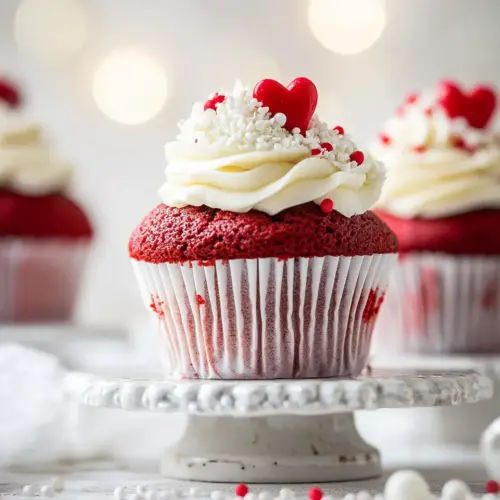
Red Velvet Cupcakes
Red Velvet Cupcakes are tender, moist, and visually striking, with a subtle cocoa note and tang from buttermilk. These easy to make cupcakes pair creamy icing with a soft crumb, perfect for celebrations and quick treats. They bake reliably and travel well, making them an ideal choice for parties or a special dessert to share.
Equipment
- Kitchen Scale
- Cupcake Tin
- Stand mixer
Ingredients
- 21/2 cups all-purpose flour 300 grams Provide the primary structure and bulk to the cupcakes, supplying gluten for lightness when properly mixed and sifted; measure accurately to maintain texture and crumb. Combine with leaveners and liquids to create the batter base that defines rise and mouthfeel.
- 2 cups granulated sugar 400 grams Sweeten the batter and help with moisture retention, contributing to tenderness and caramelization during baking; dissolve granulated sugar thoroughly for even sweetness. Adjust quantity only as listed to preserve balance with wet ingredients and leavening.
- 1 tablespoon unsweetened cocoa powder 5 grams Add subtle chocolate flavor and deepen the red hue by providing a touch of cocoa bitterness; sift cocoa with dry ingredients to prevent lumps. Use unsweetened cocoa in small amount to complement the classic red velvet profile without overpowering sweetness.
- 1 teaspoon kosher salt 3 grams Enhance overall flavor balance while aiding leavening control by moderating taste and strengthening gluten interaction; measure precisely to avoid over-salinity. Use kosher salt to bring out other flavors and counterbalance sugar.
- 1 teaspoon baking soda 6 grams Provide chemical leavening to help the cupcakes rise and create a tender crumb when reacting with acidic components like buttermilk and vinegar. Distribute baking soda evenly in the dry mix to ensure consistent lift and avoid metallic aftertaste.
- 2 large eggs 100 grams Contribute richness, structure, and emulsification while adding moisture and stability to the batter; beat eggs slightly before incorporating for uniform texture. Use large eggs to help bind ingredients and support leavening for a fine crumb.
- 11/2 cups vegetable oil 300 grams Supply fat for moistness and tenderness, coat flour proteins to limit gluten formation, and create a soft mouthfeel; measure carefully as oil influences crumb density. Use neutral vegetable oil to let other flavors shine and maintain consistent moisture.
- 1 cup buttermilk 227 grams Provide acidity, moisture, and tang that reacts with baking soda for leavening while contributing to the cake’s tender texture; keep at room temperature to blend smoothly. Buttermilk helps create characteristic flavor and lightness in red velvet.
- 1 tablespoon white vinegar 14 grams Increase acidity to react with baking soda for additional lift and a tender crumb while subtly brightening flavor; add vinegar directly to wet ingredients for best reaction. Use white vinegar to avoid imparting off-flavors while activating leavening.
- 1 teaspoon pure vanilla extract 4 grams Enhance overall aroma and provide a sweet, floral vanillin note that rounds out flavors; add vanilla to the liquid mixture for even distribution. Use pure vanilla extract for best flavor depth compared with artificial alternatives.
- 2 ounces red food coloring 57 grams Impart the signature red hue and visual appeal to the cupcakes, dispersing color evenly throughout the batter when mixed thoroughly; follow recipe amount to avoid overpowering flavor. Use food coloring designed for baking to retain color after baking and frosting.
- The Best Icing Ever (click for recipe) Serve as the topping component providing creaminess, sweetness, and visual finish to the cupcakes; prepare according to the linked recipe for best results. Use the specified icing to complement the cake’s flavor and deliver a stable, spreadable frosting.
Instructions
- NOTE: The flour/milk mixture for the icing needs time to cool completely in the fridge, so start the icing at least 1 hour before starting the cake.: The flour/milk mixture for the icing needs time to cool completely in the fridge, so start the icing at least 1 hour before starting the cake : The kitchen may smell faintly of dairy when you prepare the icing, and the patience invested here ensures a stable, silky frosting later. Cooling allows the icing components to set and thicken, which prevents melting when it meets the warm cupcakes. I often begin the icing early and let it chill with a timer to avoid rushing. A common mistake is to skip this chill time, which leads to runny frosting that slides off the cupcakes.
- Preheat oven to 350°F. Line a 12-count cupcake tin with paper liners.: As the oven warms you will notice a faint dry heat that readies the environment for even baking. Proper preheating ensures the cupcakes start baking immediately, producing a reliable rise and uniform texture. Lining the tin helps with release and cleanup. One error to avoid is putting unbaked trays into an oven that is still cold, which can cause dense, underbaked centers.
- In a medium bowl, whisk the eggs together until homogenous.: The motion creates a smooth, even color and slightly aerates the eggs, which helps with emulsification when combined with oil. You can hear a soft swish as they come together and see a glossy surface forming. If the eggs are lumpy or cold, they will incorporate unevenly, so bring them to room temperature first to avoid separation when combined with oil.
- Add the remaining liquid ingredients and whisk until well incorporated. Set aside.: Once you add vegetable oil , buttermilk , white vinegar , and pure vanilla extract , the mixture should become smooth and slightly viscous. The combined liquids should show a uniform color and gloss, signaling readiness. Set aside so the liquids and dry components will integrate without overmixing. A common slip is to skip the brief rest, which can make final mixing uneven and leave streaks of dry flour.
- In the bowl of a stand mixer fitted with the paddle attachment, stir all dry ingredients together until completely combined.: As you sift and stir the all purpose flour , granulated sugar , unsweetened cocoa powder , kosher salt , and baking soda , look for a uniform pale mixture free of lumps. The sound is a light, gentle rustle as the dry powders mingle. Thoroughly combining prevents pockets of leavening or salt, which would create uneven texture or flavor. Avoid overbeating at this stage since that can develop gluten and stiffen the final crumb.
- Add the wet ingredients to the dry ingredients.: When the wet stream meets the dry, you should see the batter begin to come together into a thick, cohesive mass. The color will deepen and become uniform, and any streaks should disappear after mixing. This moment matters because even incorporation ensures even rise and crumb. A frequent error is dumping everything in too quickly and overworking the batter, which can yield a dense texture.
- Mix on medium-high speed until completely incorporated, about 1 minute.: At medium-high you will hear a steady, rhythmic hum from the mixer and watch the batter smooth out and cling to the paddle slightly. The goal is a homogenous batter with no lumps, but not to overmix, which can make the cupcakes tough. Stop once there are no visible streaks of flour and the batter is glossy. Over mixing beyond this point is the most common cause of tight crumb.
- Fill the wells of the cupcake tins 2/3 full with batter.: As you spoon or portion the batter, the texture should be thick yet pourable, holding its shape briefly before settling. Filling to two thirds gives room for a domed top without overflowing. I often use a scoop to keep portions even, which helps cupcakes bake uniformly. Filling too full will cause spillover and uneven baking.
- Gently tap the pans on the counter a few times to release any air bubbles from the batter.: The soft thud you hear settles the batter and encourages trapped air pockets to rise and pop, preventing large holes in the finished cupcakes. After tapping, the surface should look smooth and even. Avoid vigorous knocks that may splash batter out of liners. Missing this step can leave uneven crumb with air pockets.
- Bake 15-20 minutes, or until a toothpick inserted in the middle of a middle cupcake comes out clean.: In the oven you will notice a warm, sweet aroma developing and the tops turning set and slightly springy. Check at the lower end of the time range first, because ovens vary. The clean toothpick means the interior is set but still tender. Overbaking will dry the cupcakes, so watch closely and remove as soon as they pass the test.
- Let the cupcakes rest 10 minutes, then remove from pans and cool completely on a cooling rack.: Resting allows the crumb to finish setting and makes removal easier, while cooling on a rack prevents moisture buildup from soggy bottoms. The cupcakes will release a faint sweet steam as they cool. If you try to frost while warm, the icing will melt, so be patient and wait until they are thoroughly cool.
- Find our favorite icing recipe HERE. Enjoy!: A chilled, stable icing will contrast with the cupcake's tender crumb, and when you pipe or spread it the texture should be smooth and satiny. The finishing touch brings temperature contrast and creaminess, completing the experience. Rushing to ice warm cupcakes is the most frequent mistake, leading to runny or sliding frosting.
Notes
- Use gel food coloring to achieve a vivid red with less liquid, preserving batter consistency while creating an intense hue.
- Substitute homemade buttermilk by adding a tablespoon of white vinegar to a cup of milk and letting it sit for a few minutes if store bought buttermilk is unavailable.
- Weigh ingredients for the most reliable cupcakes across different kitchens, as cups can vary by how they are packed.
- Chill the batter briefly if your kitchen is very warm, which can help control rise and prevent excessive doming.
- Use an ice cream scoop to portion batter equally and minimize wasted batter on spoons or bowls.
- Rotate pans halfway through baking if your oven has hot spots, ensuring even color and rise across all cupcakes.
- Let cupcakes cool completely before icing to avoid melted frosting and a glossy but runny finish on top of the cake.