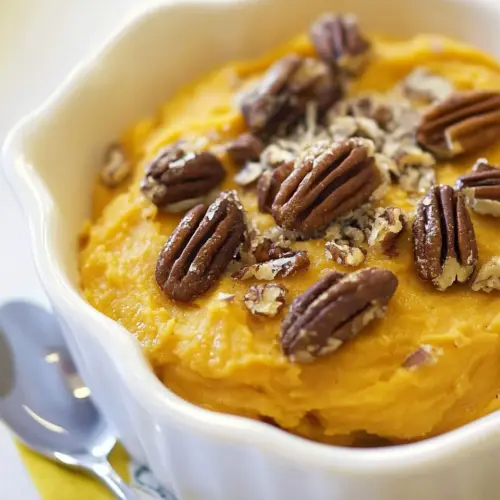
Red Lobster Whipped Sweet Potatoes with Honey Roasted Pecans
Red Lobster Whipped Sweet Potatoes with Honey Roasted Pecans are creamy, buttery, and crowned with crunchy honey glazed pecans. This easy, comforting side delivers silky texture and caramelized nutty contrast, ideal for holiday dinners or cozy weeknight meals. Make it for Thanksgiving or any fall gathering to impress with minimal effort and big flavor.
Equipment
- Oven
- Baking Sheet
- Parchment Paper
- Mixer
- Mixing Bowl
- Casserole or ramekins
Ingredients
- 2 pounds sweet potatoes Provide a sweet, creamy base when boiled and mashed, delivering natural sugars and a soft texture that defines the dish; select uniform-sized roots for even cooking and peel or scrub thoroughly before preparation.
- 2 cups pecans Add crunchy texture and a toasty, buttery flavor when roasted or caramelized with honey; toast until fragrant to enhance nuttiness and chop if desired for easier mixing or topping.
- 2 tablespoons honey Introduce floral sweetness that helps caramelize the pecans and ties flavors together; drizzle over nuts while roasting and adjust amount to reach desired glaze and sweetness balance.
- 1 tablespoon butter (for nuts) Provide a rich, savory fat to coat the pecans during roasting, promoting browning and depth of flavor; melt gently with honey to create a smooth glaze without burning.
- 1/4 teaspoon cinnamon Contribute warm, aromatic spice that complements the sweetness of the potatoes and pecans; sprinkle sparingly to add subtle complexity without overpowering the dish.
- 1/4 teaspoons salt Enhance overall flavor by balancing sweetness and elevating taste perception; use measured amounts to season both nuts and potatoes appropriately for harmony.
- 1/2 cup butter (for potatoes) Create a silky, rich mouthfeel when whipped into the mashed sweet potatoes and help bind ingredients together; add at room temperature for easier incorporation and creaminess.
- 1/2 teaspoons salt (for potatoes) Provide precise seasoning for the potatoes to ensure proper saltiness and flavor balance; add gradually and taste as you mix to avoid over-salting.
- 1/3 cup brown sugar Supply deep, molasses-like sweetness that enriches the potatoes and complements the honey-roasted pecans; stir in while mashing to dissolve evenly and adjust to preference.
- Melted butter for topping if desired Offer an optional finishing touch that adds shine and extra richness when drizzled over the finished potatoes; warm slightly before applying so it absorbs into the surface for a glossy presentation.
Instructions
- Preheat oven to 350 degrees. Place sweet potatoes on a baking sheet, and bake until they are done. Medium sized sweet potatoes take about 40 to 45 minutes. Larger or smaller sweet potatoes cooking time will differ. Sweet potatoes are done when poked with a fork the fork will slide through the potato easily.: Warmth fills the kitchen and the oven hums as it comes to temperature, creating a bed for gentle baking of the sweet potatoes . The reliable even heat allows the tubers to cook through without drying out, producing tender flesh that will whip smoothly. A common error is not preheating, which lengthens cook time unevenly and may leave the centers underdone, so wait for the oven indicator before placing the pan inside.
- To make the nuts melt the 2 tablespoons of honey and the 1 tablespoon of butter together. Add 1/4 teaspoon of cinnamon and 1/4 teaspoon salt to the honey mixture. Pour the honey sauce over the pecans.: As the potatoes roast, their skins tighten and you can smell a faint caramel sweetness wafting through the oven. The visual cue is slightly wrinkled skin and a deepened color. The slow dry heat breaks down starches into sugars, making the flesh naturally sweet and easy to whip. If you crowd the baking sheet, they steam rather than roast, so give each potato breathing room to brown evenly.
- Spread on a baking sheet lined with parchment paper. Bake for 15 to 20 minutes. Stir the nuts several times while baking. Cook until golden brown. To make the whipped sweet potatoes peel potatoes, and place into a mixing bowl. Add 1/2 cup butter, salt, and brown sugar. Use a mixer to whip the potatoes together. Red Lobster places the potatoes in individual casserole dishes. You can place the potatoes in a casserole dish. Sprinkle with nuts and drizzle with melted butter if desired.: During this period, steam and aroma build, and when pierced with a fork the tines should glide with almost no resistance. This timing gives you a target, but oven variances and potato sizes change outcomes, so rely on the fork test. Cutting cooking time short leads to a lumpy mash, so err on the side of full tenderness for the creamiest result.
- Larger or smaller sweet potatoes cooking time will differ: Thicker specimens need extra minutes, while thin ones finish sooner, and you will sense this in the weight and give of each tuber. Adjusting time prevents undercooked cores or over dried surfaces. If a potato is still firm in the center, return it to the oven in five minute increments until it yields easily.
- Sweet potatoes are done when poked with a fork the fork will slide through the potato easily: That smooth sliding sensation is the clearest signal of readiness, and the flesh will look moist and slightly translucent. This means the starches have transformed and will accept butter and sugar readily, yielding a silkier whip. Forcing a less tender potato into a mixer creates stringy lumps, so confirm tenderness before proceeding.
- To make the nuts melt the 2 tablespoons of honey and the 1 tablespoon of butter together: As the honey warms and the butter dissolves, the mixture loosens into a glossy syrup that will coat the pecans evenly, helping them caramelize. The scent is sweet and buttery with a faint floral note from the honey. If you overheat, the honey can scorch and taste bitter, so warm just until fluid and combined.
- Add 1/4 teaspoon of cinnamon and 1/4 teaspoon salt to the honey mixture: These seasonings deepen the flavor of the glaze, with the cinnamon adding warmth and the salt balancing sweetness. When stirred in, the glaze becomes aromatic and layered, preparing the pecans for roasting. Adding too much spice will mask the nutty nuance, so keep measurements precise.
- Pour the honey sauce over the pecans: The sticky glaze clings to nooks and ridges, promising shiny, caramelized edges after roasting. Toss gently so each piece gets coated, and you will notice beads of syrup glinting on the nuts. Uneven coating can cause patches to burn while others remain under caramelized, so stir until uniformly glossy.
- Spread on a baking sheet lined with parchment paper: Laying the glazed pecans in a single layer ensures even heat exposure and makes flipping simple. Parchment helps prevent sticking and gathering of burnt bits. If you pile the nuts, they will steam and clump together instead of toasting to a crisp texture, so space them out for best results.
- Bake for 15 to 20 minutes: During this time the nuts will sizzle lightly and release a toasty aroma, and the glaze will bubble and darken to a golden brown. The sound is subtle, a quiet oven whisper as sugars caramelize. Watching closely from minute ten onward prevents the transition from golden to burnt, which happens quickly at the end of the window.
- Stir the nuts several times while baking: Turning them allows all sides to brown uniformly and keeps the glaze from pooling and burning. The tactile action breaks up clumps and promotes consistent color. Forgetting to stir often leaves the bottoms scorched and the tops pale, so schedule brief stir intervals for even caramelization.
- Cook until golden brown: Visual cues matter here; the nuts should be a deep, warm gold, not dark brown. The aroma becomes richly nutty and sweet at this stage. Remove them promptly from heat to halt further browning, because residual oven heat continues the cooking process and can push them from perfectly toasted to bitter if left unattended.
- To make the whipped sweet potatoes peel potatoes, and place into a mixing bowl: Once peeled, the hot flesh steams gently in the bowl, making it easier for the butter and brown sugar to dissolve into it. The warmth also helps create a silkier texture when whipped. Resist the urge to mash immediately; letting them sit briefly helps evaporate excess moisture, which yields a thicker, less watery whip.
- Add 1/2 cup butter, salt, and brown sugar: These enrich the potatoes and create that signature glossy taste. As the butter melts into the warm flesh and the brown sugar dissolves, you can taste and adjust seasoning. Too little butter gives a dry mouthfeel, while too much can make the dish cloying, so balance to your preference.
- Use a mixer to whip the potatoes together: The mixer aerates the mixture, producing a light, velvety consistency rather than a dense mash. The rhythmic whir and the sight of clouds of potato forming in the bowl are satisfying signals you're on the right track. Over mixing can make the texture gummy, so whip just until smooth and fluffy.
- Red Lobster places the potatoes in individual casserole dishes: Serving in small dishes creates elegant portions and helps the potato maintain warmth and presentation. The individual vessels also give an opportunity to crisp the exposed edges slightly if you prefer a contrast. Using too large a dish may cool the potatoes faster and dilute the visual appeal, so select appropriately sized ramekins if you go this route.
- You can place the potatoes in a casserole dish: A larger casserole is great for family style serving and reheating, and it lets you add a decorative scattering of pecans across the surface. Cover with foil if reheating to prevent a dried top. Leaving it uncovered in a dry oven can create an overly crusty surface that some may not enjoy.
- Sprinkle with nuts and drizzle with melted butter if desired: The final touch of warm, crunchy pecans and a glossy drizzle of melted butter elevates both look and mouthfeel, giving each scoop a mix of cream and crunch. This finishing step adds aroma and shine, inviting diners to dig in. Be mindful that too much drizzle can pool and make the top soggy, so apply sparingly for the best presentation.
Notes
- Toast level control: Adjust roast time for the pecans to achieve a lighter crunch or a deeper caramelized bite, but watch them closely to avoid burning.
- Butter swap thoughts: Use cultured butter for a tangier richness or regular unsalted butter if you want to manage salt precisely; both integrate well into whipped sweet potatoes.
- Individual serving flair: Spoon the whipped potatoes into small ramekins and broil briefly for crisp edges, then top with warm pecans for contrast in texture and temperature.
- Brown sugar depth: Choose dark brown sugar for a richer molasses tone, or light brown sugar if you prefer a subtler, more classic sweet profile.
- Presentation trick: After whipping, smooth with a spatula and use the back of a spoon to create peaks that catch melted butter and provide places for pecans to nestle attractively.