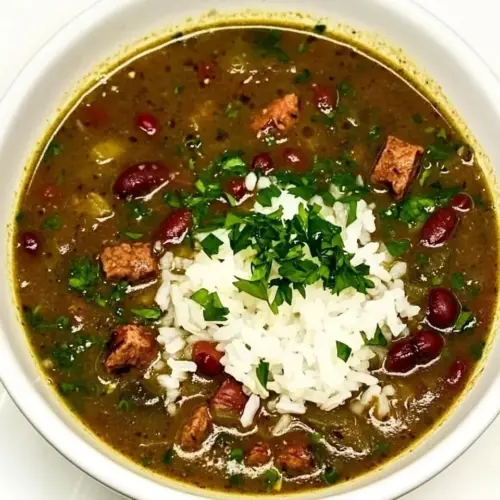
Red Beans and Rice Soup
Red Beans and Rice Soup blends creamy red beans, savory sausage, and fragrant aromatics into a comforting, easy weeknight dinner. Slow cooked depth and a touch of heat make each spoonful cozy and satisfying, perfect for winter evenings. Make it for family meals when you want a filling, flavorful bowl that warms from the inside out.
Equipment
- Slow Cooker
- Saucepan
- Colander
Ingredients
- 1 large onion, chopped small Sautéed until translucent and fragrant, adds a sweet, savory foundation and aromatic depth to build the soup’s flavor profile. Provides texture and natural sugars that balance spicy and salty elements during long simmering.
- 2 tsp . olive oil Heated briefly to coat the vegetables and aromatics, supplies a light, healthy fat that helps brown the onion and bloom dried herbs for richer flavor. Contributes a subtle fruity note and carries fat-soluble flavors throughout the broth.
- 1 T finely minced garlic Mince finely and softened in fat to release pungent, aromatic oils that give bright, savory punch to the soup. Enhances overall umami and layers of flavor without overwhelming other seasonings when used in controlled amounts.
- 2 tsp . dried thyme Sprinkled early to infuse the broth with warm, slightly floral and earthy notes that complement the bean and sausage components. Holds up well to long cooking and helps create cohesive savory background flavor.
- 1 tsp . dried oregano Added for its robust, slightly bitter and peppery Mediterranean flavor that complements thyme and enriches the soup’s herbaceous character. Works well with roasted or simmered ingredients to lift heavier notes from beans and sausage.
- 1 T Tony Chachere’s Creole Seasoning, more or less to taste. Seasoned in to provide immediate Creole heat, salt, and complex spice flavors typical of Louisiana cooking, customizable to personal taste. Acts as a primary seasoning blend that ties together the soup’s regional profile and boosts overall savory intensity.
- two 15 oz. cans red beans (see notes) Drained or added with liquid to supply creamy texture, earthy sweetness, and body to the soup while cutting simmering time compared to dried beans. Contributes starch and protein which help thicken the broth and make the dish hearty.
- 8 links Amylu Chicken Andouille Sausage (see notes) Sliced or added whole to infuse smoky, spicy, and meaty flavors; releases rendered fat and juices that enrich the broth and complement the beans. Provides a focal protein and characteristic Andouille smokiness central to the dish’s Creole identity.
- 8 cups chicken broth (see notes) Poured as the primary liquid to create the soup base, supplying savory depth and dilution for concentrated ingredients while controlling overall salt and flavor balance. Enables simmering to meld flavors and soften beans and aromatics into a cohesive broth.
- 2 T Worcestershire sauce Stirred in for complex, tangy umami that enhances savory depth and rounds out the soup’s flavor; balances richness from sausage and beans. Adds a slightly sweet and savory backbone that amplifies other seasonings.
- 2 tsp . Green Tabasco Sauce (or more if you want a lot of heat) Dosed to introduce vinegary cayenne heat and bright chili flavor that elevates spice complexity; adjustable to taste for desired heat level. Compliments Creole seasoning and Andouille while providing a sharp, acidic counterpoint.
- 3 bay leaves Placed in the pot to slowly release herbal, slightly floral and bay leaf bitterness that lends aromatic complexity during simmering. Easy to remove before serving, it subtly deepens the broth without adding measurable texture.
- 2 cups cooked white rice, plus more for serving if desired. (see notes) Folded in at the end to provide comforting starchiness and absorb flavors, creating satisfying mouthfeel and heartiness in each bowl. Serves as the traditional grain component and can be adjusted for serving size or texture preferences.
Instructions
- Heat the oil in the bottom of the slow cooker (or in a pan if your slow cooker doesn’t brown), add the onion and saute until it’s starting to brown, about 5 minutes.: The moment the olive oil warms and the onion hits the pan you should hear a soft sizzle, and within a couple of minutes you will smell a sweet, savory scent as the edges begin to caramelize. That faint browning signal tells you the sugars are releasing, which builds depth in the final broth. If you skip this step and dump raw onion directly into the slow cooker you lose that nutty layer of flavor, so take the time to saute until the pieces show golden edges. Common error, especially when rushed, is crowding the pan which causes steaming instead of browning. Use a wide pan or cook in batches to keep pieces separate.
- Add the minced garlic, dried thyme, dried oregano and Tony Chachere’s Creole Seasoning and saute about 2 minutes more.: As you add the minced garlic and dried herbs you'll notice an immediate lift in aroma, a peppery, herbaceous cloud that quickly perfumes the kitchen. The two minute scent bloom unlocks essential oils in the thyme and oregano , smoothing their edges. Doing this also tempers the raw bite of garlic and lets the seasoning blend toast slightly, which deepens the flavor. Watch closely because garlic can brown and turn bitter in an instant, so keep the heat moderate and stir constantly. Avoid adding salt early if your seasoning is already salty.
- Transfer to slow cooker if you’re sauteeing on the stove.: Moving the fragrant base into the slow cooker allows the flavors you created to evenly infuse the larger volume of liquid. You will notice the space in the cooker beginning to hold that aromatic warmth, and the residual oil coats the bottom which helps prevent sticking as the soup simmers. Make sure to scrape the pan so none of the toasted bits are left behind, they are flavor gold. The common mistake here is leaving browned fond in the pan which wastes flavor, so use a splash of broth to deglaze if needed before transferring.
- Drain canned beans into a colander placed in the sink and rinse with cold water until no more foam appears, then let drain.: Rinsing the two cans of red beans removes the jarred foam and reduces metallic can taste, producing a cleaner broth. The beans will release a faint starchy scent as you rinse, and the water should run clear when they re ready. Proper draining prevents excess liquid from diluting the soup and helps control sodium. A frequent oversight is not rinsing well enough, which can leave a soapy film on the surface of the finished soup.
- When most of the water has drained off, transfer to the slow cooker.: As you add the drained red beans to the cooker you will see the pot take on volume and texture. The beans act like tiny flavor sponges, and as they simmer they release both starch and body to the broth, helping it thicken naturally. Stir them in gently to avoid mashing too many, unless you prefer a creamier consistency. Over stirring early can break too many beans and alter texture.
- Cut the sausage into slices or half-moon slices and add to the slow cooker.: Slicing the sausage lets its fat and spices bloom into the broth, releasing smoky, savory oils. As the pieces warm they'll soften and shed flavor into the liquid, giving that signature meaty backbone. Slice uniformly so they heat through at the same rate, and if you prefer a stronger sausage presence, sear slices briefly before adding to deepen the color and taste. The usual mistake is adding too many tiny pieces which can make the texture clumpy.
- Add the homemade chicken stock, Worcestershire sauce, Green Tabasco Sauce and bay leaves.: Pouring in the chicken broth loosens the concentrated flavors and creates the soup s body. The aroma should change immediately as the Worcestershire sauce and Green Tabasco Sauce mingle, introducing umami and a vinegary heat. Floating bay leaves will provide a subtle herbal backbone over the long cook. Stir to incorporate, then give everything a minute to settle. Avoid adding more hot sauce until the end so you can adjust heat precisely.
- Cook on high for about 4 hours or on low for 7-8 hours.: This long, gentle simmer allows collagen and starches to soften and flavors to meld into a cohesive whole. You will see the surface bubble quietly, and the aroma will deepen into a cozy, savory scent that fills the house. Slow cooking develops richness and gives the beans a velvety texture without becoming mushy. Resist the urge to lift the lid frequently, as heat loss extends cooking time and disturbs the simmer.
- While the soup cooks, cook the rice using a rice cooker or according to package directions.: Preparing the rice separately ensures it maintains a pleasant, slightly firm bite when stirred in. Cooking rice ahead avoids it over absorbing the broth during the long simmer, which would turn the dish too gummy. Time the rice so it s freshly cooked when you fold it in, and fluff with a fork to separate grains. A common slip is cooking rice too far in advance and storing it uncovered, which dries it out.
- When the soup has cooked about 4 hours (for high) or 7-8 hours (for low), stir in 2 cups cooked white rice.: Adding the cooked rice toward the end allows it to heat through without disintegrating. As the rice blends in you ll notice the broth thicken slightly and take on a creamier mouthfeel. Stir gently to distribute the grains evenly. If the soup thickens too much after the rice is added, a splash of chicken broth can loosen it right away. Avoid adding uncooked rice now, as it will swell unpredictably and change texture.
- Add a little more water or chicken stock if the soup seems too thick and cook on high for 20-30 minutes more.: Adjusting the liquid at this stage is all about achieving the right balance between brothy and stew like. As you add chicken broth and return to a higher heat you will see the surface come back to a gentle boil, and the aromas will concentrate further. This short final cook helps flavors finish marrying and ensures the rice is warmed through. Over thinning will dilute flavor, so add liquids sparingly and taste as you go.
- Serve soup hot, with additional cooked rice and Green Tabasco Sauce to add at the table if desired.: The final service step is where the soup shines. Ladle into bowls and offer extra rice and Green Tabasco Sauce so diners can tailor their portion. You should see a glossy surface and inhale a layered scent of herbs, spice, and savory broth. A usual misstep here is serving it lukewarm, so be sure it is piping hot for the best experience.
Notes
- Boost the smokiness by briefly searing the sausage before adding it to the slow cooker, this caramelizes edges and deepens the savory profile.
- Dial the heat by adjusting the amount of Green Tabasco Sauce or Tony Chachere’s; start small and add more at the table so you do not overpower other flavors.
- Make it lighter by using lower sodium chicken broth and rinsing the red beans well, this keeps richness while controlling salt.
- Increase body by mashing a few beans against the side of the pot before serving, the released starch will thicken the broth naturally.
- Stretch servings by adding extra cooked rice when serving, it soaks up broth and makes portions go further without diluting flavor if you warm the extra rice slightly.