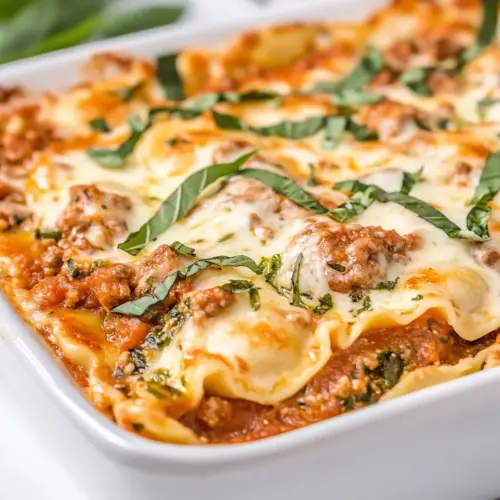
Ravioli Lasagna
Ravioli Lasagna is a creamy, cheesy casserole that layers pillowy ravioli with savory meat and marinara for an easy weeknight dinner. With a bubbling mozzarella top and pockets of ricotta throughout, it delivers comforting textures and bold tomato flavor, perfect for family meals or potlucks. Make it for a fuss free dinner that still feels special.
Equipment
- 9x13 casserole dish
- Skillet or sauté pan
- Foil
Ingredients
- 2 tablespoons olive oil Sauté in a skillet until fragrant and shimmering to provide a flavorful cooking fat that prevents sticking and helps brown the meat for depth.
- 1 pound (450 grams) lean ground beef Brown over medium-high heat to develop savory caramelized flavors and contribute hearty protein and texture to the sauce and layers.
- 1 teaspoon italian seasoning Season meat and sauce while cooking to impart a balanced Italian herb profile; sprinkle in increments to build aromatic complexity.
- 1/4 teaspoon ground black pepper Grind into the sauce to add subtle heat and enhance the overall savory balance; adjust precisely to avoid overpowering other flavors.
- 32 ounces (900 grams) marinara sauce Simmer gently with browned meat to form the tomato-based backbone of the dish, melding flavors and adding moisture for the layered casserole.
- 1/4 teaspoon salt optional, taste the sauce before adding Adjust near the end of sauce preparation to brighten and balance acidity; add sparingly and taste as you go for optimal seasoning.
- 24 ounces (680 grams) ravioli frozen or chilled Layer frozen or chilled to provide the pasta component that cooks through during baking, creating soft, pillowy pockets within the lasagna structure.
- 15 ounces (425 grams) whole milk ricotta cheese Spoon between ravioli layers to add creamy richness and a mild tang, helping bind the layers and contribute a smooth, luscious texture.
- 1/2 cup (43 grams) shredded parmesan cheese Sprinkle into the cheese mixture or over layers to introduce nutty, salty umami that enhances overall cheesiness and depth of flavor.
- 2 cups (240 grams) shredded mozzarella cheese Top and melt over the assembled dish to create a gooey, stretchy, golden crust that offers creamy richness and visual appeal when baked.
- Fresh basil or parsley chopped for garnish Garnish chopped just before serving to add a fresh, herbaceous brightness and a pop of color that complements the rich, cheesy layers.
Instructions
- Preheat the oven to 350°F/180°C.: The room fills with a gentle warmth as the oven heats, which primes the dish for even baking. Preheating ensures the casserole starts cooking immediately, promoting an even rise and consistent bubbling. If you skip preheating the surface may overcook before the interior heats. A common mistake is relying on oven indicator lights rather than an oven thermometer, so if you are unsure, check the temperature to be precise.
- In a skillet over medium-high heat, heat olive oil and cook the beef breaking it apart with a spatula or a wooden spoon as you cook it. Drain grease, and return to the stovetop.: Listen for a steady sizzle as the olive oil warms and the beef hits the pan, and watch for the meat to brown and develop small caramelized bits that add deep flavor. The aroma will shift from raw to toasty and savory as the Maillard reaction occurs, which is exactly what you want for depth in the sauce. If the pan starts to smoke the heat is too high, so lower the flame to avoid bitter, burnt notes. A typical pitfall here is crowding the pan, which causes steaming instead of browning, so break the meat apart and spread it thinly to brown properly.
- Add Italian seasoning, ground pepper, and marinara. Stir and simmer for 5 minutes, taste the sauce and see if it needs any salt (I find marinara to be salty enough). Remove from heat.: After browning, the sizzling will quiet as you drain excess fat, leaving behind concentrated browned bits on the pan surface that contribute powerful flavor. Returning the meat to the pan lets you reincorporate those fond flavors into the sauce. Leaving too much grease will make the final bake heavy, so drain thoroughly. Be careful when pouring hot grease, use a heatproof container and avoid splashes.
- In a 9×13 casserole dish, layer a third of the meat sauce, half of the ravioli, and half of the ricotta.: When you add the dried herbs, cracked black pepper , and the marinara sauce , you will see the sauce loosen and start to shimmer as it warms. Stirring releases aromas of herbs and tomato that deepen with a short simmer. This step builds the personality of the dish, and simmering for a few minutes helps integrate the flavors. A common misstep is rushing this stage; taste and adjust seasoning, since rushing can leave the sauce tasting flat.
- Then add another third of the meat sauce, the remaining ravioli, and the remaining ricotta. Finish with the rest of the meat sauce, and finally, top with the shredded mozzarella and parmesan cheese.: Allow the sauce to bubble gently so the edges darken slightly and the flavors meld, you will notice a richer tomato scent and a silkier texture. Tasting at this point is crucial because jarred sauces vary widely in saltiness, and adding salt prematurely can make the casserole too salty. If the sauce tastes thin, a few extra minutes of simmering will concentrate it, but avoid over reducing which can make it overly intense.
- Cover tightly with foil, and bake for 30 minutes. Uncover and bake for 15 more minutes. If desired place under the broiler for 1-2 minutes. Serve warm.: Once the sauce smells rounded and balanced, removing it from the stove preserves freshness and prevents it from reducing too far. The sauce will continue to release steam and evolve a bit as it cools slightly, which helps when layering so the ricotta does not become runny. Leaving it on high heat can evaporate too much liquid and yield a dry casserole, so pull it off at the right moment.
- In a 9×13 casserole dish, layer a third of the meat sauce, half of the ravioli, and half of the ricotta.: As you spread the first layer of sauce, notice how glossy it looks and how it creates a protective cushion for the pasta so nothing sticks. Nestle the ravioli snugly so they form a single layer, then dollop the ricotta in even mounds that will melt into soft pockets. This layering controls moisture distribution and ensures even baking. A frequent error is piling ingredients too high in one spot, which causes uneven cooking, so distribute evenly across the dish.
- Then add another third of the meat sauce, the remaining ravioli, and the remaining ricotta.: Building the middle layer gives the casserole structure, and when you add the sauce you will hear a soft settling as the layers press together. The alternating textures of creamy ricotta and saucy meat will promise a harmonious interior once baked. Avoid pressing down too hard which can mash the ravioli , you want gentle contact for even heat circulation.
- Finish with the rest of the meat sauce, and finally, top with the shredded mozzarella and parmesan cheese.: The last sauce layer should cover everything in a glossy blanket, and sprinkling the mozzarella and grated parmesan creates a cheese crust that browns and bubbles delightfully. Even coverage yields uniform melting and a golden top. Too much cheese can lead to a greasy finish, so spread it to just cover for the best balance.
- Cover tightly with foil, and bake for 30 minutes.: Covering traps steam and warms the interior gently, which helps the chilled or frozen ravioli heat through without drying out. You will hear a soft simmer as the casserole bakes, and the aroma will become fuller and comforting. Leaving the dish uncovered too soon can brown the top prematurely while the middle remains cold, so keep it covered for the initial phase. Be sure the foil is tented slightly to avoid touching the cheese.
- Uncover and bake for 15 more minutes.: Uncovering lets the top brown and the cheeses bubble, producing those golden patches and slight crisp around the edges that I always chase. The visual cue to look for is a uniformly bubbly surface and lightly toasted cheese. If it looks pale, give it a few extra minutes, but watch closely to prevent burning. A common pitfall is assuming the interior is hot when the top is browned, so test by checking the center for bubbling.
- If desired place under the broiler for 1 to 2 minutes.: A quick broil will add deep golden spots and tiny crisp flecks on the cheese, enhancing texture and aroma. Stand by the oven and watch constantly, since the broiler works fast and can turn from perfect to burnt in seconds. If you are using foil, remove it fully first, and keep the oven door slightly open if your broiler recommends it. Over broiling will char the cheese and create a bitter note.
- Serve warm.: When you cut into the casserole you will hear a soft sigh as steam escapes, and the interior will reveal pockets of sauce and creamy ricotta . Letting it rest for a minute helps the layers set so slices hold together beautifully. Serve with a sprinkle of chopped basil or parsley for bright color and herbaceous lift. Cutting too soon will cause the layers to slump, so be patient for a clean presentation.
Notes
- Check sauce saltiness first. Always taste your marinara sauce before adding extra salt, because jarred sauces vary a lot in sodium. I often skip the salt entirely, and only add a pinch if the sauce tastes flat after simmering.
- Brown the meat properly. For the deepest flavor, give the beef room in the pan so it can brown rather than steam. If you hear a fast sizzle and see browned bits, you are on the right track.
- Drain excess fat. After browning, drain off grease to keep the casserole from being greasy. I usually tip the pan into a heatproof bowl and blot the meat with paper towel to remove residual oil.
- Don’t overwork the ricotta. Treat the ricotta gently; stirring it too vigorously can make it watery. Dollop it in place for creamier pockets in the finished bake.
- Distribute the ravioli evenly. Arrange the ravioli in a single layer without overlapping too heavily so they heat uniformly. If you have odd shaped pieces, tuck them gently to maximize coverage.
- Watch the broiler carefully. If you decide to broil for a quick golden top, stay right there and watch for 1 to 2 minutes. Broilers vary, and a few seconds can mean the difference between perfect and burnt.
- Let it rest before slicing. Allowing the casserole to settle for a few minutes helps the layers hold together, leading to cleaner slices and less sauce spill.