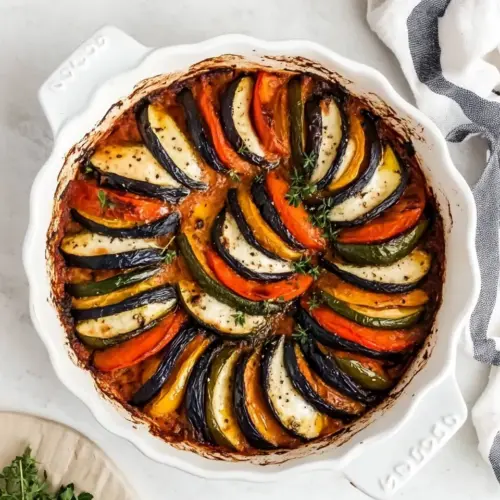
Ratatouille Recipe
Ratatouille Recipe is a colorful, oven roasted vegetable classic that combines tender eggplant, zucchini, and Roma tomatoes in a savory crushed tomatoes base. Creamy roasted textures meet herby notes and light caramelization for an easy weeknight dinner or special lunch, making it a perfect make ahead dish that tastes even better the next day.
Equipment
- Skillet
- Baking Dish
- Oven
Ingredients
- 2 tablespoons olive oil Enhances flavor and aids in sautéing; used to soften onions and meld aromatics. Adds a subtle fruity richness and helps carry fat-soluble flavors throughout the dish.
- 1/4 cup onion finely chopped Provides a sweet, savory base when finely chopped and cooked until translucent. Releases moisture and natural sugars to balance the acidity of tomatoes and vegetables.
- 2 garlic cloves minced Imparts pungent, aromatic heat when minced and briefly cooked to bloom oils. Strengthens savory depth and complements the sweetness of onions and tomatoes.
- 1 cup crushed tomatoes Contributes a bright, tangy tomato base that forms the sauce layer; crushed texture helps bind the vegetables. Balances the roasted vegetable flavors and provides moisture during baking.
- 1 teaspoon dried basil Adds warm, slightly sweet herbal notes and Mediterranean character; sprinkled into the sauce for depth. Works with other dried herbs to create a classic Provençal profile.
- 1/4 teaspoon dried parsley Contributes mild, slightly grassy herbaceousness to the sauce; used sparingly for subtle background flavor. Helps round out the herbal blend without overpowering delicate vegetables.
- 1 medium eggplant sliced into 1/8-inch thick rounds Provides a hearty, meaty texture when sliced thin and layered; absorbs flavors from the sauce and oil. Roasts to tender, silky flesh and adds a slight earthiness to the dish.
- 2 medium zucchini sliced into 1/8-inch thick rounds Offers tender, mildly sweet flesh when thinly sliced and layered among other vegetables. Cooks to a soft texture that complements eggplant and tomato while adding fresh green notes.
- 3 medium Roma tomatoes sliced into 1/8-inch thick rounds Yields juicy, slightly acidic slices that release liquid and meld with the sauce; adds fresh tomato flavor. Softens in the oven to contribute bright, bright tang and moisture to the casserole.
- Salt to taste Balances and enhances all flavors by adjusting seasoning to preference; helps bring out natural sweetness and suppress bitterness. Used at the end or during cooking to achieve desired taste.
- Black pepper to taste Provides sharp, warming spice when freshly ground; used to taste to highlight savory elements. Complements salt and herbs to create a well-rounded final seasoning.
Instructions
- Preheat the oven to 375°F. In a skillet, heat olive oil over medium heat. Sauté onion and garlic until softened, about 3 minutes.: Warm air envelops the kitchen as the oven comes to temperature, and you should notice a faint hum from the heating element when it is ready. Getting the oven steady at 375°F ensures the vegetables roast evenly, allowing edges to caramelize without drying out the centers. I always let the oven fully stabilize before sliding the dish in, because temperature swings can produce uneven doneness. A common mistake is placing the dish in too early, which can lead to undercooked centers, so wait until the heat is consistent.
- Stir in crushed tomatoes, basil, and parsley. Simmer the sauce for 10 minutes, allowing it to thicken slightly. Season with salt and pepper to taste.: The oil should shimmer slightly and spread easily across the pan, signaling it is hot enough. This step prepares a gentle medium for the aromatics to soften without crisping. When the oil begins to move fluidly, add the onion so it can sweat. Avoid overheating the oil, because if it smokes it will impart a bitter taste to the sauce; moderate heat gives the best result.
- Spread the tomato sauce evenly in the bottom of a baking dish. Arrange the sliced eggplant, zucchini, and Roma tomatoes in alternating layers over the sauce.: You will hear faint sizzling and smell a sweet, savory aroma as the onion turns translucent and the garlic becomes fragrant. These sensory cues indicate the aromatics have released their sugars and are ready to support the sauce. Stir frequently to prevent the garlic from sticking, since burnt bits create bitterness. The danger here is rushing the process at too high heat, which can brown the garlic too quickly.
- Drizzle the vegetables with olive oil and season with additional salt and pepper. Cover with foil and bake for 30 minutes.: As the crushed tomatoes hit the warm pan, steam will rise and the scent will shift toward lush tomato and herbs. Simmering these allows the dried basil and parsley to rehydrate and infuse their flavors into the sauce. I give it a gentle stir so the aromatics disperse evenly. A common oversight is not simmering long enough, leaving the sauce tasting flat, so let it develop for a few minutes.
- Remove the foil and continue to bake for another 40 minutes, or until the vegetables are tender and the top is slightly caramelized.: During this time, the sauce will reduce, concentrating sweetness and thickening to a spoonable consistency. You will notice bubbles slow and the surface takes on a glossy sheen, clues that the water content is decreasing. This thickened base prevents the layered vegetables from sitting in watery juice. Avoid boiling vigorously, because that can break down delicate flavors and create a fragmented texture.
- Season with salt and pepper to taste: Sprinkle small pinches of salt and grind fresh black pepper , tasting as you go, to achieve balance. The sauce should taste bright and seasoned but not overly salty, because the roasted vegetables will also concentrate flavors. I always err on the side of under-salting at this stage, since final adjustments after baking are easier. Over-salting now can make the finished dish unpalatable.
- Spread the tomato sauce evenly in the bottom of a baking dish: Use the back of a spoon to distribute the sauce into a thin, uniform layer across the dish so every slice sits on a flavorful bed. The even spread prevents pooling and ensures consistent moisture under each vegetable. I check for any dry pockets and smooth them out before arranging. Neglecting this can lead to uneven seasoning and dry spots in the final bake.
- Arrange the sliced eggplant, zucchini, and Roma tomatoes in alternating layers over the sauce: As you place each thin slice, you will see the dish take on a rhythmic, colorful pattern and a satisfying visual order. Even spacing helps the heat circulate and promotes uniform cooking, while overlapping slightly keeps the assembly cohesive. I prefer to alternate slices so each forkful includes several vegetables. An easy mistake is overcrowding the dish, which can steam rather than roast the slices, so leave a little breathing room.
- Drizzle the vegetables with olive oil and season with additional salt and pepper: A light drizzle will give the top a glossy sheen and encourage browning at the edges. The aroma of warmed olive oil combined with roasted vegetables is unmistakable, and the extra seasoning layers flavors that the sauce started. I recommend using just enough oil to coat surfaces lightly, because excess can lead to sogginess. Over-oiling is a common error that reduces the caramelization you want.
- Cover with foil and bake for 30 minutes: Covered baking traps steam, allowing the vegetables to soften gently and absorb the sauce. You will hear a low, steady hiss as moisture circulates beneath the foil, and when you lift it after 30 minutes the vegetables should feel tender when nudged with a fork. This stage prevents drying while ensuring the centers cook. A mistake here is leaving the dish uncovered too early, which can brown the top before the inside is fully tender.
- Remove the foil and continue to bake for another 40 minutes: As the foil comes off, the kitchen fills with roasted, caramelized scents and you will see the top begin to take on golden brown edges. This longer uncovered roast drives off excess moisture and encourages the surfaces to concentrate their flavors and develop slight char for complexity. Listen for gentle bubbling at the edges as a signal of readiness. Avoid impatience, because insufficient uncovered time will leave the top pale and the textures less developed.
- Or until the vegetables are tender and the top is slightly caramelized: Test by sliding a fork through a few layers; you should feel soft resistance and notice caramelized spots on the exposed edges. The contrast between tender interiors and slightly brown tops gives the dish its character. If some pieces finish early, cover them lightly to prevent overbrowning. Overcooking at this final stage can turn textures mushy, so remove the dish when tenderness is reached.
Notes
- Layer differently: Try arranging the slices in concentric circles or straight rows depending on your baking dish, this changes presentation without altering cooking time significantly.
- Reduce oil: Lightly brush instead of drizzling to cut fat while still promoting browning, which helps if you prefer a lighter dish.
- Make it ahead: Assemble and refrigerate before baking, then bring to room temperature and finish in the oven for convenience on busy days.
- Double the sauce: Prepare extra crushed tomatoes base and reserve some to spoon over leftovers, which keeps each serving moist and flavorful.
- Adjust herb intensity: Increase or decrease the dried basil and parsley to suit your taste, since herbs can dominate if overused.