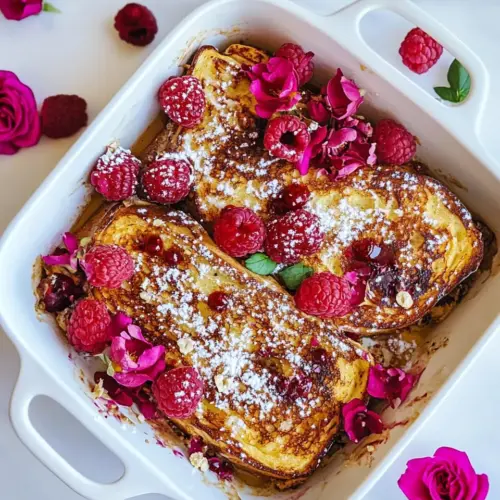
Raspberry Rose Baked French Toast
Raspberry Rose Baked French Toast is a creamy, fragrant brunch bake that pairs custardy challah with tart raspberries and a crunchy almond coconut topping. This easy to assemble dish offers floral notes from rose water and sweet depth from honey, perfect for leisurely spring mornings and casual entertaining. Try it for a memorable weekend brunch that still feels effortless to make.
Equipment
- 9 x 13 inch baking dish
- Large Bowl
- Medium Bowl
- Whisk
Ingredients
- 5 whole eggs Whisk together to create a rich custard base that binds and enriches the bake, providing structure and a tender crumb when baked.
- 3 egg yolks Incorporate to deepen richness and creaminess in the custard, intensifying flavor and giving the finished dish a silkier texture.
- 2 1/2 cups coconut milk I like using canned coconut milk, or whole milk Pour as the primary liquid to mellow sweetness and create a creamy custard; contributes fat for a silky mouthfeel and helps hydrate the bread.
- 1/4 cup honey Sweeten the custard naturally while adding subtle floral and complex notes; helps balance tart berries and enhances browning on the top.
- 1 tablespoon vanilla extract Add for warm aromatic sweetness that lifts the custard flavor; blends with vanilla notes from other elements and complements fruit.
- 1 teaspoon rose water Infuse a delicate floral aroma that complements raspberries and elevates the dessert’s complexity without overpowering other flavors.
- 1/2 teaspoon cinnamon Season lightly to add warm, earthy spice that complements the floral and fruity elements, enhancing overall depth and aroma.
- pinch of fresh nutmeg about 1/4 Grate for a hint of warm, nutty spice that adds complexity; use sparingly to avoid overwhelming the floral and fruity flavors.
- 1/2 teaspoons salt Enhance overall flavor balance and bring out other ingredients by seasoning the custard; essential for rounding savory-sweet profiles.
- 1 inch loaf challah bread cut into 3/4- thick slices Slice and soak to absorb the custard, providing a tender, bread-forward base with a slightly chewy interior and golden crust when baked.
- 2 pints fresh or frozen raspberries plus fresh raspberries for topping Scatter throughout for bursts of bright, tart flavor and moisture; fresh or frozen berries add color, acidity, and textural contrast.
- maple syrup and powdered sugar for serving Drizzle or dust alongside serving to add sweet finishing notes and visual appeal; syrup and powdered sugar enhance each bite’s sweetness.
- 1/2 cups slivered almonds Toast for a crunchy, nutty topping that introduces textural contrast and a toasty almond flavor that pairs well with raspberries.
- 1/4 cup unsweetened flaked coconut Sprinkle to contribute tropical, chewy texture and subtle natural sweetness; pairs with almonds for a layered crunchy topping.
- 2 tablespoons butter cold Dot across the topping to create small pockets of butter that melt and help toast the almonds and coconut while adding richness.
- 1 tablespoons brown sugar Brown to caramelize and provide a sweet, slightly crunchy finish for the topping, enhancing the overall toast and adding depth.
Instructions
- Grease a 9 x 13 inch baking dish (I love any of the Fiesta baking dishes!).: The warm scent of butter or oil as you grease the pan primes the bake by preventing sticking and encouraging even browning along the edges. I use a light coating that glints on the surface of the baking dish, which helps the bottom slices crisp without tearing when served. Why this matters, the grease creates a tiny barrier so the custard does not fuse to the glass or metal, making it easier to lift out perfect squares. A common mistake is using too much, which can pool and make the base greasy; use a thin, even layer and tap out any excess.
- In a large bowl, whisk together the eggs, egg yolks, coconut milk (or milk), honey, vanilla, rose water, cinnamon, nutmeg and salt.: As you whisk, the mixture should smooth into a glossy pale custard, the aroma of vanilla and cinnamon rising gently. The whisking incorporates air and fully blends the honey , preventing sticky pockets, while the yolks add velvet richness that you can almost see in the sheen. This step determines the texture of the soak so getting it homogenous is essential; if it looks streaky, keep whisking until uniformly colored. Watch for overwhisking if you are hand mixing, which can create too many bubbles and a less dense set, so whisk just until smooth.
- Submerge each piece of challah bread in the egg mixture, allowing the bread to sit at least a minute and soak up the eggs. Arrange the dipped slices of challah in the prepared baking dish. Pour the remaining egg mixture over the bread slices in the baking dish. Add half the raspberries in between the slices and on top.: When you press the challah into the custard, you should see the liquid pulled into the crumb, the surface darkening slightly as it soaks. The bread should feel heavy but still hold its shape, not falling apart. Laying the slices snugly in the dish helps them support one another during baking, and nesting some raspberries between slices scatters juicy pops through the interior. The remaining custard poured over ensures any air pockets fill, creating a unified set. A common error is letting the bread soak too briefly so the center remains dry, so be patient and allow at least a minute per side for thorough absorption.
- In another medium bowl, combine the slivered almonds, coconut flakes and brown sugar. Add the butter and use your hands to incorporate the butter into the almonds + coconut. Sprinkle the mix over top the bread slices. Sprinkle a handful of raspberries over top.: Rubbing cold butter into the dry mix yields small clumps that toast into crisp clusters, making a satisfying top layer. You should feel the mixture come together, with the brown sugar slightly tacky and the coconut flakes and almonds coated. When sprinkled, the topping should sit visibly on the bread, promising crunch as it browns, and the extra raspberries scattered on top will caramelize at the edges, adding bright bursts against the nutty topping. One pitfall is not distributing the topping evenly, which can leave some slices soft and others overly crisp; spread it uniformly for consistent results.
- Cover and place in the fridge for 1 hour or overnight. When ready to bake, preheat the oven to 375 degrees F. Bake for 45-50 minutes or until the French toast is golden and crisp. If the tops of the bread begin to brown too quickly loosely cover the French toast with foil.: Chilling lets the custard fully penetrate the challah , so the center sets creamy rather than gummy; you will notice the custard tone deepen as it rests. Preheating brings the oven to an even heat so the outside crisps while the center gently comes to temperature. During baking watch for a nutty scent and golden color on the topping, and listen for a soft crackle as the sugar and butter toast. If edges brown too fast, a loose foil tent reflects heat and prevents burning while allowing the interior to finish. A common mistake is skipping the rest, which can result in uneven texture, so plan the hour or overnight soak when possible.
Notes
- Adjust the floral note: If you prefer a gentler rose presence, halve the rose water and rely more on vanilla for aroma, that way the custard reads warm and familiar while still hinting at floral.
- Change the topping crunch: Swap some of the slivered almonds for chopped pistachios for a color pop and buttery flavor, but keep the overall measure the same so the topping still crisps uniformly.
- Boost the tartness: If your raspberries are very sweet, squeeze a little lemon over them before baking to lift brightness without altering the custard.
- Make it nut free: If nuts are a concern, double the coconut flakes for the topping to maintain texture, ensuring the coconut is unsweetened to avoid overwhelming sugar.
- Overnight prep: Assemble and refrigerate the night before for stress free mornings, then bake directly from chilled, adding a few extra minutes to the cook time if your oven is slow.