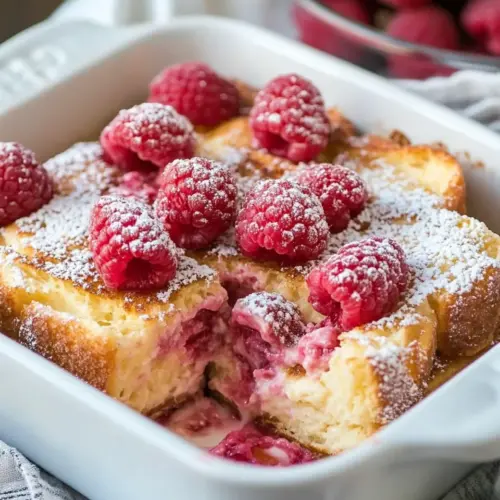
Raspberry Mascarpone French Toast Casserole
Raspberry Mascarpone French Toast Casserole is a creamy, berry studded brunch favorite that combines pillowy challah, a rich custard, and pockets of tangy mascarpone. Soft interior, golden top, and bright raspberries make it ideal for a relaxed spring gathering or easy weekend brunch, delivering a bakery quality bake with simple steps and a comforting finish.
Equipment
- 7 x 11 inch baking pan
- Mixing Bowl
- Whisk
- Spatula
Ingredients
- One loaf challah, about 15 ounces, cut into 1 1/2 inch cubes, then spread out on a baking sheet to and let dry out Torn into 1 1/2 inch cubes and dried out to provide a sturdy, absorbent base that soaks up custard without collapsing; challah’s rich, eggy crumb adds a tender, slightly sweet texture to the casserole. Allowing the bread to stale slightly concentrates flavor and prevents a soggy bake while creating crisp edges when baked.
- 6 eggs Beaten thoroughly to create the custard’s structure and richness, eggs bind the milk and cream together and help set the casserole as it bakes. Their proteins coagulate during cooking to produce a luxurious, custardy interior with a delicate firmness.
- 1 1/2 cups heavy cream Combined with milk to create a silky custard, heavy cream contributes fat and creaminess that yields a rich, decadent texture and helps produce a golden, tender bake. The higher fat content also enhances mouthfeel and carries flavor from the sugar and vanilla.
- 1 cup milk Mixed with cream to thin the custard slightly and balance richness, milk lightens the mixture so the casserole isn’t overly heavy while still contributing moisture and mild dairy flavor. Whole milk or reduced-fat options will subtly alter creaminess and calorie content.
- 1 1/2 teaspoons vanilla Added for floral, sweet aromatic flavor that brightens the custard and complements the raspberries; vanilla enhances overall perception of sweetness without adding sugar. Use pure vanilla extract for best depth and avoid artificial imitations for a cleaner, fuller profile.
- 1/3 cup sugar Dissolved into the custard to provide sweetness and help caramelize the surface, sugar balances the tartness of raspberries and deepens the casserole’s flavor as it bakes. Adjusting the amount slightly can customize sweetness to personal taste while still promoting browning.
- 6 ounces fresh raspberries (I always toss in a few more) Scattered through the custard to contribute bright, tart bursts of flavor and natural color that contrast the rich mascarpone-infused bread; fresh raspberries add a lively, fruity note and light textural variation. Gently folding them in preserves their shape so they don’t fully disintegrate during baking.
Instructions
- Spray 7 x 11-inch baking pan with cooking spray. Place half the dried bread cubes in the bottom of the pan.: As you press the cubes into the pan you should notice a dry, slightly crisp edge on each piece, a sign that they were dried long enough to absorb custard without dissolving. The initial layer forms the base and will brown slightly against the pan surface, creating contrast with the creamy center. If you skip evenly distributing the cubes, you may end up with uneven soaking, so arrange them in a single layer and tuck them gently into corners. Watch for any overly large chunks that could leave under soaked gaps, and break them so the custard reaches every piece.
- Whisk together the eggs, cream, milk, and sugar. Set aside.: As you whisk, the mixture should become smooth and pale, with tiny ribbons of cream folding into the eggs, and a faint sweet scent rising. The sugar dissolves while you whisk, and the custard should appear glossy, not grainy. This step matters because a well emulsified custard yields even texture when baked, avoiding curdled pockets. If your custard feels lumpy, keep whisking or strain it through a fine mesh. A common error is under mixing, which can leave streaks of egg that cook unevenly.
- Make mascarpone cream by whipping together the mascarpone, sugar, and lemon juice.: The mascarpone should become soft and pillowy, with a subtle tang from the lemon juice that brightens its richness. Whipping adds air and makes spoonable dollops that melt into the warm custard pockets as the casserole bakes. Aim for a spreadable consistency; if it is too loose the cheese may run rather than holding little creamy pockets. Over whipping can change the texture, so stop once smooth and slightly thick. Taste to ensure the lemon is balanced, you want a lift not sourness.
- Dollop spoonfuls of mascarpone cream over the bread. Sprinkle raspberries over the cheese. Cover with remaining bread cubes.: The contrast of white mascarpone against the straw colored cubes looks inviting, and the scattered raspberries provide visual pops of red. As you layer, press slightly so the cream nestles among cubes, which will give those portions a richer, cream filled bite once baked. If you pile raspberries unevenly you may end up with intensely tart pockets, so distribute them in moderation. Avoid crushing the berries while layering, handle them gently to keep their shape.
- Pour custard liquid over the bread, then use a spatula to press the bread down into the mixture. Cover with plastic wrap and refrigerate for 8 hours or overnight to allow the bread to absorb the custard.: Pour slowly and listen for the soft splashes as liquid finds the nooks between cubes. Pressing down helps the custard reach interior pieces so the texture is consistent throughout. Refrigeration is critical here, because chilling lets the custard thicken into the bread instead of immediately seeping out, which improves knit and prevents weeping while baking. A common mistake is baking too soon, which results in dry centers or areas that did not fully set. If you are short on time, allow at least a few hours, but overnight is best for depth of flavor and even soak.
- Remove from the refrigerator 30 minutes before need to bake it. Preheat oven to 350 degrees.: Letting the pan sit at room temperature for half an hour eases the shock of heat and promotes even cooking, while preheating the oven ensures a reliable bake from the moment you put it in. You should feel the chilled pan warm slightly at the edges when it is ready, and the oven should reach temperature so the exterior begins to brown without overcooking the center. If you bake straight from cold, the outer edges can overcook by the time the middle sets, so give it that gentle tempering period.
- Remove plastic wrap from the casserole dish. Cover with foil and bake for 30 minutes. Remove foil and bake for 30 minutes or longer or until the custard is set.: During the covered bake you will notice steam collecting under the foil, and the aroma of cooked eggs and cream will begin to emerge. Removing the foil allows the top to golden and develop slight caramelization where sugar hits the surface. The custard is done when a knife inserted into the center comes out mostly clean with only a little moist custard clinging, and the interior should feel springy, not liquid. A common pitfall is pulling it too early which yields a runny middle, so err on the side of a few extra minutes if in doubt.
- Let cool for about 10 minutes before serving. Sprinkle with powdered sugar and serve with more berries and maple syrup, if desired.: Cooling allows the custard to firm slightly so slices hold together and the flavors settle. As it rests you will notice a gentle steam and the scent of baked bread and sweet dairy. Dusting with powdered sugar adds a pretty finish, while extra raspberries bring freshness. If you cut too soon, the casserole may crumble, so wait the ten minutes to get neat slices. Resist dousing with syrup immediately if you prefer a balanced bite, add syrup sparingly and let guests customize.
Notes
- Dry the bread properly: Spread the cubed challah out on a baking sheet and let it sit uncovered for several hours or overnight to slightly stale, which helps it absorb custard without turning to mush.
- Whisk until smooth: Take a minute to fully combine the eggs, heavy cream, milk, and sugar; a smooth custard prevents streaks and ensures even setting.
- Balance the mascarpone: Whip the mascarpone with a touch of sugar and lemon juice for lighter pockets of cream that melt into the casserole as it bakes.
- Distribute berries evenly: Scatter the raspberries between layers rather than piling them on top, so each slice gets bursts of tartness.
- Chill overnight for best texture: Letting the assembled dish sit in the fridge for at least 8 hours allows the custard to fully hydrate the bread and produces a creamier interior.