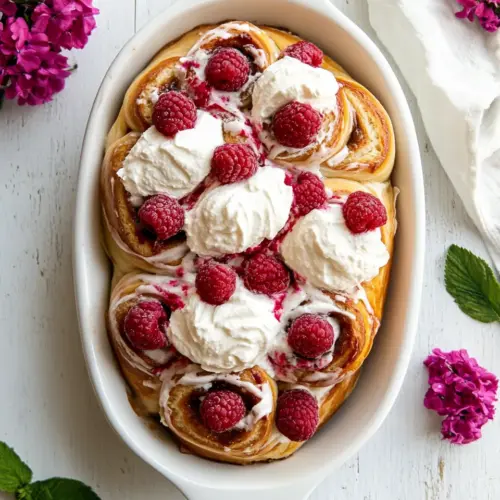
Raspberry Lemon Brioche Rolls with Whipped Ricotta Cream
Raspberry Lemon Brioche Rolls with Whipped Ricotta Cream are pillowy, buttery rolls swirled with tart raspberries and bright lemon, finished with a silky whipped ricotta topping. The enriched brioche dough yields a tender crumb and golden top, perfect for an easy weekend brunch or special occasion. Make them overnight for convenience, they are worth the bake.
Equipment
- Stand mixer
- Dough Hook
- 9x13-inch Baking Dish
- Food Processor
Ingredients
- 3 1/2 – 4 cups all-purpose flour plus more for dusting Provide structure and lift to the dough by contributing gluten and bulk; sift or measure accurately for consistent texture and dust work surfaces to prevent sticking while shaping.
- 1/4 teaspoon cinnamon Add a warm, sweet-spicy nuance that complements citrus and berries; use sparingly to avoid overpowering the delicate brioche flavors and enhance aroma.
- 1/4 teaspoon cardamom Impart floral, slightly citrusy warmth to brighten the dough; grind fresh for best flavor and balance against the cinnamon and lemon zest.
- 1/2 teaspoon kosher salt Enhance overall flavor balance and control yeast activity; dissolve evenly into dry ingredients to ensure proper seasoning throughout the bread.
- 1 tablespoon instant yeast Leaven the dough rapidly for an enriched brioche rise; proof in warm milk for reliable activation and follow package timing for optimal dough development.
- 3/4 cup warm whole milk Provide moisture and warmth to activate yeast while enriching dough; maintain a lukewarm temperature to avoid killing yeast or firming butter too quickly.
- 2 tablespoons honey Contribute natural sweetness and tender crumb while adding a subtle floral note; stir into warm milk for even distribution and gentle flavoring.
- 3 large eggs, at room temperature Enrich the dough with fat and structure for a tender, rich crumb; bring to room temperature so eggs incorporate smoothly and promote even emulsification.
- 1/2 cup (1 stick) salted butter, melted Introduce fat for tenderness and silkiness by melting into the dough; cool slightly before mixing to prevent cooking eggs and to ensure proper dough texture.
- 2 -3 tablespoons lemon zest Deliver concentrated citrus oil for bright aroma and flavor; grate only the yellow peel, avoiding bitter white pith for the freshest lemon notes.
- 3/4 cup granulated sugar Sweeten the pastry and feed yeast slightly while contributing to caramelization during baking; dissolve into wet ingredients for consistent sweetness.
- 6 tablespoons salted butter, at room temperature, plus more for greasing Provide soft, spreadable fat for laminating and greasing; soften to room temperature for easy spreading between dough layers to create tender, buttery rolls.
- 4 cups fresh or frozen raspberries Add juicy tartness and vibrant color as a filling or topping; use fresh for firmness or frozen for convenience, and avoid overmixing to preserve berry shape.
- 8 ounces whole milk ricotta cheese Create a creamy, slightly tangy filling base when whipped; drain excess liquid from ricotta if needed to achieve a smooth, spreadable consistency.
- 1/2 -1 cup powdered sugar Sweeten and thicken the whipped ricotta to desired consistency; adjust amount to taste to create a balanced sweetness that complements raspberries and lemon.
- 2 teaspoons vanilla extract Introduce warm vanilla aroma and depth to the whipped cream; stir in last to preserve delicate floral notes and round out the dairy sweetness.
Instructions
- To make the dough. In the bowl of a stand mixer, combine 3 1/2 cups flour, cardamom, cinnamon, salt, and yeast. Add the milk, honey, eggs, butter, and 1 tablespoon lemon zest. Using the dough hook, mix until the flour is completely incorporated, about 4-5 minutes. If the dough seems sticky, add the remaining 1/2 cup of flour. It's better to have a stickier dough rather than a dry dough, so add flour 1 tablespoon at a time. Cover the bowl and let sit at room temperature for 1 hour or until the dough has doubled in size. To make the filling. In a small bowl, combine the sugar and remaining 1-2 tablespoons lemon zest. Line a 9×13 inch baking dish with parchment. Lightly dust your work surface with flour. Turn out the dough, punch it down, and roll it into a rectangle about 10 x 16 inches. Spread 6 tablespoons softened butter evenly over the dough. Sprinkle the 1/2 cup of the lemon sugar evenly over the butter and lightly push into the butter. Sprinkle over 2 1/2 cups raspberries. Starting with the long edge closest to you, carefully roll the dough into a log, keeping it fairly tight as you go. When you reach the edge, pinch along the edge to seal. Using a sharp knife, cut into 12-15 rolls. Place the rolls in the prepared baking dish. Cover and let rise 20-30 minutes or transfer to the fridge to rise overnight (see notes). Preheat the oven to 375 degrees F. Bake the rolls for 20 to 25 minutes, or until golden brown. Meanwhile, make the cream. Whip the ricotta in a food processor until smooth and creamy. Add the powdered sugar and vanilla, pulse to combine. The cream can be kept in the fridge for up to 3 days. Toss the remaining 1/2 cup raspberries with the remaining 1/4 cup lemon sugar. Spread the cream over the warm rolls. Sprinkle with berries. Serve and enjoy!: The first thing you should notice is the way the dry spices and flour smell together, a faint warm citrus and spice scent that primes the dough. When you mix them, aim for an even distribution so each bite has balanced flavor. If you are using a scale, measure carefully because too much flour can dry the dough. A common mistake is adding all the flour at once then correcting, which can lead to a heavy crumb. Instead, start with the stated amount and be prepared to adjust. Properly combined dry ingredients set the stage for an even rise, so take a moment to whisk or stir them together before adding wet ingredients.
- Add the milk, honey, eggs, butter, and 1 tablespoon lemon zest: When you add the warm milk , it should feel pleasantly warm rather than hot, which preserves yeast viability and creates a gentle steam during baking. The mixture will smell sweet with hints of lemon from the zest right away. As the eggs and melted butter hydrate the dry mix, the dough transforms from crumbly to cohesive. Avoid adding very hot liquid to protect the eggs and yeast. If the liquid is too cool, the dough may take longer to rise, so aim for lukewarm temperature for best results.
- Using the dough hook, mix until the flour is completely incorporated, about 4 to 5 minutes: As you knead with the dough hook, listen for a change in the mixer sound, a smoother, lower hum that signals gluten development. The dough should pull away from the bowl slightly and become elastic. You may see a glossy surface form; that gloss suggests adequate kneading. Overkneading can make the dough tight and resistant, while underkneading leaves it slack and flat. To test, perform a gentle windowpane check by stretching a small piece; it should thin without tearing easily.
- If the dough seems sticky, add the remaining 1/2 cup of flour: Sticky dough often smells faintly sweet and feels tacky against your fingers, which is okay for enriched doughs. Add flour a tablespoon at a time until manageable. Resist the urge to add large amounts at once, because too much flour will dry the dough and produce dense rolls. A sticky but tacky dough will yield a lighter, more tender crumb, so aim for slightly tacky rather than dry.
- Cover the bowl and let sit at room temperature for 1 hour or until the dough has doubled in size: During this rest you will observe the dough grow and become puffy, often with glossy domes and air pockets near the surface. The aroma should deepen, taking on a yeasty, slightly sweet scent. Avoid placing dough in a drafty area which can stall proofing. A common issue is underproofing; if the dough springs back quickly when gently pressed, it needs more time. Proper proofing ensures an open, tender crumb in the finished rolls.
- To make the filling. In a small bowl, combine the sugar and remaining 1 to 2 tablespoons lemon zest: Rubbing the lemon zest into the granulated sugar releases fragrant oils that perfume the filling. The sugar will take on a citrusy aroma and slightly clump as it absorbs the oils. This step is about building layers of fragrance that will caramelize during baking. If you skip zesting directly into the sugar, you lose some brightness in the finished filling, so take the small extra step for more lively flavor.
- Line a 9×13 inch baking dish with parchment: Lining the pan ensures the rolls release cleanly after baking and keeps the bottoms from overbrowning. You'll notice how parchment prevents sticking and makes transfer simple. Greasing lightly under the parchment adds insurance against sticking. A frequent oversight is not trimming parchment to fit, which can allow edges to char, so tuck it neatly inside the pan.
- Lightly dust your work surface with flour: A lightly floured surface prevents sticking without adding excess flour back into the dough. The tactile cue is important here, you should be able to slide the dough as you roll without it grabbing the counter. Using too much flour will dry the outer dough and interfere with the filling adhesion, so use sparingly and keep a bench scraper nearby for adjustments.
- Turn out the dough, punch it down, and roll it into a rectangle about 10 x 16 inches: As you roll, the dough should feel smooth and elastic, stretching slightly under the rolling pin. The surface will faintly spring back when pressed. Rolling to an even thickness ensures uniform baking and filling distribution. If the dough resists, let it rest briefly to relax the gluten; forcing it will cause shrinkage. Even edges and consistent thickness are signs you are ready for the filling step.
- Spread 6 tablespoons softened butter evenly over the dough: The soft butter should be easily spreadable, coating the dough in a thin, even layer. This creates the luscious buttery lamination inside each roll. If the butter is too hard it will tear the dough, if too melted it will pool; aim for room temperature softness. Inconsistent butter distribution can lead to dry patches, so take your time to cover the surface fully.
- Sprinkle the 1/2 cup of the lemon sugar evenly over the butter and lightly push into the butter: Pressing the sugar slightly into the softened butter helps it adhere and prevents it from sliding out during rolling. The sugar will glisten against the butter and smell intensely citrusy. A misstep here is piling sugar in one spot which can create overly sweet pockets; keep it even and gentle.
- Sprinkle over 2 1/2 cups raspberries: Scatter the raspberries so they are distributed rather than clumped, keeping some space at the edges for sealing. The berries may release a little juice on contact, which blends into the sugar and butter for a jammy interior. If berries are too wet, pat them dry to avoid soggy dough. Uniform berry placement ensures each roll has fruity brightness.
- Starting with the long edge closest to you, carefully roll the dough into a log, keeping it fairly tight as you go: Rolling tightly creates defined swirls and helps the rolls hold shape while baking. You will feel resistance as the dough tightens around the filling, and the log should have uniform tension along its length. If you roll too loosely the spirals may unfurl in the pan, and too tight can squeeze out filling. Aim for even, steady pressure for consistent spirals.
- When you reach the edge, pinch along the edge to seal: Pinching seals the seam to keep the log intact. A good seal prevents the sugar and berries from leaking and ensures the rolls rise upwards rather than flattening. Test the seam by pressing gently; if it reopens, re-seal. Failure to seal properly can lead to messy baking and uneven shapes.
- Using a sharp knife, cut into 12 to 15 rolls: A sharp knife or unfluted blade gives clean cuts without squashing the roll. The exposed spirals should show layers and filling. If your knife drags, chill the log briefly to firm it up. Uneven slices will bake unevenly, so try to keep them uniform in thickness for consistent results.
- Place the rolls in the prepared baking dish: Arrange the rolls snugly so they can rise and touch each other slightly, which encourages soft sides and pull apart texture. You should see the spirals facing up, ready to puff. If you prefer crisp edges, leave more space between them. Packing too tightly can prevent proper expansion, while too loose will give crustier sides.
- Cover and let rise 20 to 30 minutes or transfer to the fridge to rise overnight (see notes): During this final rise the rolls will puff and the spirals will open slightly. The room temperature rise produces a quicker result, while an overnight fridge rise develops deeper flavor. Avoid overproofing which yields a collapsed center. Look for noticeable puffiness and a soft spring when lightly tapped as signs they are ready for the oven.
- Preheat the oven to 375 degrees F: A properly preheated oven ensures even rise and caramelization. The initial high heat encourages oven spring and browning. Place the rack in the center for balanced baking. Using an oven thermometer helps keep the temperature accurate, since many ovens run hot or cold.
- Bake the rolls for 20 to 25 minutes, or until golden brown: As they bake you will see the tops take on a glowing golden color and smell a rich lemon and butter aroma. The edges may show a deeper caramelization while the centers remain soft. Underbaking yields a doughy center, so check for an internal temperature near 190 degrees F if uncertain. Rotate the pan if your oven has hot spots for even color.
- Meanwhile, make the cream. Whip the ricotta in a food processor until smooth and creamy: Processing ricotta transforms its grainy texture into a silkier, lighter cream. You should hear a steady hum and notice the ricotta becoming glossy. Smoothness matters because it spreads easily and melds with the warm rolls. A common pitfall is underprocessing, leaving small curds; continue until fully smooth for best mouthfeel.
- Add the powdered sugar and vanilla, pulse to combine: The powdered sugar dissolves quickly into the whipped ricotta , sweetening it and giving it structure. Adding vanilla brings warmth to the cream and ties the flavors together. Taste as you go to reach your preferred sweetness, remembering the rolls themselves are sweetened as well. Over-sweetening can mask the bright berry and lemon notes.
- The cream can be kept in the fridge for up to 3 days: Chilled, the cream firms slightly and holds its shape when dolloped. When you bring it to room temperature briefly it becomes easier to spread. Store in an airtight container to prevent flavor transfer. If you find it too firm after refrigeration, let it sit for 10 minutes and stir gently to restore spreadability.
- Toss the remaining 1/2 cup raspberries with the remaining 1/4 cup lemon sugar: This quick toss creates jewel like berries coated in citrus sugar that look fresh atop the warm rolls. The sugar draws out slight juices, creating a glossy finish. If berries are very soft, toss gently to avoid crushing. This step adds vibrant color and a final burst of citrus to each serving.
- Spread the cream over the warm rolls: Dolloping the whipped ricotta onto warm rolls allows it to melt slightly into the spirals, creating creamy pockets. The contrast between warm dough and cool cream is part of the experience; aim for an even layer but leave some peaks for texture. If the rolls are too hot the cream may become runny, so wait just until they are warm to the touch.
- Sprinkle with berries. Serve and enjoy: The final touch of sugared raspberries adds brightness and a pop of color. As you serve, note how the cream and fruit complement the buttery brioche . Avoid storing assembled rolls for long, as the moisture from the fruit can soften the dough. Serve promptly for the best balance of textures and flavors.
Notes
- Use active dry yeast: If you prefer active dry yeast, proof it in the warm milk and honey for 5 to 10 minutes until foamy before adding to the dry ingredients; this guarantees a vigorous rise and is especially helpful in cooler kitchens.
- Overnight fridge rise: For deeper flavor, assemble the rolls and let them rise covered in the refrigerator overnight; in the morning, bring them to room temperature while the oven preheats, then bake slightly longer for an even golden top.
- Make it gluten free: Substitute a 1 to 1 gluten free flour blend like Cup4Cup in place of the all purpose flour, and expect a slightly different crumb and a need for careful handling due to different hydration.
- Adjust sweetness: Tailor the amount of powdered sugar in the whipped ricotta to your taste, starting with less if you prefer the fruit and lemon to shine through more prominently.
- Berry swap: If you want to experiment, try substituting the raspberries with blackberries or a mix of berries for varied texture and sweetness, watching for moisture differences when using softer fruits.