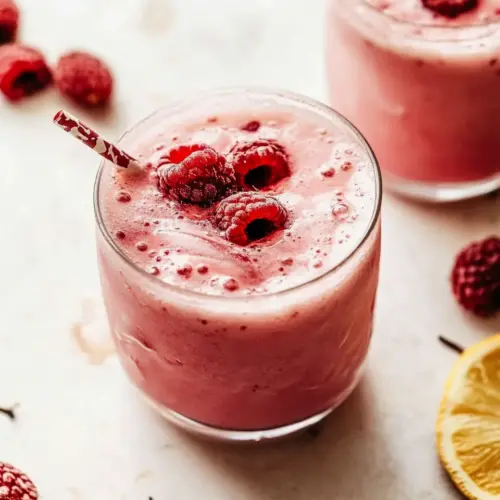
Raspberry Hibiscus Pink Drink
Raspberry Hibiscus Pink Drink is a creamy, floral, easy chilled beverage that blends bright raspberries and floral hibiscus tea with silky plant based milk for a refreshing treat. Perfect for hot days and light gatherings, it’s an easy weeknight or weekend sipper that feels special in every glass, and worth making for a pretty, flavorful refreshment.
Equipment
- Blender
Ingredients
- 1/3 cup fresh raspberries Add vibrantly tart flavor and natural color while muddling slightly to release juices; contributes a fresh fruity base and subtle texture to the drink, balancing sweetness and floral notes for a bright finish.
- 1 teaspoon hibiscus tea, secured in a loose leaf tea bag or other tea steeping apparatus Provide floral, tangy infusion when steeped, contributing a deep hibiscus aroma and ruby hue that complements the raspberries; secure in a tea bag or infuser to prevent loose leaves while extracting concentrated flavor.
- 1 cup boiling water Pour over the hibiscus to extract flavors and create a strong concentrated infusion; boiling water quickly releases pigments and aromatics, acting as the solvent that binds tea and fruit components together.
- sweetener, to taste (agave nectar, maple syrup, honey, stevia etc) Sweeten to personal preference to balance tart and floral notes; use a preferred liquid or granular sweetener and dissolve into the warm infusion to integrate flavor uniformly and adjust overall sweetness level.
- 1 cup plant-based milk of choice (I used homemade cashew) Add creamy body and a subtle nutty or neutral base depending on choice, providing smooth mouthfeel and diluting the concentrate to create a milky pink beverage; plant-based milk also harmonizes with the sweetener and vanilla.
- 1/2 teaspoon vanilla extract Enhance overall aroma and add warm, familiar sweetness that deepens flavor complexity; a small amount lifts and rounds out both fruity and floral elements without overpowering the drink.
- ice, for serving Chill and dilute the prepared mixture while providing a refreshing contrast; ice keeps the beverage cold for serving and subtly controls final concentration as it melts.
Instructions
- Place the raspberries and hibiscus tea bag in a liquid measuring cup with a minimum 2-cup capacity. Pour the boiling water over the raspberries and hibiscus tea and let it steep for 5 minutes.: The immediate scent is a bright berry lift that mixes with floral hibiscus, and you should notice the raspberries’ perfume intensify right away. I use a clear measuring cup so I can watch the color bloom, which helps time the steep perfectly. One common mistake is crowding the cup, which prevents even extraction because the boiling water cannot circulate, so leave a little space.
- Remove the tea bag and pour the tea and raspberries into an upright blender. Add any sweetener you’d like to use, along with the plant-based milk and vanilla. Blend the mixture on high until totally smooth.: As the hot water hits the ingredients you will see the magenta color radiate out, and the steam carries tart, floral aromas that hint at the final flavor. Steeping for the recommended time extracts the pigments and aromatics without pulling too much bitterness from the hibiscus. Oversteeping is a typical error here, producing harsh tannins, so set a timer and taste after the time is up if you prefer a milder infusion.
- Run the pink drink through a fine mesh strainer or nut milk bag to catch all of the raspberry seeds. Place the strained pink drink in the fridge for at least an hour.: When you transfer the mixture, notice how the liquid has become richly colored and fragrant, and the raspberries will appear softened and plump. Using an upright blender ensures an even puree, which helps the drink become silky when combined with the plant milk. Be careful with hot liquids in blenders because trapped steam can cause pressure build up, so remove the center piece of the lid or vent slightly to avoid splatter.
- Before serving, give the pink drink a good stir (separation is natural). Then, pour it over ice. Enjoy!: At this stage the aroma changes as sweetness and creamy notes join the tart base. Add sweetener a little at a time and stir between additions, tasting to reach balance. A misstep is adding too much sweetener up front, which can mask the floral character, so adjust gradually. The plant milk begins to soften acidity immediately, so you can sense how the final sip will feel.
- Blend the mixture on high until totally smooth: Blending breaks down the raspberry flesh and releases fragrant oils, creating a luxuriously velvety texture. You should hear a steady hum and see the liquid turn uniformly pale pink, with no visible chunks. If the blend is uneven, pulse a few more times to ensure smoothness. A common mistake is under blending, leaving bits of fruit that will clog your strainer later and yield an inconsistent mouthfeel.
- Run the pink drink through a fine mesh strainer or nut milk bag to catch all of the raspberry seeds: As you strain, notice the difference in texture, from pulpy to silky, and the liquid will pour through a clear, blush color. I press gently with a spoon or squeeze the nut milk bag to extract as much flavor as possible without forcing bitter components through. One thing to avoid is pressing too aggressively, which can push small seed fragments through the mesh and create a gritty final drink.
- Place the strained pink drink in the fridge for at least an hour: Chilling melds the flavors and lets the temperature drop so the drink is crisp when served, and often the color settles to a softer shade in the cold. During refrigeration you may notice slight separation where the plant milk floats a bit from the infusion, which is normal and harmless. A frequent oversight is serving too soon, which yields a warmer, less refreshing beverage that does not show the same flavor harmony.
- Before serving, give the pink drink a good stir (separation is natural): Stirring reunites the components and brightens the aroma, creating a cohesive sip. I use a long spoon or a straw to whisk gently so the drink regains its silky texture without creating foam. Skipping this quick stir means you might get an uneven pour where the first mouthful is more milky and the last is more tart, so a brief stir ensures consistency.
- Then, pour it over ice: The sound of liquid hitting ice is crisp and refreshing, and visually the drink looks lively as condensation beads on the glass. Pour slowly to keep the ice from over diluting the flavor, and leave room for gentle swirling if you like. A common mistake is using too much ice which chills the drink but dilutes it excessively, muting the raspberry and hibiscus notes.
- Enjoy: The first sip should present a mix of tart, floral, and subtly sweet flavors, with a smooth finish from the plant milk. Pay attention to the balance and temperature; a cold pour accentuates brightness while slight warmth highlights floral details. One last tip is to taste and tweak the next time you make it, perhaps reducing sweetener or shortening steep time to better match your palate.
Notes
- Control steep time, five minutes is a great starting point to extract color and floral notes without harshness, but taste as you go to make it your own.
- Adjust sweetener in increments, add a little, taste, then add more if needed so you do not overpower the delicate hibiscus character.
- Choose the right plant milk, cashew provides silkiness, while others may give a thinner or thicker mouthfeel, so pick based on the texture you prefer.
- Strain well, using a nut milk bag or fine mesh sieve yields a smooth beverage free of seed grit that feels more luxurious.
- Chill properly, refrigerate for at least an hour so flavors settle and the drink is pleasantly cold when served over ice.