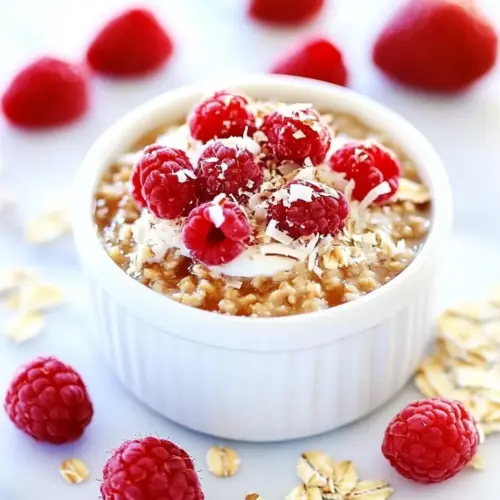
Raspberry Coconut Creme Brulee Oatmeal
Raspberry Coconut Creme Brulee Oatmeal is a creamy, slightly crispy breakfast that pairs nutty steel cut oats with coconut milk and bright fresh raspberries. This easy, elegant bowl feels indulgent yet quick enough for busy mornings and perfect for a special weekend brunch. Make it for a comforting, memorable start to your day.
Equipment
- Medium Saucepan
- Ramekins
- Baking Sheet
- Broiler or kitchen torch
Ingredients
- 2 cups water Provide the cooking medium needed to hydrate and soften the steel cut oats; brings necessary liquid to achieve creamy texture and prevents scorching during simmering. Help dissolve dissolved sugars and distribute heat evenly so porridge cooks uniformly in about 10 to 15 minutes.
- 2/3 cup Quaker Quick 3-Minute Steel Cut Oats Contribute hearty, chewy oat texture and nutty flavor while delivering whole-grain fiber that thickens the porridge as it absorbs liquid. Stand as the primary source of substance and structure for the dish, releasing starches that create a creamy base when stirred.
- Pinch of salt Add a small amount of seasoning to enhance overall flavor balance and amplify the natural nuttiness of the oats and sweetness of the raspberries. Support texture by slightly modifying water boiling point, ensuring a more controlled simmer during cooking.
- 1/3 cup lite coconut milk Lend a subtle coconut creaminess and mild sweetness that enriches mouthfeel without overpowering the oats; helps create a dessert-like, custard-inspired profile. Combine with the cooked oats to produce a silkier finish and integrate coconut flavor alongside raspberries.
- 1 cup fresh raspberries Provide fresh fruity brightness, natural sweetness, and gentle tartness that cuts through the richness of the coconut; add vibrant color and bursts of juiciness in each bite. Offer textural contrast and potential for slight mashing into the oatmeal to flavor the base while preserving whole berries for garnish.
- 4 teaspoons coconut sugar or turbinado sugar Supply caramel-like sweetness with a light molasses note that complements the coconut and raspberries; allow for a subtle brûlée-like finish when sprinkled on top and torched or broiled briefly. Offer a less refined sugar option that contributes crunch when caramelized and deepens flavor complexity.
- Toasted coconut for garnish, optional Deliver optional crunchy texture and pronounced toasted coconut aroma that enhance the tropical aspect of the dish; add visual appeal and contrasting crispness against creamy oatmeal. Allow for sprinkling just before serving to preserve crispness and intensify coconut flavor.
Instructions
- In a medium sauce pan, bring water and salt to a boil. Stir in the oats and reduce to medium heat. Simmer uncovered, stirring occasionally, until oats are of desired texture, about 5 minutes. Remove from heat and stir in the coconut milk. Gently fold in the 1/2 cup of the raspberries.: The moment the water reaches a rolling boil you will notice energetic bubbles and a slight steam rising, which signals the pot is hot enough to start cooking evenly. This initial high heat helps the oats hydrate quickly and prevents them from becoming gummy. A common misstep is using too small a pan which causes foaming and spillage, so choose a pan with extra room. I like listening for the consistent bubbling and watching for steam to know it is ready, then immediately reduce the heat for the next phase.
- Divide oats into 4 oven safe ramekins or bowls. Press additional raspberries on top. Sprinkle 1 teaspoon of sugar over each ramekin, making sure the oats and raspberries are well coated. Place the ramekins on a baking sheet and put under a hot broiler for 2-3 minutes, or until the sugar melts and forms a crust. Remove from the oven and garnish with toasted coconut, if desired. Serve warm.: You will hear a soft, steady simmer when the heat is lowered, and the sound of gentle bubbling shifts from loud to tender. This controlled simmer allows the grains to soften gradually while keeping separate texture. Stirring right after adding them prevents clumping on the bottom. Avoid turning the heat too high as that will make the outside of the grains break down before the center cooks through, resulting in an uneven chew.
- Simmer uncovered, stirring occasionally, until oats are of desired texture, about 5 minutes: During the simmer you will notice the liquid becoming silkier and the mixture thickening as the oats absorb water. The aroma will become nutty and warm. Stir occasionally to develop creaminess and to stop sticking, and watch for visual cues: the surface should show small, gentle bubbles and the grains should look plump. If you want a looser porridge allow slightly more liquid, and if you prefer thicker oats let them cook a little longer. A common error is constant stirring, which can overwork the oats and make them gluey, so stir gently and intermittently.
- Remove from heat and stir in the coconut milk: Once off the heat, add the lite coconut milk so it warms through without breaking the delicate texture of the oats. The mixture will go from matte to a glossy sheen as the fat and liquid settle together, and a soft coconut aroma will lift from the bowl. This step brings silkiness and a hint of tropical flavor that complements the raspberries. If you add the milk too early at high heat it can separate or reduce undesirably, so adding it off the heat preserves that smooth finish.
- Gently fold in the 1/2 cup of the raspberries: Folding keeps the berries intact so you still get little pockets of fresh juice rather than a uniform jam. You will notice bright specks of red soften slightly into the creamy oats, and the aroma of the berries will mingle with coconut. Use a rubber spatula and fold with slow motions to avoid bursting them all. Rushing this step tends to over-mash the fruit and turns the bowl uniformly pink, losing the delightful bursts of texture.
- Divide oats into 4 oven safe ramekins or bowls: Spoon the warm mixture into dishes that can tolerate broiler heat, and tap them gently to settle the oats. The surface should be mostly smooth with a few visible berries. Using identical ramekins helps the broiler caramelize evenly. Avoid overfilling because the mixture may bubble slightly under broiling, and use an oven mitt when transferring to the baking sheet to protect your hands from the warmth.
- Press additional raspberries on top: Arranging extra berries on the surface creates visual contrast and ensures fresh fruit in every bite. The berries will warm slightly under the broiler and soften while keeping some structure, providing both texture and a pop of acidity. Press them lightly so they adhere to the oats but do not sink. A mistake here is crowding the top with too many berries which can release excess juice and prevent the sugar from forming a crisp crust.
- Sprinkle 1 teaspoon of sugar over each ramekin, making sure the oats and raspberries are well coated: The sugar layer is key to creating that brulee crackle. Even distribution matters because thicker patches take longer to caramelize and may char. You will hear a subtle crackle as the sugar hits the hot surface and then see it go from grainy to glossy to amber. One pitfall is using fine sugar which melts too quickly and can burn, so choosing a coarser coconut or turbinado sugar helps produce a better crust.
- Place the ramekins on a baking sheet and put under a hot broiler for 2 to 3 minutes, or until the sugar melts and forms a crust: Under the broiler, the air becomes intensely hot and the sugar transforms into caramel, giving off a faint toasted scent. Watch closely through the oven window because the sugar can go from perfect to burnt in seconds. The ideal visual cue is an even, amber colored glossy crust with a few deeper flecks. If you do not have a broiler, using a kitchen torch works well and gives you precise control; avoid leaving them unattended under a broiler.
- Remove from the oven and garnish with toasted coconut, if desired: After removing the ramekins, allow them to rest briefly so the crust sets and the surface cools enough to eat safely. Adding toasted coconut at this stage provides an extra layer of texture and a warm, nutty aroma that echoes the coconut milk. Be careful handling the hot dishes, and let them cool a moment before serving to prevent burns. A common oversight is serving immediately which can cause the sugar to be molten and messy rather than pleasantly crackled.
- Serve warm: Serving warm highlights the contrast between the crisped top and the creamy oats beneath, and the berries will be pleasantly soft. Present each ramekin with a small spoon so diners can break the crust and scoop down into the warm porridge. If you chill the dish it changes the texture and the crust may soften, so serve soon after broiling for best effect. One mistake to avoid is reheating at too high a temperature which can dry the oats and melt the crust.
Notes
- For creamier oats: Increase the coconut milk slightly and stir it in off heat so the porridge stays silky without becoming thin.
- If you prefer thicker texture: Cook the oats a minute or two longer on low, stirring occasionally to reach a denser consistency.
- To reduce sweetness: Use less of the finishing sugar on top and taste before adding more, since the berries contribute natural sugar too.
- To speed things up: Use pre warmed water and a lidded pan for the initial boil to shave off a minute or two in the early stage.
- If you lack a broiler: A kitchen torch will caramelize the sugar precisely, giving you control and the same crunchy finish.