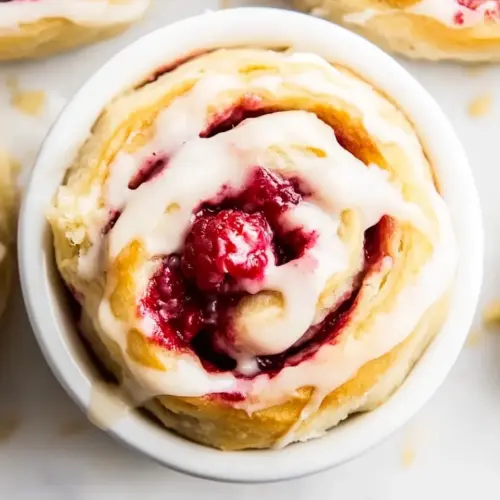
Raspberry Cinnamon Rolls
Raspberry Cinnamon Rolls combine tender, yogurt enriched dough with bright, jam like raspberries and warm cinnamon. This easy to follow, quick bake is perfect for weekend brunch or an easy weekend treat, offering a balance of tart fruit and sweet glaze. Try them for a cozy, crowd pleasing bake that is simple enough to make any time.
Equipment
- Mixing Bowl
- Rolling Pin
- Baking Dish
- Knife
- Measuring Cups
Ingredients
- 1 3/4 cups elf-rising flour see notes Provide structure and bulk to the dough while contributing protein and a slightly nutty flavor; adjust hydration as needed because self-rising flour contains leavening agents and salt. Use gentle mixing to avoid overworking the gluten, ensuring tender rolls with an even rise during baking.
- 1 cup Vanilla Greek yogurt See notes Add creaminess, moisture, and a subtle vanilla tang that enriches the dough; Greek yogurt’s thickness helps create a soft crumb and tender texture. Incorporate at room temperature for even distribution and to aid in activating the leavening in the self-rising flour.
- 1 cup raspberries Offer bright acidity, natural sweetness, and a burst of fruit flavor that complements the cinnamon; raspberries also provide moisture and occasional pops of juice. Fold gently into the filling or press into dough to retain some whole berries while preventing excessive bleeding of color.
- 1/4 cups sugar Provide sweetness to balance tart raspberries and spice; granulated sugar also helps tenderize the filling and encourages caramelization during baking. Distribute evenly in the filling mixture so the sweetness is consistent throughout each roll.
- 1 teaspoon cinnamon Contribute warm, aromatic spiciness that enhances the fruity and sweet elements; cinnamon pairs especially well with raspberries and adds depth to the filling. Measure carefully to avoid overpowering the delicate berry flavors while ensuring a fragrant cinnamon profile.
- 1 serving cooking spray Prevent sticking and promote even browning by lightly coating the baking pan; a nonstick spray simplifies release of the finished rolls. Apply sparingly to avoid excess oil pooling while still ensuring easy removal and clean slices.
- 1/2 cup powdered sugar Add smooth sweetness and a finishing touch to the rolls when mixed into a glaze; powdered sugar dissolves quickly for a silky drizzle or coating. Combine with a small amount of liquid to reach desired consistency and brush or pour over warm rolls for shine and extra sweetness.
Instructions
- Preheat the oven to 350°F (180°C). Line a large baking dish with parchment paper or tin foil and set aside.: The moment you preheat you start the chemistry that produces a golden exterior. You should hear a faint hum from the oven as it reaches temperature and feel the kitchen warm slightly, which primes the environment for even baking. Lining the dish with parchment paper or tin foil helps when the sugary filling tries to stick, so your rolls lift cleanly. Why this matters: even heat at the start gives the rolls a uniform rise and a nicely browned outside. Common mistake: not preheating fully can cause uneven baking, where centers stay doughy while edges brown.
- In a large mixing bowl, combine the flour and yogurt, then mix until fully incorporated. If the dough is too thick, add more yogurt to thin it out. If the dough is too thin, add a little extra flour. Using your hands, form a ball of dough.: As you combine self rising flour and Vanilla Greek yogurt , you will notice the mixture go from powdery to a cohesive mass, with the yogurt smoothing out the flour. Use a spatula first, then your hands, feeling for a dough that holds together without excessive stickiness. The texture should be pliable and slightly tacky, not runny. Why this matters: proper hydration balances structure and tenderness so the rolls are soft but hold their shape. Common mistake: over mixing can make the dough dense, while under mixing leaves pockets of dry flour.
- Lightly flour a kitchen surface. Sprinkle a tablespoon of extra flour on top of the ball of dough, and transfer it to the floured surface. Form the dough into a rectangular shape. Using a rolling pin, roll out the dough to around 12 inches by 6 inches.: Rolling transforms the dough from a rough ball into a malleable sheet; you will feel it stretch and relax under the pin. The surface should be just dusted so the dough slides, not sticks. Visual cue: you want an even rectangle about a half centimeter thick so the spirals are balanced. Why this matters: even thickness ensures uniform baking and neat spirals. Common mistake: applying too much extra flour can dry the dough, leading to a tougher roll.
- In a mixing bowl, combine the frozen raspberries with sugar and cinnamon and mix well. Spray the dough with cooking spray. Cover with the raspberry and sugar mixture. From one end of the dough, roll it slowly until it is completely rolled up. Slice into 6-8 pieces.: When you mix raspberries , sugar , and cinnamon , the sugar will start to macerate the berries, releasing fragrant juices that smell bright and sweet. After you spray the dough lightly with cooking spray , spread the filling evenly so each bite gets a touch of fruit and spice. As you roll, listen for the soft friction sound of dough layers meeting, and feel the log firm up in your hands. Cutting into 6 to 8 pieces reveals swirls that showcase the filling; a sharp knife or dental floss yields clean slices. Why this matters: even filling distribution prevents pockets of overly wet or dry dough, and slow rolling preserves spiral integrity. Common mistake: overfilling can cause the rolls to leak and become soggy in the pan.
- Transfer the sliced dough onto the lined dish. If desired, brush the tops with either butter, milk, oil, or water for a golden brown exterior. Bake for 17-20 minutes, or until golden on the outside.: As the rolls begin baking you will notice a sweet, fruity steam and a caramelizing scent. Brushing the tops encourages even browning and gives a slightly glossy finish; using butter adds richness, while milk or oil can help with coloration. Visual cue: aim for a uniformly golden brown top, not overly dark. The edges may crisp slightly and the centers should feel set. Why this matters: this step locks in texture and creates that irresistible crust contrast to the soft spiral interior. Common mistake: baking too long dries them out, while underbaking leaves centers doughy.
- Remove from the oven and let cool in the dish. While it is cooling, prepare the glaze by mixing the powdered sugar with 1-2 tablespoons of water, milk, or yogurt. For a thicker glaze, add more powdered sugar. For a thinner glaze, add more liquid. Drizzle over the tops of the rolls.: Cooling is essential so the filling settles and the glaze does not immediately run off. The aroma at this stage is a warm blend of cinnamon and berry, and the rolls will steam gently as they rest. Whisking powdered sugar with a spoonful of liquid creates a glossy, silky glaze; choose milk for creaminess or yogurt for tang. Pour the glaze in thin ribbons so it blankets the spirals without pooling excessively. Why this matters: proper cooling and glazing create a balanced finish that enhances texture and presentation. Common mistake: glazing while rolls are too hot can make the glaze overly runny and prevent it from setting properly.
Notes
- Use flavored yogurt: Swap the Vanilla Greek yogurt for sweetened coconut or soy yogurt to make a dairy free version while keeping the moisture and sweetness level similar.
- Gluten free option: Replace the self rising flour with a gluten free self rising blend to accommodate gluten sensitivities; you may need to adjust yogurt slightly to achieve the right dough consistency.
- Thicker glaze: Make the glaze richer by using powdered sugar with a touch of yogurt instead of water, which yields a tangy, creamier finish that clings well to warm rolls.
- Freeze ahead: Freeze unbaked, sliced rolls on a tray, then transfer to a bag; bake from frozen adding a few extra minutes to the bake time for fresh outcomes on demand.
- Use fresh berries carefully: If using fresh raspberries that are very juicy, toss them with a small amount of sugar and drain briefly so the filling does not make the dough soggy.