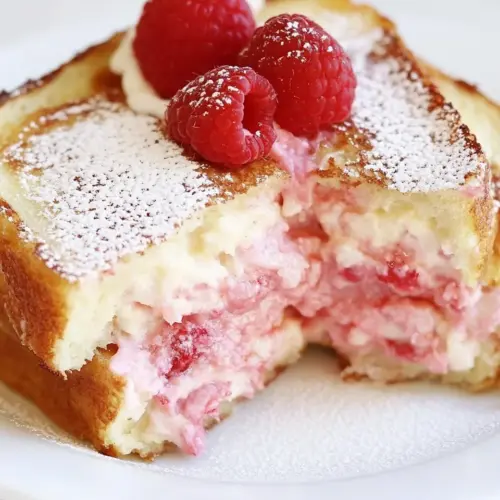
Raspberry Cheesecake Stuffed French Toast
Raspberry Cheesecake Stuffed French Toast is a creamy, crunchy brunch favorite that combines tangy Neufchatel Cheese and bright raspberry jam inside custardy, golden soaked french bread. This easy to scale recipe delivers a crisp exterior from crushed graham crackers or cornflakes and a warm, rich center, perfect for weekend gatherings and special mornings, making it a must try for anyone who loves indulgent yet approachable breakfasts.
Equipment
- Nonstick griddle
- Electric griddle
- Mixing Bowl
- Blender
- Shallow Bowls
- Spatula
Ingredients
- 2/3 cup Neufchatel Cheese or 1/3 less fat Cream Cheese (about 5 oz) Softens and adds a creamy, tangy base to the filling, creating a light cheesecake texture when beaten until smooth; contributes richness without excessive fat when using reduced-fat Neufchatel or lower-fat cream cheese.
- 1/2 cup raspberry jam, seedless if preferred Provides concentrated fruit sweetness and a bright raspberry flavor to the filling, helping balance the tang of the cheese and adding spreadable moisture between bread slices.
- 1/2 cup buttermilk Adds a lightly acidic tang that tenderizes the egg batter and contributes to a tender custard coating with a subtle tang that complements the cheese filling.
- 1/2 cup milk Dilutes the batter for a smoother, more pourable custard and adds dairy richness to the exterior coating so the toast browns evenly and tastes creamy.
- 5 large eggs Binds the custard, builds structure, and contributes richness and lift when whisked with the milks and flavorings to form the French toast soaking mixture.
- 2 tbsp all-purpose flour Thickens the custard slightly and helps the mixture cling to the bread, providing a bit of structure that creates a custardy interior once cooked.
- 1/8 tsp baking powder Acts as a very small leavening aid in the batter to lighten the custard slightly and help the coating puff a little during cooking.
- 3/4 tsp ground cinnamon Imparts warm, aromatic spice to the batter, complementing the sweet raspberry and creamy filling with a classic cinnamon aroma and mild sweetness.
- 1/8 tsp ground nutmeg Adds a subtle warm spice note that enhances the overall aroma and depth of the batter without overpowering the cinnamon or fruit flavors.
- 1 pinch salt Enhances overall flavor balance by amplifying sweetness and mellowing any bitterness, helping the custard and filling taste rounded and well-seasoned.
- 1 tsp vanilla extract Adds floral-sweet aromatic notes that elevate the custard and cheesecake flavors, tying together the dairy, fruit, and spice components.
- 10 g graham cracker sheets crushed, or 3 cups cornflakes, crushed (I've tried and love both) Provides a crunchy topping option when using crushed graham crackers, or a crisp alternative when using crushed cornflakes; adds texture contrast to the soft stuffed interior.
- 1 1/4 " (one and a quarter inch) slices day old french bread Supplies sturdy, slightly stale slices ideal for absorbing the custard without falling apart, allowing the toast to hold the cheesecake and jam filling during cooking.
- Vanilla Cream Syrup, for serving Serves as a sweet sauce accompaniment that complements the stuffed French toast with additional vanilla flavor and pouring consistency for serving.
- sweetened whipped cream, for serving (optional) Provides a light, airy sweetness as an optional finishing touch that adds visual appeal and additional creaminess when dolloped atop the plated toast.
Instructions
- Preheat a nonstick griddle over medium heat or an electric griddle to 325 degrees. In a mixing bowl, using a fork, combine Neufchatel Cheese and raspberry jam, stir until well combined and nearly smooth (it's ok if there's a few small lumps), set aside.: When the griddle reaches an even heat, you will notice a faint shimmer and a subtle scent of warm metal, which signals it is ready. This steady medium heat allows the exterior to brown without burning while the inside warms through. If the surface is too hot, the crust will char before the center becomes warm, so test with a small drop of batter first. An unevenly heated griddle can cause patches of undercooked or overbrowned bread, so take a minute to ensure consistent temperature.
- In a blender combine buttermilk, milk, eggs, flour, baking powder, cinnamon, nutmeg, salt and vanilla. Blend on low speed for 10 seconds. Pour mixture into a shallow bowl, set aside. Pour crushed graham crackers or corn flakes into a separate shallow bowl, set aside.: As you mash the Neufchatel Cheese and fold in the raspberry jam , the aroma shifts to a tart sweet perfume that hints at the filling's bright flavor. The texture should be creamy but not entirely uniform, a few small lumps are fine because they soften when warmed. Overbeating can make the mixture too runny, which will leak during assembly, so stop once the consistency is stable. If you notice the mixture separating or becoming too loose, chill it briefly to firm up before using.
- Make a slit down the center of each slice of bread cutting about 3/4 of the way down (basically you're making a butterfly, the bread should be slit down the middle but still connected). Spread 1 1/2 tbsp of the raspberry mixture on one side of the inside of each slice of bread where slit was made, then very gently press bread together.: Blending these wet and dry elements creates a silky custard that will soak into the french bread without puddling. The smell will be warm and spiced from the cinnamon and nutmeg , and the mixture should look homogenous and slightly frothy at the top. If the batter seems too thick, a splash more milk will help; if too thin it will not cling to the bread properly. Avoid overblending which can introduce too much air, leading to uneven cooking.
- Butter preheated griddle and dip one side of filled bread into milk/egg mixture (giving it a few seconds to soak up mixture and being careful not to immerse the center filled with raspberry mixture) then flip and dip opposite side several seconds. Allow a bit of the excess to drip off then dip and coat both sides in crushed graham crackers. Place coated slice on preheated buttered griddle and cook until golden brown (about 2-3 minutes) then lift french toast with a spatula, butter griddle again and flip french toast. Cook opposite side until golden. Repeat process with remaining slices of bread. Serve cooked french toast immediately along with vanilla cream syrup and optional sweetened whipped cream.: A short, controlled pulse smooths the batter without over aerating it, producing a custard that soaks evenly. You'll notice small bubbles forming on the surface which is normal. Blending longer can create an overly aerated mixture that causes the soaked bread to cook irregularly, so stick to the brief pulse recommended. If you see lumps of flour remain, stir them out gently by hand rather than continuing to blend.
- Pour mixture into a shallow bowl, set aside: Transferring the custard to a shallow vessel makes dipping easy and helps the french bread absorb the mixture quickly and evenly. The shallow bowl allows a quick soak without over immersing the center stuffed seam. If the bowl is too deep, the center may get soggy, so use a dish with a wide, shallow surface. Cover and chill briefly if the kitchen is very warm, to keep the custard at a stable temperature.
- Pour crushed graham crackers or corn flakes into a separate shallow bowl, set aside: The crushed coating should be evenly textured, not overly powdery. As you press the soaked edges into this bowl, you want a crunchy, adhesive layer that will seal and protect the toast as it cooks. If the crumbs are clumping, break them up with your fingers so each piece gives a crisp bite. Avoid using crumbs that are too fine, they will not provide the desired crunch and could form a paste when wet.
- Make a slit down the center of each slice of bread cutting about 3/4 of the way down (basically you're making a butterfly, the bread should be slit down the middle but still connected): This butterfly cut creates a pocket for the filling without separating the slice, which helps maintain structure during dipping and cooking. Use a sharp knife for a clean slit; tearing will create jagged edges that can fall apart. If you cut all the way through, the filling can spill out while dipping, so stop short of the bottom as instructed. A thin, precise cut is safer and easier to work with, especially for thicker slices.
- Spread 1 1/2 tbsp of the raspberry mixture on one side of the inside of each slice of bread where slit was made, then very gently press bread together: Spoon the creamy Neufchatel Cheese and raspberry jam blend carefully so it stays inside the pocket. The tactile feedback of the bread compressing slightly tells you when you have the right amount of filling. Pressing too hard can force the filling out, while too little will leave the center lacking. If filling squeezes out, wipe it away and re press gently; excess can cause burning on the griddle and create uneven cooking.
- Butter preheated griddle and dip one side of filled bread into milk/egg mixture (giving it a few seconds to soak up mixture and being careful not to immerse the center filled with raspberry mixture): The sound of a soft sizzle as the butter hits the hot surface is a reliable cue that the griddle is ready. When you dip the bread, allow just a few seconds per side so the custard penetrates the crumb without soaking the pocket open. Keep the center elevated slightly when dipping to avoid filling leakage. Too long in the custard results in limp, falling apart slices, so be deliberate and swift.
- then flip and dip opposite side several seconds: Alternating sides ensures even absorption and creates a consistent custard layer throughout the slice. The batter should coat without dripping excessively; if it drips too much, let the bread rest upright briefly so excess returns to the bowl. Uneven soaking can lead to undercooked centers or over expanded pockets, so aim for balanced contact time on both sides. If the filling begins to poke out, brief refrigeration helps it set before cooking.
- Allow a bit of the excess to drip off then dip and coat both sides in crushed graham crackers: Letting the excess custard drip prevents soggy coating, and pressing the crumbs onto both sides yields a crackling texture when cooked. You want an even layer of crumbs that adheres without clumping. If the crumbs fall away, press gently to secure them, but avoid smearing the filling. Using too fine a crumb will create a paste instead of a crispy shell, so aim for the recommended texture.
- Place coated slice on preheated buttered griddle and cook until golden brown (about 2-3 minutes) then lift french toast with a spatula, butter griddle again and flip french toast: As the slice hits the griddle you should hear a steady sizzle and watch for the edges to set and the surface to color to a warm golden brown. The aroma of butter and spices will intensify. If you see the coating darkening too quickly, lower the heat slightly. A thin metal spatula helps you lift and flip with minimal disruption; avoid forcing the flip, and instead ensure the underside has formed a stable crust before turning.
- Cook opposite side until golden: The second side will often brown a bit faster because the interior is already warming, so stay attentive. The center should be hot and the filling slightly warmed but not molten. If the outside browns before the inside warms, reduce the heat and cover briefly to allow gentle heat penetration. Overcooking will dry the bread out, while undercooking leaves a cold center, so aim for an inviting balance of warm filling and crisp exterior.
- Repeat process with remaining slices of bread: Maintain a steady rhythm of dipping, coating and cooking so each slice receives the same attention. Adjust the griddle heat between batches if necessary, and wipe any burnt crumb residue to avoid unpleasant flavors transferring to the next batch. A tired or too hot griddle is the most common reason for inconsistent results, so recalibrate as you go.
- Serve cooked french toast immediately along with vanilla cream syrup and optional sweetened whipped cream: Serve while the crust is crisp and the filling is warm, which is when the contrasts are most pronounced. The Vanilla Cream Syrup adds a luxurious finishing note, and a dollop of sweetened whipped cream elevates the presentation. If you must hold slices briefly, keep them in a low oven to preserve texture, but fresh off the griddle is always best.
Notes
- Swap your coating Try either crushed graham cracker sheets or crushed cornflakes depending on whether you want a cookie style crunch or a flakier crisp. Both protect the soaked bread and add textural contrast.
- Make the filling ahead Prepare the Neufchatel Cheese and raspberry jam mixture a day in advance, which deepens flavor and saves morning prep time. Keep it covered in the refrigerator until you are ready to assemble.
- Use thick slices Choose 1 1/4 inch day old french bread for the best soak to structure ratio, thinner slices may become too fragile during filling and dipping.
- Control soak time Dip each slice just long enough for the custard to coat and penetrate without collapsing the pocket, too much time will make the bread fall apart while cooking.
- Keep the griddle consistent Monitor and adjust the griddle temperature between batches to preserve even browning and avoid burning the coating.
- Hold briefly in oven if needed If preparing for a crowd, keep cooked slices on a baking sheet in a low oven to maintain warmth and crispness while you finish the rest.