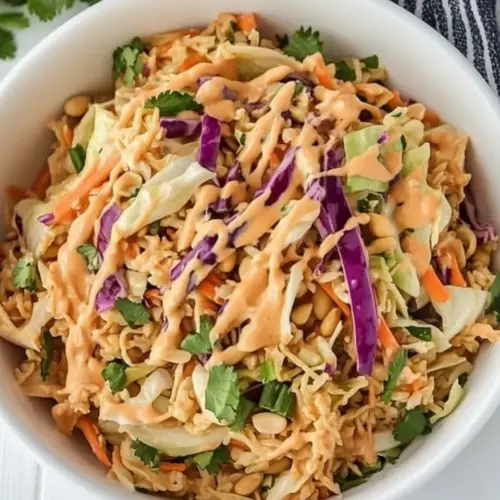
Ramen Cabbage Salad with Peanut Dressing
Ramen Cabbage Salad with Peanut Dressing is a creamy, crunchy, easy to pull together salad that pairs crisp cabbage, toasted ramen crunch, and a tangy nutty dressing for an irresistible texture play. Perfect for an easy weeknight dinner or a potluck side, this bright, flavorful salad is satisfying and simple to scale, making it a must make for busy cooks who love bold flavor.
Equipment
- Large Bowl
- Small mixing bowl
- Whisk
- Knife
- Cutting Board
Ingredients
- 1 bag cole slaw mix (16 oz.), chopped Adds a crunchy, mild base that blends shredded cabbage and carrots for texture and bulk in the salad; holds dressing well and provides a familiar coleslaw foundation.
- 1/2 head of purple cabbage, chopped Provides vibrant color and a slightly peppery crunch that contrasts the cole slaw mix; enhances visual appeal and adds firm cabbage texture.
- 2 -3 green onions, chopped Offers a mild oniony bite and fresh herbaceous note when scattered through the salad; delivers sharpness without overpowering other flavors.
- 1/2 cup cilantro, chopped Contributes bright, citrusy herbal freshness that lifts the dressing and adds flecks of green; balances richness with aromatic nuance.
- 1/2 c sliced almonds Supplies a toasty, nutty crunch and subtle richness that complements the peanut dressing; adds mouthfeel and nut-forward flavor.
- 1 package ramen noodles (3 oz.) Introduces a crunchy, toasted noodle element when broken and toasted, creating a signature ramen salad crunch and slightly wheaty note.
- 1/3 cup natural creamy peanut butter Creates a creamy, nutty base for the dressing that binds liquids and adds depth of peanut flavor for savory-sweet balance.
- 2 T vegetable oil Provides a neutral frying note and helps emulsify the dressing; contributes subtle richness and assists in toasting the ramen if used.
- 2 T lime juice Adds bright acidity and citrus tang to balance the peanut butter’s richness and bring lively flavor to the dressing.
- 1 T rice vinegar Delivers gentle acidity and mild sweetness that rounds the dressing’s flavor profile and enhances tangy complexity.
- 1 T soy sauce, or Tamari for gluten free option Imparts savory umami and saltiness to amplify flavors; offers a gluten-free option when using Tamari for dietary needs.
- 2 garlic cloves, minced Adds pungent aromatics and sharp savory depth that brighten the dressing and complement the peanut and ginger components.
- 2 -3 T maple syrup or honey Introduces natural sweetness to counterbalance savory and acidic elements; helps thin and glaze the dressing slightly.
- 1/2 tsp freshly minced ginger, ground ginger will work too Provides warm, aromatic spice that complements the garlic and peanut flavors; fresh ginger gives brightness while ground works as an alternative.
- 1/4 -1/2 tsp red pepper flakes Adds heat and a lingering spicy kick to the dressing; allows control over spiciness to suit personal taste preferences.
- Sea salt Allows for seasoning to taste and balancing of flavors; enhances and rounds out the overall profile when used sparingly.
- Pepper Provides subtle background heat and flavor contrast when freshly ground; used to finish and season the salad to taste.
- 3 T water, more or less as needed Thins the peanut dressing to desired consistency and helps emulsify ingredients while allowing adjustment for pourability.
Instructions
- Chop/cut vegetables accordingly and combine in a large bowl. Toss to combine.: The first sensory cue you will notice is the bright, vegetal scent when the cole slaw mix and purple cabbage hit the bowl, with leaves rustling and a faint metallic tang from the knife. Visually, aim for uniform pieces so every bite includes both tender and crisp elements, which helps the dressing adhere evenly. Use a wide bowl so you can toss without bruising the herbs. Why this matters, even pieces allow balanced mouthfeel and consistent flavor distribution. Common mistake to avoid, leaving large chunks that make the salad difficult to eat and unevenly dressed. If your green onions and cilantro are added now, they will mellow; add a portion later to preserve brightness.
- For the dressing, whisk all ingredients together aside from the water in a small mixing bowl. Add water to thin out if desired.: As you whisk the creamy peanut butter , vegetable oil , lime juice , and rice vinegar , you will see the mixture become glossy and slightly thick; this sheen is a sign the oils are emulsifying with the acidic components. Smell the garlic and ginger rise through the nutty base, signaling the dressing is building complexity. Why this matters, creating a stable emulsion ensures the dressing clings to the vegetables rather than pooling at the bottom. Troubleshooting tip, if the dressing resists combining, add a teaspoon of warm water and whisk vigorously until smooth. Avoid adding the water too early, as it makes measuring the final thickness harder.
- Either pour dressing over salad and toss to combine, or wait until ready to serve to add dressing. (Add desired amount of dressing, you don't have to use the entire amount.) Toss in crushed up ramen noodles and peanuts just before serving. Top with extra cilantro for garnish.: Once the dressing is emulsified, you will test the texture by letting a small amount run from the spoon; it should coat the back without sliding off too quickly. Add 3 T water gradually and whisk until you achieve a pourable consistency that will lightly coat the salad. The reason this step matters is that a properly thinned dressing distributes evenly and enhances mouthfeel without saturating the leaves. Common mistake, over thinning which dilutes the flavors and leaves the salad watery. If that happens, rebalance with a touch more peanut butter or maple syrup to restore richness and sweetness.
- Refrigerate leftovers in sealed containers.: When you pour the dressing over the vegetables, listen for the soft swish as it hits the bowl and watch the leaves take on a light sheen. Tossing should be gentle and thorough, lifting from the bottom to coat all pieces without bruising delicate herbs. Why this choice matters, dressing immediately softens textures and melds flavors, while waiting preserves maximum crunch. A common mistake is over tossing, which can make the salad limp. If you want to keep the crispest texture, reserve some dressing to add tableside.
- Toss in crushed up ramen noodles and peanuts just before serving.: The moment you add the crushed ramen noodles and sliced almonds you will hear a satisfying crackle, and the contrast between creamy dressing and crisp topping is immediate. Add them right before eating so they stay crunchy, offering a toasty note that brightens each forkful. Why this matters, the contrast in textures makes the salad exciting and prevents sogginess. Troubleshooting tip, if added too early the noodles will soften; store toppers separately if you plan to refrigerate leftovers.
- Top with extra cilantro for garnish.: A final scatter of roughly chopped cilantro adds a fresh herbal aroma and visual pop, making the dish feel composed. The final garnish should be added just before serving so the herb retains its color and fragrance. Why this matters, fresh herbs lift the heavier elements and provide a finish that feels lively. Mistake to avoid, chopping the cilantro too fine which can cause it to wilt quickly; coarse chopping preserves texture and aroma.
- Refrigerate leftovers in sealed containers.: Leftover salads benefit from airtight storage to preserve flavor and reduce oxidation of the cabbage. Refrigeration calms the dressing and keeps the vegetables crisp for longer, and chilled bowls often taste more cohesive the next day. Why this matters, proper storage extends shelf life and retains texture. Common error, storing salad already tossed with crunchy toppings which will become soggy; store toppings separately and add them when ready to eat.
Notes
- Prep tip: Buy pre chopped cole slaw mix to save time, it gives consistent shreds and reduces hands on chopping.
- Dressing consistency: If your peanut butter is stiff, whisk it with a tablespoon of warm water first before adding the acidic ingredients so it becomes easier to emulsify.
- Crunch preservation: Store the crushed ramen noodles and sliced almonds separately in a sealed container to keep them crisp until serving.
- Salt control: Taste the dressing before adding extra sea salt since the soy sauce contributes substantial saltiness already.
- Herb freshness: Add most of the cilantro right before serving to preserve its vibrant color and aromatic lift.