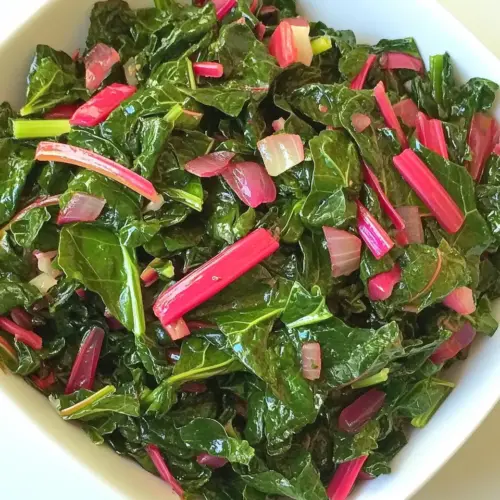
Rainbow Swiss Chard
Rainbow Swiss Chard is a quick, colorful sauté of tender greens and crunchy stems, brightened by garlic and a hint of red pepper. This easy weeknight dish delivers savory, slightly sweet, and textural contrast in minutes, making it ideal for simple dinners or grain bowls. Make it to add vibrant vegetables to your week and enjoy a fast, wholesome side.
Equipment
- Sauté Pan
- Knife
- Spatula
Ingredients
- 1 pound rainbow Swiss chard, washed and thoroughly dried Provide the leafy base and vibrant color for the dish, offering a slightly earthy, mildly bitter flavor that softens when cooked. Chop or tear into bite-sized pieces to ensure even wilting and easy eating; stems can be cooked a bit longer for tenderness. Packed with vitamins A, C, and K, it contributes nutrition and bulk to the finished side.
- 2 cloves garlic, smashed and chopped Add pungent aromatics and savory depth by releasing essential oils when smashed and chopped; garlic browns quickly, lending a nutty, caramelized note. Sauté briefly with oil to mellow harshness and integrate flavor throughout the greens. Small pieces distribute flavor evenly and enhance overall aroma.
- 1/2 tsp red pepper flakes, optional Contribute optional heat and a touch of smoky spice that elevates the flavor profile without overpowering the chard. Sprinkle sparingly while sautéing to toast the flakes and release capsaicin, adjusting quantity to personal heat preference. Works well to balance richness from oil and enhance savory notes.
- 2 tsp olive oil Provide the cooking fat necessary to sauté garlic and wilt the Swiss chard, promoting even heat transfer and flavor melding. Use a moderate amount to coat the pan and prevent sticking while allowing ingredients to brown lightly for complexity. Choose extra-virgin or regular olive oil for a fruity, slightly peppery undertone.
- Salt and fresh pepper to taste Season to taste with salt and freshly ground pepper to enhance natural flavors, balance bitterness, and provide finishing contrast. Add salt incrementally during cooking to draw out moisture and concentrate flavor, then adjust with pepper at the end for bright, aromatic lift. Proper seasoning transforms simple greens into a well-rounded side.
Instructions
- Heat the oil over medium heat in a sauté pan.: You will smell the faint fruitiness of olive oil as it warms, and the surface of the pan may shimmer slightly when it is ready. This step matters because a properly warmed pan ensures the garlic sizzles on contact rather than stewing, which preserves its sweet aromas. A common mistake is using too high heat, which can burn the oil and make the dish bitter, so keep the burner at medium and watch for gentle ripples on the oil surface.
- Smash the garlic clove with the side of a knife and add it to the pan.: When the garlic hits the hot oil you should hear a quick, delicate sizzle and the aroma will bloom immediately. The smashed bits release oils that flavor the entire pan, creating a fragrant base for the greens. Avoid leaving the garlic unattended, because it can brown in seconds; if it edges toward dark brown, remove it briefly or lower the heat to prevent bitterness.
- Add red pepper flakes if using, sauté the garlic lightly in the oil until it becomes golden.: The tiny pops of red pepper will toast and add smoky warmth, while the garlic should turn a light golden hue rather than dark brown. This color indicates a sweet, nutty flavor. If the garlic blacks, it will lend a harsh taste, so keep the heat moderated and stir constantly during this brief stage.
- Chop the stems into small pieces and add to the oil.: As the chopped stems hit the pan you will notice a sharper vegetal scent and a firmer texture under your spatula. Cooking the stems first ensures they soften fully and do not remain fibrous when the leaves are added. A common misstep is adding leaves too early, which causes the stems to stay underdone, so give the stems their own time to cook.
- Mix and add a drop of water and cover.: The tiny splash of water helps create steam that speeds the softening of the stems without steaming the leaves later. You may hear a gentle hiss as the water meets the hot pan, and within a minute the pan will carry a warm, concentrated aroma. Overdoing the water will steam the greens and dilute flavor, so use only a small amount.
- Cook about 4-5 minutes.: During these minutes you should see the stems turn more translucent and tender, and the pan aroma will shift from raw vegetal to richer, sweet notes. This timeframe is important so the stems reach the right texture, and testing a piece for tenderness is more reliable than strict timing. If the stems still feel firm, extend the cooking by a minute or two, but avoid overcooking which makes them mushy.
- Chop the leaves and add to the pan.: Freshly chopped leaves release vegetal perfume when torn or cut, and when added they wilt quickly into the pan creating a layered aroma. Adding the leaves after the stems prevents them from becoming limp and overcooked, preserving a silky texture. A frequent error is overcrowding the pan with leaves, which can lead to steaming instead of sautéing; add them in batches if needed.
- Sauté until just wilted, stirring frequently.: You will see the leaves collapse and their color deepen to a glossy, darker green, and the sound will be a soft, almost imperceptible sizzle. Stirring keeps cooking even and helps the leaves finish without turning soggy. If you stop stirring, pockets may overcook, so keep the spatula moving for even tenderness.
- Season with salt and pepper.: As the final touch the seasoning brightens the whole pan and balances any bitter notes. Taste a leaf and adjust salt and pepper gradually, because you can always add more but cannot take it away. A common mistake is over salting earlier in the process, so I prefer to season at the end and taste before serving.
Notes
- Add a squeeze of citrus to brighten the finished greens and enhance their natural sweetness.
- Include red pepper flakes for warming heat, adding them with the garlic so they bloom in the oil.
- Finish with a drizzle of good olive oil off the heat to add a silky mouthfeel and deepen the overall aroma.
- Serve over warm grains like rice or bulgur to turn the greens into a heartier main for a light meal.
- Keep it simple and skip optional seasonings if you prefer a very clean, vegetable forward plate.