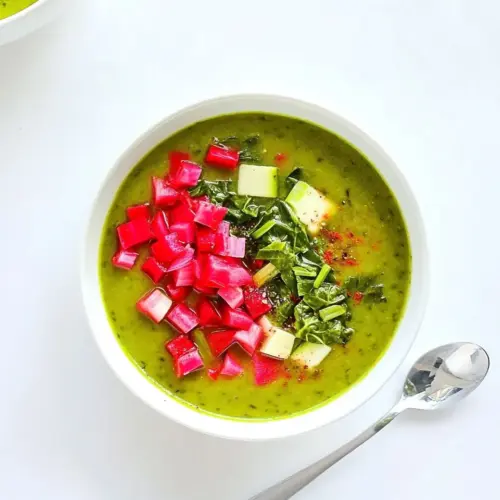
Rainbow Chard Soup
Rainbow Chard Soup is a creamy, verdant bowl that combines tender rainbow chard, aromatic fennel and scallions, and lush full fat coconut milk for an easy weeknight dinner or light lunch. The soup blends silky texture with bright lemon finishing, making it both comforting and refreshing, perfect for spring produce and simple entertaining.
Equipment
- Medium Saucepan
- Blender
Ingredients
- 2 tablespoons butter Melted in the pot at the start to provide a rich cooking fat and develop a glossy base for sautéing aromatics, butter adds a silky mouthfeel and gentle richness that balances the soup's vegetal notes. Use it to soften fennel and scallions without scorching; its emulsifying properties help bind coconut milk into the broth for a cohesive texture.
- 1 fennel bulb Sliced or diced and added early to build a sweet-anise aromatic backbone, fennel contributes a crisp, slightly licorice flavor that mellows with cooking and complements the chard's earthiness. Cook until translucent to release its sugars and fragrance, which brighten the soup's overall complexity.
- 10 scallions, roots trimmed, white and light green parts chopped, some dark green parts reserved Sautéed whites and light greens contribute a mild oniony sweetness and body while the reserved dark green parts are used later for color and fresh bite; scallions provide layered onion flavor without overpowering the dish. Use them early to form the aromatic base and finish with some greens for contrast and texture.
- 2 garlic cloves, finely chopped Finely minced and added early with the scallions, garlic imparts savory depth and a warm, aromatic note that enhances the soup's umami character. Gently cook it until fragrant to avoid bitterness and to allow its flavors to meld into the broth.
- 1/2 jalapeño, stem removed, finely chopped (I included the seeds and ribs for heat) Finely chopped and added to taste for heat and bright peppery flavor, jalapeño brings a lively spiciness that lifts the soup without dominating the other ingredients. Include seeds for extra heat or remove them for milder warmth, and sweat briefly to integrate its flavors evenly.
- 7 ounces full-fat coconut milk (about 1/2 a can) Stirred in near the end to add creamy richness and tropical sweetness, full-fat coconut milk creates a luscious, silky texture and mellow coconut aroma that complements the greens. Whisk it into the hot broth off-heat to avoid splitting and to achieve a smooth, velvety finish.
- 2 1/4 cups water Added as the primary liquid to adjust consistency and to carry flavors, water dilutes and balances the soup while allowing the aromatics and greens to infuse the broth. Use the specified amount to achieve a medium-bodied soup, adjusting slightly for preferred thickness.
- 1 bunch (3/4 pound) rainbow chard, stems removed and reserved, leaves chopped Chopped leaves added to the soup for vibrant color, hearty texture, and concentrated leafy flavor, rainbow chard supplies iron-rich greens and a slightly bitter, earthy taste. Reserve and chop stems separately to sauté for extra texture, then wilt leaves into the broth until tender.
- 1 teaspoon kosher salt, plus more to taste Sprinkled in during cooking and adjusted to taste to season and enhance all other flavors, kosher salt heightens sweetness and balances bitterness in the soup. Add gradually and taste frequently to avoid over-salting, especially when using coconut milk.
- 1 handful of baby spinach leaves Added near the end to boost freshness and contribute additional mild leafiness, a handful of baby spinach offers tender texture and a quick wilting green note that complements the chard. Stir in briefly just before serving so the delicate leaves retain color and nutrients.
- Lemon juice Squeezed or stirred in at the finish to brighten flavors and provide acidic lift, lemon juice cuts through richness and rounds out the soup with a clean, citrusy tang. Add incrementally and taste to achieve a balanced interplay between acidity and creaminess.
Instructions
- Trim the stalks and the root end of the fennel. Reserve some of the fennel fronds, but discard stalks and tough root. Cut the fennel bulb in half, and slice out the core. Discard core. Chop remaining fennel into 1/2-inch pieces.: As you trim, you will notice the fennel releasing a faint anise aroma; that scent is your cue that the vegetable is fresh. Cutting the bulb in half and removing the core lets the pieces soften evenly during cooking, preventing stringy or undercooked bits. A common mistake is leaving the tough core in, which can result in chewy pieces that distract from the soup's silkiness. When slicing the remaining fennel into 1/2 inch pieces, aim for consistent size so they soften at the same rate. The sound here is gentle, a light knife rhythm, and the look is pale translucent slices once cooked through.
- Warm butter in a medium saucepan over medium heat. Add chopped fennel, scallion, garlic and jalapeño, and saute until the fennel starts to soften (about 5 minutes). Add coconut milk, and simmer for 2 minutes. Add water, rainbow chard leaves and salt, and cook until the leaves are tender (about 5 minutes).: When the butter hits the pan, listen for a soft hiss as the water content evaporates and the milk solids start to scent the kitchen with a warm, nutty note. This is the base for the aromatics and it leans into the savory side of the soup. Add the chopped fennel , scallion , garlic and jalapeño , and sauté until the fennel begins to soften, about five minutes in the recipe timeline. During sautéing, watch for even color and a gentle shimmer on the vegetables; if anything browns too quickly, lower the heat to avoid bitter flavors. Stir frequently so the garlic does not stick, as burnt garlic will impart an acrid note that is hard to mask later.
- Transfer soup to a blender with a handful of baby spinach leaves, and blend until smooth. You can add a little water if the soup is too thick. Season to taste with lemon juice (about 1/2 a lemon) and additional salt.: When you pour in the coconut milk , the pan will quiet and the mixture will take on a creamy sheen, releasing a soft coconut aroma that rounds out the sharper aromatics. Simmering briefly allows the coconut to warm through and meld with the sautéed vegetables. Keep the heat gentle to avoid separating the milk; a too vigorous boil can break the emulsion. A useful indicator is a gentle ripple across the surface rather than vigorous bubbling.
- To serve, divide soup between 2 bowls (entree) or 4 bowls (appetizer), and top with Greek yogurt, toasted chopped almonds, toasted coconut flakes, sliced scallion greens, and pickled chard stems.: As you add the water and the chopped rainbow chard , you will see the pot transform into a verdant swirl. The leaves wilt within minutes, releasing a vegetal aroma and deepening the broth's color. Cook until the greens are tender, roughly five minutes according to the timeline, but rely on texture more than the clock. Overcooking can lead to a dull, lifeless color and less vibrant flavor, so taste a leaf for tenderness. The sound at this stage is a gentle simmer, and visually the pot should look glossy and full of tender greens.
- Transfer soup to a blender with a handful of baby spinach leaves, and blend until smooth: When you spoon the soup into the blender, you will notice the steam and an intensified green scent, demonstrating how the aromatics and greens have concentrated. Adding a handful of baby spinach boosts color and silkiness without changing flavor drastically. Blend until smooth and creamy, adjusting with a little water if the texture is too thick. Be cautious when blending hot liquids; vent the blender lid slightly and cover with a towel to avoid pressure buildup. A common error is overfilling the blender, which risks splatter; work in batches if necessary.
- Season to taste with lemon juice and additional salt: After blending, the initial flavor can feel rounded and a touch heavy, which is why I always finish with lemon juice and extra salt if needed. The acid brightens the whole bowl, and a final seasoning check will reveal the true balance. Add about half a lemon to start, then taste and add more if it needs lift. Overacidifying can mask the delicate chard notes, so adjust slowly, tasting after each squeeze.
- To serve, divide soup between bowls and top with suggested garnishes: The last stage is about texture and contrast. When ladling into bowls, the soup should look glossy and smooth, with a vibrant green color. Top with Greek yogurt, toasted chopped almonds, toasted coconut flakes, sliced scallion greens, and pickled chard stems as suggested, to add creaminess, crunch, and brightness. A typical misstep is adding too many heavy toppings, which can obscure the soup's lightness; choose one or two garnishes that complement rather than overwhelm.
Notes
- Make it nut free by skipping toasted almonds and toasted coconut flakes; instead finish with extra sliced scallion greens for crunch.
- Milder heat option remove the jalapeño seeds and ribs before chopping to keep just a hint of warmth without overpowering the greens.
- Extra green boost add an additional handful of baby spinach or other tender greens to the blender to intensify color and nutrients.
- Change the garnish swap Greek yogurt for a dollop of plain cultured coconut yogurt to keep the bowl dairy free while maintaining creaminess.
- Make ahead strategy store the cooled soup in an airtight container in the fridge for up to three days, and reheat gently over low heat to preserve texture.
- Adjusting texture if you prefer a chunkier finish, reserve a portion of the sautéed fennel and chopped chard to stir into the blended soup at the end.