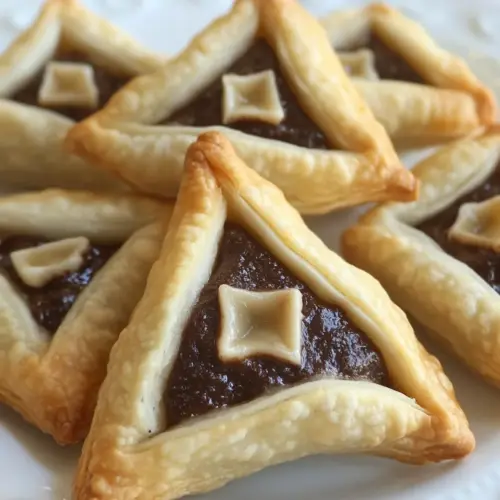
Rabbi Olitzky’s Chocolate Cream Cheese Hamantaschen
Rabbi Olitzky’s Chocolate Cream Cheese Hamantaschen are tender, slightly tangy pockets of dough filled with creamy cream cheese and melting chocolate chips. The texture is soft with lightly golden edges, making them an easy treat for holiday gatherings or an easy weeknight baking project. Make them for their nostalgic triangular shape and rich filling, a perfect reason to bake and share.
Equipment
- Stand mixer
- Rolling Pin
- Cookie Sheet
- Wire Rack
- Cookie Cutter
Ingredients
- 5 cups flour Provides structure and bulk to the dough, forming the base matrix for hamantaschen. Adds gluten when mixed with liquid, enabling the dough to be rolled and folded while maintaining shape. Balances other ingredients and helps achieve a tender yet sturdy cookie texture.
- 1 pound vegetable shortening, room temperature Adds richness and a tender, flaky crumb by coating flour proteins and shortening gluten formation. Contributes moisture and a neutral flavor profile that lets other flavors shine. Helps create a short, tender pastry that holds fillings without becoming tough.
- 1 cup pineapple juice Supplies liquid and a subtle bright sweetness that hydrates the dough and dissolves sugars. Imparts a faint fruity acidity that can tenderize gluten and add complexity to the pastry. Replaces other liquids to maintain dough consistency while contributing mild flavor.
- 1/2 cup sugar Sweetens and helps with browning during baking, contributing a light caramelized flavor. Balances the tang of cream cheese and acidity of pineapple juice, while also aiding in moisture retention. Blends smoothly into dough for even sweetness distribution.
- 1 teaspoon salt Enhances overall flavor by amplifying sweetness and other taste notes, while also controlling yeast or chemical leavening activity if present. Helps balance flavors and can reduce any flat or dull taste in the finished cookie. Ensures a well-rounded palate.
- 1 1/2 cups brown sugar Deepens flavor with molasses notes and adds moisture for a chewier, richer texture. Complements the cream cheese and chocolate by providing complex sweetness and a slight caramel undertone. Helps the dough remain soft and tender after baking.
- 6 ounces cream cheese Contributes creaminess and slight tang that lightens the filling and pastry flavor profile. Adds moisture and richness to the dough, improving tenderness and mouthfeel in the finished hamantaschen. Blends with sugars and fats to create a smooth, cohesive texture.
- 1 teaspoon vanilla Adds aromatic warmth and enhances the perceived sweetness and depth of the other ingredients. Contributes subtle floral and vanilla notes that round out the chocolate and cream cheese flavors. Helps mask any overly acidic or bland elements for a pleasant balance.
- 1 cup chocolate chips Provides concentrated chocolate flavor and pockets of melted sweetness when baked into the filling or dough. Adds texture contrast and a rich, bittersweet element that complements the tang of cream cheese. Melts slightly during baking to create gooey, chocolatey inclusions.
Instructions
- Mix all ingredients together until soft dough forms. The easiest way to do this is with a stand mixer.: The dough will feel slightly tacky but should pull away from the bowl when it is correctly combined. You will notice the aroma shift from sugary to a mellow, baked note as the shortening disperses. Use a stand mixer if you can, because it ensures even mixing without overworking the flour . One common mistake is adding too much flour at once, which makes the dough dry; if the dough seems stiff, add a tablespoon of pineapple juice at a time until it softens. The sound of the mixer will change from heavy to smoother as the dough comes together, and visually you want a uniform mass with no streaks of shortening.
- Knead the dough into a ball, place into a bowl, and cover with plastic wrap. Refrigerate for a few hours to overnight.: After kneading briefly, the dough should be cohesive and spring slightly when pressed. This step lets gluten relax for a tender crumb. Covering tightly prevents a skin from forming during refrigeration. A common trap is refrigerating uncovered, which dries the surface and makes rolling difficult. The chilled dough will firm up and feel cool to the touch, signaling it is ready for resting.
- Cut the cream cheese into small chunks. Mix together all filling ingredients until well combined.: Chilling tightens the dough and makes it much easier to roll thinly. The texture becomes denser and less sticky, and the flavor benefits as the ingredients meld. Resist the urge to rush this step, because warm dough will tear when you roll it. If you do refrigerate overnight, let it sit at room temperature for 15 to 20 minutes before rolling so it eases into pliability without becoming too soft.
- Remove dough from refrigerator. If the dough has turned hard, allow to soften for 15-20 minutes. Divide the dough into four pieces. Pound each piece out, one at a time, then use a rolling pin to roll out the dough on a floured surface. The dough should be rolled quite thin, as cookies will puff up during baking. Note: As the dough warms it will become sticky. Keep your rolling pin lightly coated in flour to prevent it from sticking.: When you cut the cream cheese into cubes, you create pieces that will blend smoothly into the filling. Tiny pieces warm and cream evenly with the sugar and vanilla . If you skip cutting down the cream cheese , the filling can end up lumpy. Use a sharp knife and keep the cubes chilled until you are ready to mix so the filling stays cohesive.
- Note: As the dough warms it will become sticky. Keep your rolling pin lightly coated in flour to prevent it from sticking.: The filling should be smooth and hold its shape on a teaspoon, with visible flecks of melted chocolate chips interspersed if they soften slightly. Taste for balance, adjusting sweetness only if needed. Overmixing the filling can incorporate too much air, making filling too loose during baking; mix until homogenous and slightly glossy. A silky, spreadable filling will hold within the cookie without running out.
- Cut the dough into 3-4 inch circles. Place circles onto ungreased cookie sheet.: The chilled dough should feel firm and cool. If it is rock hard, let it soften for 15 to 20 minutes; this brief rest prevents cracking during rolling. The surface should yield under gentle pressure but not stick. A frequent error is rolling dough immediately from the fridge, which causes tearing. Once it has softened slightly, it will roll smoothly and produce even circles.
- Place a teaspoon of filling into the center of each circle. Do not use more than a teaspoon of filling, or you run the risk of your hamantaschen opening and filling spilling out during baking.: Cutting into quarters makes the rolling manageable and keeps the unused portions chilled. Each piece should be handled one at a time to avoid warming the rest. Keep the unused pieces wrapped and chilled. If you try to roll all the dough at once, the exposed portions will warm and become sticky, complicating cutting and shaping.
- Assemble the hamantaschen in three steps. First, grasp the left side of the circle and fold it towards the center to make a flap that covers the left third of the circle.: The pounding relaxes the gluten and helps create an even sheet for cutting. Roll until the dough is quite thin, because the cookies will puff up while baking. A dusting of flour prevents sticking, and you will see a slightly matte surface when the thickness is right. Overly thick dough yields heavy cookies that do not bake evenly. Keep your rolling pin lightly coated in flour to prevent sticking, and turn the sheet frequently to maintain uniform thickness.
- Grasp the right side of the circle and fold it towards the center, overlapping the upper part of the left side flap to create a triangular tip at the top of the circle. A small triangle of filling should still be visible in the center.: The circles should be large enough to hold a teaspoon of filling yet small enough to form a neat triangle. Use a cookie cutter or rim of a glass for consistent sizing. The edges should be clean and not ragged, because neat edges help the flaps seal. A common issue is using uneven cutters which makes shaping and sealing inconsistent. Place each circle onto an ungreased cookie sheet with even spacing for proper heat circulation.
- Grasp the bottom part of the circle and fold it upward to create a third flap and complete the triangle. When you fold this flap up, be sure to tuck the left side of this new flap underneath the left side of the triangle, while letting the right side of this new flap overlap the right side of the triangle. This way, each side of your triangle has a corner that folds over and a corner that folds under– it creates a 'pinwheel' effect. This method of folding is not only pretty– it will help to keep the cookies from opening while they bake.: Ungreased pans help cookies develop a slight base crisp and brown evenly. As they bake, the bottoms will take on color and show textural contrast with the soft tops. If you grease the pan, cookies may spread too much. Arrange the circles with space to expand, and you will notice a subtle change in the sheen as they begin to bake.
- Pinch each corner of the triangle gently but firmly to secure the shape.: The amount of filling is crucial, because too much causes leaking and too little leaves hollow centers. A teaspoon gives a compact mound that will stay put when you fold the flaps. If the filling is warm or loose, refrigerate briefly before portioning; warm filling will bleed out. The correct amount results in a visible triangle of filling after the three flaps are folded.
- Repeat this process for the remaining circles. When all of your hamantaschen have been filled, bake them on the ungreased cookie sheet at 400 degrees F for 20-25 minutes till cookies turn light golden brown. Remove the cookies from the pan and cool them on a wire rack. Cool the cookie sheet completely before making more cookies.: The first flap forms the base of the triangle, and you will feel the dough's resilience as you fold. Folding creates tension that helps the cookie keep shape. If you fold too loosely, the cookie can open while baking. Work gently so the dough does not tear at the edges, and aim for flaps that meet closely in the center for a tidy triangle.
- Grasp the right side of the circle and fold it towards the center: Overlap the left flap slightly to create the initial triangular tip. The slight overlap is what seals the structure and frames the filling. If you overlap asymmetrically, the finished triangle can look lopsided. Keep your fingers clean and dry so the dough does not stick while you work.
- Grasp the bottom part of the circle and fold it upward to create a third flap: Tuck the left side under and let the right side overlap to complete the pinwheel effect. This technique locks the corners in place and reduces the chance of opening. A common mistake is folding without tucking the edges appropriately, which causes gaps. Check that each corner has a folded under and folded over side for the most secure shape.
- Pinch each corner of the triangle gently but firmly to secure the shape: A secure pinch prevents the cookies from unraveling while baking. The pinch should be firm enough to hold but not so tight that it cuts the dough. You want to feel the dough compress slightly under your fingers. If corners are left loose, filling can escape and create a flat cookie. After pinching, set the shaped cookies back on the sheet so the seams rest on the tray.
- Repeat this process for the remaining circles: Keep a steady rhythm so the folded cookies are consistent in size and seal. I like to line up filled circles and move through shaping in batches to maintain pace. If you take too long, the dough can warm and become sticky, making neat folding harder. Consistency here yields uniform baking and an attractive platter.
- Bake them on the ungreased cookie sheet at 400 degrees F for 20 to 25 minutes till cookies turn light golden brown: As the cookies bake you will see the edges set first and the centers puff slightly. The aroma will shift to a toasty, buttery note as sugars caramelize. Avoid underbaking which leaves the centers doughy, and also avoid overbaking which dries them out. If the top browns much before the bottom, rotate the pan halfway through baking.
- Remove the cookies from the pan and cool them on a wire rack: Cooling allows the internal structure to set, and the cookies firm up as they reach room temperature. Transfer carefully because warm cookies are fragile. If you leave them on the hot pan, they can continue to brown and possibly overcook. Once cooled, the hamantaschen will hold their shape and be ready for serving or storing.
- Cool the cookie sheet completely before making more cookies: A hot cookie sheet will soften subsequent dough portions and lead to spreading. Allow the sheet to return to room temperature or switch to a different sheet. Many bakers reuse pans too quickly; waiting preserves shape and ensures even baking for every batch.
Notes
- Chill time matters: Extend refrigeration to overnight for firmer dough that is easier to roll and cut, which helps maintain uniform thickness and reduces tearing.
- Measure flour correctly: Spoon and level flour into the cup to avoid adding too much, which keeps the dough tender rather than dense and dry.
- Keep filling cool: If your filling feels soft, refrigerate it briefly so it holds its shape on the dough circles and reduces the risk of leakage during baking.
- Work in batches: Divide dough and work one piece at a time to prevent the rest from warming up and becoming sticky, which makes cutting and shaping harder.
- Use consistent cutters: Use a cookie cutter or glass rim for even circles, which yields uniformly shaped hamantaschen that bake evenly and look cohesive on a platter.
- Watch bake time closely: Bake until light golden brown and rotate pans halfway to ensure even coloring, avoiding under or overbaking for best texture.