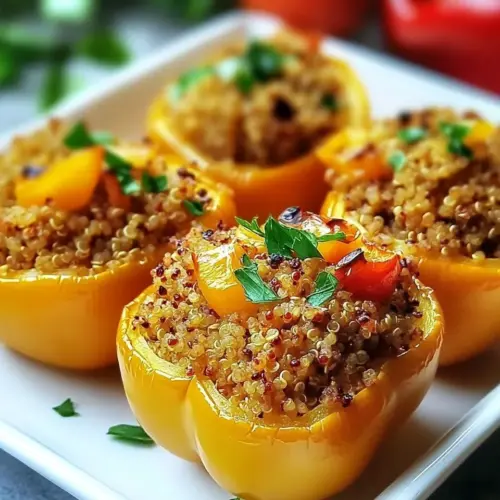
Quinoa Stuffed Peppers
Quinoa Stuffed Peppers combine nutty quinoa, savory mushrooms, and creamy cannellini beans in tender roasted bell peppers for an easy weeknight dinner. This vibrant, plant based main is saucy, satisfying, and perfect for meal prep. Try it when you want a comforting yet light vegetarian meal that reheats beautifully and tastes even better the next day.
Equipment
- Oven
- Baking Sheet
- Saucepan
- Large Pot
Ingredients
- 1/2 cup dry quinoa Rinse thoroughly and simmer to tenderize; provides a nutty, slightly chewy base and soaks up flavors from the cooking liquid to form the stuffing's backbone.
- 1 cup water Boil gently and absorb into dry grains; supplies the necessary liquid to cook the quinoa and helps infuse it with flavor for a fluffy texture.
- 4 bell peppers, sliced in half lengthwise, seeds and white pith removed Halve and remove seeds to create edible vessels; offers a crisp, colorful casing that softens when roasted and complements the filling with sweet, vegetal flavor.
- 1 tablespoon coconut oil Melt and sauté to prevent sticking and add richness; contributes a subtle tropical flavor and helps caramelize vegetables for depth in the filling.
- 1 small onion, chopped Dice and sweat until translucent to build aroma; adds savory sweetness and a soft texture that forms part of the flavor foundation for the stuffing.
- 1 clove garlic, minced Crush and cook briefly to release pungent aromatics; delivers sharp, savory notes that brighten and enhance the overall savory profile of the filling.
- 1 cup chopped mushrooms (about 4 ounces) Chop and sauté to develop umami and texture; brings meaty, earthy flavors and moisture that enrich the stuffing without overpowering other vegetables.
- 1 zucchini, chopped Chop and cook until tender to add bulk and freshness; provides mild sweetness, moisture, and a slight crunch that balances the final filling.
- 1 (15-ounce) can white cannellini beans (about 1 1/2 cups cooked beans) Drain and mash or stir into the filling for protein and creaminess; offers tender, starchy body and plant-based protein to make the dish hearty and satisfying.
- 1 cup marinara sauce, plus more for serving Stir in and warm to bind the filling and add acidity; contributes tomato-forward tang, moisture, and saucy cohesion that keeps the stuffing moist and flavorful.
- Sea salt and black pepper Season sparingly to taste to enhance all elements; supplies essential salinity and a hint of heat to balance sweetness and acidity while rounding out flavors.
Instructions
- Preheat the oven to 350 F. Combine the quinoa and water in a small saucepan and bring the water to a boil. Cover and reduce the heat, cooking until the quinoa is tender, about 15 minutes. Fluff with a fork and set aside.: The moment you set the oven, you begin creating even heat for both the peppers and the final bake. You should feel the kitchen slowly warm and hear the oven cycle as it approaches temperature. Preheating matters because putting cold ingredients into a hot, but not fully heated oven can lengthen baking time and yield unevenly softened peppers. A common mistake is skipping preheat, which can leave centers undercooked while the outsides over soften.
- Place the bell peppers cut-side down on a baking sheet and bake them for 10 minutes. Remove from the oven and set aside.: When the water first reaches a rolling boil, you will see active bubbling and steam rising from the pot, and the grain will start absorbing the liquid. This vigorous start helps the quinoa cook evenly, and once you cover the pot it will gently steam to tenderness. If you keep the lid ajar or use too high a heat after covering, the water can evaporate too quickly and leave the quinoa undercooked, so maintain a low simmer once covered.
- In the meantime, melt the coconut oil in a large pot over medium heat and saute the onion until it starts to become translucent, about 5 minutes. Add in the garlic, mushrooms and zucchini, and saute until all of the vegetables are tender, about 6 to 8 minutes. Season with salt and pepper.: As it simmers, listen for a gentle staccato of bubbling and watch the pot for a small steam plume escaping the lid. The grains will swell and become translucent with a tiny spiral visible. Fluffing with a fork separates the grains and releases steam, preventing clumping. Overcooking or stirring vigorously while hot can make the quinoa gummy, so let it sit a moment after cooking before fluffing.
- Add in the cooked quinoa, beans, and marinara sauce, and stir well to combine and adjust the seasoning to taste. Arrange the cooked bell peppers cut-side-up and spoon the filling into each pepper. It should generously fill 4 bell peppers. Spoon additional marinara sauce over each pepper to help prevent them from drying out, then bake for 30 minutes at 350, until the peppers are very tender. Serve warm, with additional marinara sauce, if you like.: Fluffing produces that airy, separated texture you want for the filling and allows any excess steam to escape, preventing watery filling. You should notice the quinoa lighten in texture and stop steaming aggressively. If you skip fluffing, the filling can become compacted and dense, which changes mouthfeel.
- Place the bell peppers cut side down on a baking sheet and bake for 10 minutes: Laying the pepper halves cut side down concentrates heat inside to soften the flesh quickly and coax out some moisture, which helps them maintain shape when stuffed later. You will smell a sweet, roasted fragrance as their skins begin to blister. A frequent slip up is overroasting here, which can make the pepper walls too floppy to hold the filling during the final bake.
- Remove from the oven and set aside: Once slightly softened, transfer the peppers to a safe spot so they cool enough to handle. Their texture should be pliable but still structured. If you stuff them while too hot, handling becomes awkward and the filling can slide out, so give them a few minutes to settle.
- Melt the coconut oil in a large pot over medium heat and saute the onion until it starts to become translucent about 5 minutes: When the oil shimmers, add the onion and listen for a gentle sizzling, a sign the natural sugars are releasing. The transformation from opaque to translucent signals the right time to add other aromatics. Rushing with high heat risks browning the onion too fast, bringing bitter notes instead of the sweet depth we want.
- Add in the garlic mushrooms and zucchini and saute until tender about 6 to 8 minutes: As these vegetables hit the pan you will hear a lively sizzle and see liquid release from the mushrooms, followed by evaporation and concentrated flavors. The zucchini should wilt and the mushrooms should darken slightly, offering a pleasing chew. Stir regularly to ensure even cooking and avoid burning the garlic, which becomes bitter if overcooked.
- Season with salt and pepper: Adding sea salt and black pepper at this stage draws flavors together and enhances the vegetables natural tastes. You will notice the mixture brighten, and the aromas will deepen. A common error is under seasoning early on, which results in a bland filling even after the sauce is added, so taste and adjust as you go.
- Add in the cooked quinoa beans and marinara sauce and stir well to combine: Once these elements join, the mixture should look cohesive and slightly glossy, with the marinara sauce coating each grain and vegetable. The beans break up to add creaminess, and the quinoa absorbs tomato flavors. If the filling seems dry, it will benefit from a splash more sauce, but avoid adding so much that it becomes soupy and spills from the peppers.
- Adjust the seasoning to taste: At this point, take a careful spoonful and consider acidity, salt, and pepper balance. You want the flavors lively enough to stand up to the baked pepper. Many cooks forget this final tasting step, and the result can be flat; small seasoning fixes here make a big difference.
- Arrange the cooked bell peppers cut side up and spoon the filling into each pepper: The visual cue you are aiming for is a generous mound of filling that sits above the rim slightly, showing the mix is substantial. The filling should feel cohesive, not watery, which helps it stay in place while baking. Overfilling risks spillover and uneven baking, so aim for a balanced portion per half.
- Spoon additional marinara sauce over each pepper to help prevent them from drying out: A thin layer of sauce on top acts as a protective glaze that keeps the surface from crusting and adds bright tomato notes. You will see it settle into crevices and create a shiny finish. Forgetting this step can yield drier tops after the final bake.
- Bake for 30 minutes at 350 until the peppers are very tender: During this time the filling will bubble gently and the peppers will collapse into tender boats, releasing a roasted perfume. You want a wobble when you press the flesh and a fork should glide through without resistance. Overbaking will make the peppers too soft and can dry the filling, so check toward the end of the bake.
- Serve warm with additional marinara sauce if you like: When plated, the steam lifts aromatic notes of tomato and roasted vegetables, and the first bite should be warm and cohesive. If you add extra sauce it contributes moisture and an acidic lift. A common serving mistake is letting them cool too long before plating, which dulls the aromas and the texture loses a little of its comforting warmth.
Notes
- Boost the herbs Add fresh chopped herbs like basil or parsley to the filling after cooking to brighten the flavors and add fresh green notes to each bite.
- Try different sauces Swap the marinara sauce with a roasted pepper sauce for a deeper, smokier profile that doubles down on pepper flavor.
- Make it heartier Stir in extra cooked beans to increase protein and make the filling more substantial, perfect for long afternoons when you want leftovers.
- Switch the grain Replace quinoa with cooked farro or brown rice for a chewier texture and a different nutty note that still holds up in the filling.
- Assemble ahead Stuff peppers and refrigerate unbaked for up to one day, then bake just before serving for easy entertaining and better time management.