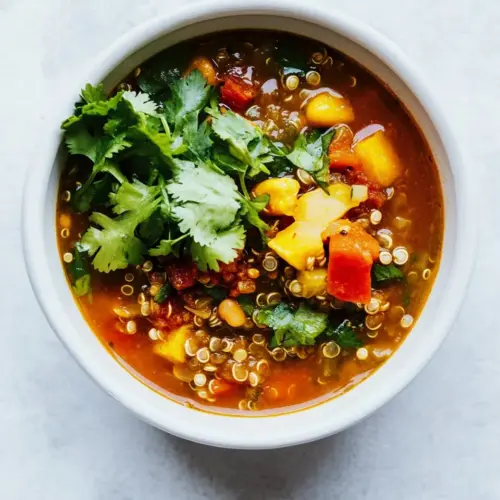
Quinoa Soup
Quinoa Soup is a creamy, savory, easy weeknight dinner with tender shredded chicken, nutty quinoa, and bright citrus notes. This hearty, wholesome bowl blends texture from pinto beans and corn with bold tomato and spice flavors, making it perfect for cold evenings or make ahead lunches. Try it for a cozy, satisfying meal that reheats beautifully and keeps everyone coming back for seconds.
Equipment
- 6-quart Crock-Pot
- Instant Pot
Ingredients
- 2 tablespoons olive oil Sauté over medium heat to create a flavorful fat base for browning aromatics and building the soup’s richness; adds subtle fruitiness and helps evenly cook vegetables without burning.
- 1/2 cup finely diced yellow onion Sweat gently until translucent to release sweet, savory notes that form the aromatic backbone of the soup; finely dicing ensures quick, uniform cooking and even flavor distribution.
- 1/2 cup thinly sliced carrots Cook until slightly softened to contribute sweetness, texture, and color contrast; thin slicing helps carrots meld into the broth while still providing pleasant bite.
- 1/2 cup sliced celery Sauté until tender-crisp to add aromatic celery flavor and subtle vegetal saltiness; sliced pieces provide texture and pockets of savory flavor throughout the soup.
- 2 teaspoons minced garlic Cook briefly with the aromatics to release pungent, savory, and slightly sweet flavors that deepen the soup’s overall profile; mincing produces small pieces that dissolve into the broth.
- 1 (6-ounce) can tomato paste Bloom in the hot oil or water to provide concentrated tomato flavor and body; stirring it in early adds umami, acidity, and a rich base for the tomatoes.
- 1 (14.5-ounce) can fire-roasted crushed tomatoes or diced tomatoes Stir in to supply bright tomato sweetness, acidity, and roasted depth; choosing fire-roasted crushed or diced tomatoes adds smoky complexity and chunky texture to the broth.
- 1 (16-ounce) pound boneless, skinless chicken thighs or breasts, see note 1 Simmer until cooked through to contribute hearty protein, moistness, and savory depth; boneless, skinless chicken thighs or breasts provide tender meat that shreds and enriches the soup.
- 1 (15.5-ounce) can pinto beans drained and rinsed Add drained and rinsed to contribute creamy texture, earthy flavor, and extra protein and fiber; rinsing reduces sodium and prevents overly starchy broth cloudiness.
- 1 -1/2 cups frozen corn or 1 can Stir in frozen or canned corn to provide bursts of sweet crunch and color contrast; frozen retains freshness while canned offers convenience and consistent texture.
- 3/4 cup tri-colored quinoa or plain Rinse before cooking and add to supply nutty flavor, chewy texture, and nutritional value including protein and fiber; tri-colored or plain quinoa cooks quickly and thickens the soup slightly.
- 1 large orange Zest or juice to add bright citrus acidity and aromatic oils that lift and balance hearty, savory flavors; an orange complements tomato and chicken with subtle sweetness.
- 5 cups chicken stock or broth, I like Swanson’s Pour in as the primary cooking liquid to create a savory, seasoned base; chicken stock or broth contributes depth, salt, and body to simmer the quinoa and proteins.
- 2 bay leaves Drop in while simmering to infuse subtle herbal aroma and a mild, bay-leaf bitterness that enhances overall complexity; remove before serving to avoid overly woody pieces.
- 2 teaspoons cajun seasoning see note 2 Sprinkle to introduce layered heat, smoky and savory notes, and regional flair; Cajun seasoning intensifies the soup’s spiciness and rounds out the flavor profile.
- 1 teaspoon chicken bouillon powder Stir in to heighten savory, concentrated chicken flavor without extra cooking time; bouillon powder provides quick umami boost and salt balance.
- 1 teaspoon dried oregano Add to lend an earthy, slightly bitter oregano aroma that supports tomato and chicken flavors; dried oregano holds up well during simmering without becoming bitter.
- 1/2 teaspoon ground cumin Measure and mix to contribute warm, aromatic earthiness and a hint of citrusy depth; ground cumin pairs with tomatoes and beans for a rounded, savory backbone.
- 1/2 teaspoon paprika Sprinkle to impart subtle smokiness and color while complementing paprika-friendly ingredients; paprika adds mild sweet pepper notes without overpowering the soup.
- Salt and pepper Season gradually to achieve balanced flavor; adjusting salt and freshly cracked pepper at the end brightens ingredients and controls overall seasoning.
- Toppings as desired see note 3 Garnish as desired to add freshness, texture, and flavor contrast; toppings like herbs, cheese, or acidic condiments can personalize and finish each bowl.
Instructions
- Optionally sauté veggies (adds loads of flavor—see note 4): In the base of a slow cooker that can sauté, an Instant Pot insert, or a sauté pan, add the olive oil and heat over medium-high. Once oil is hot, add onion, carrot, and celery. Sauté, stirring frequently, until golden, about 5–7 minutes. Add garlic, tomato paste, and all the seasonings. Season to taste with salt and pepper (I add 1 teaspoon salt and 1/2 teaspoon pepper). Sauté, stirring frequently, until very fragrant and tomato paste starts to darken, about 5 more minutes. Pour in tomatoes and stir, scraping the bottom to release any browned bits (especially in an Instant Pot to avoid a burn warning).: The kitchen will fill with the warm, savory scent of softened onion , carrot , and celery as they sizzle in the hot olive oil , releasing sweet and aromatic notes. As the vegetables edge toward golden, the sound changes to a gentle, steady bubble and the pan develops fond, those little browned bits that translate to depth in the broth. When you add the garlic and tomato paste , the smell intensifies into a roasted, slightly sweet tomato aroma, and the paste will darken slightly as its sugars caramelize. This step matters because it builds a concentrated flavor foundation that the stock will carry and expand. A common mistake is rushing the sauté or using too high heat, which can scorch the garlic or paste and introduce bitterness. If you notice any burning, lower the heat and scrape the pan to incorporate those browned bits rather than letting them continue to char.
- Meanwhile, trim the fat off the chicken. If using breasts, cut each breast into 3 large, even pieces.: You will notice the chicken becoming easier to handle once trimmed, and cutting breasts into even pieces helps them cook uniformly. The tactile feel changes from slippery to firmer as you cut, and properly trimmed pieces will brown slightly if you briefly sear them, adding another layer of flavor. This technique prevents uneven cooking and ensures the meat will shred easily after simmering. One error to watch for is leaving large uneven pieces that either overcook or remain underdone; aim for consistent size to avoid that problem.
- Slow Cooker: If you didn’t use a slow cooker to sauté, scrape every bit of the contents from the pan into the slow cooker. Add trimmed chicken, drained and rinsed pinto beans, undrained corn, uncooked (but rinsed—see note 5) quinoa, 1/2 cup orange juice, and bay leaves. Pour chicken stock over everything and mix well. Cover and cook on high 3–5 hours or until chicken is tender and shreds easily and quinoa has “popped” (my slow cooker takes closer to 3 hours). The longer it cooks, the more liquid the quinoa absorbs, which is why I don’t recommend cooking on low—see note 6.: If you didn’t use a slow cooker to sauté, scrape every bit of the contents from the pan into the slow cooker : You will hear a soft scrape as the rich, fragrant base transfers into the slow cooker, introducing concentrated aromas into the larger pot. Add the trimmed chicken , drained and rinsed pinto beans , undrained corn , rinsed uncooked quinoa , 1/2 cup orange juice, and the bay leaves . Pour the warm or room temperature chicken stock over everything and stir until ingredients are evenly distributed and the aroma lifts. Cover and cook on high for 3 to 5 hours, during which the soup will develop a gentle simmer and the quinoa will swell and pop, creating a pleasing texture. The why here is that slow, moist heat melds flavors and yields very tender chicken . Avoid cooking on low for extended periods if you prefer a soup rather than stew, because the quinoa will continue to absorb liquid and may thicken the pot more than desired.
- Instant Pot: Turn off sauté function and add trimmed chicken, drained and rinsed pinto beans, undrained corn, uncooked (but rinsed—see note 5) quinoa, 1/2 cup orange juice, and bay leaves. Pour chicken stock over everything and mix well. Put on the lid, set valve to “sealed,” and cook on manual for 10 minutes. Naturally release pressure for 7 minutes, then manually release the rest of the pressure (turn valve to “release”).: Turn off sauté function and add trimmed chicken, drained and rinsed pinto beans, undrained corn, uncooked quinoa, 1/2 cup orange juice, and bay leaves : When you add these cold or room temperature ingredients into the warmed insert, the contrast between the fragrant sautéed base and the raw additions is noticeable, but once you seal and cook on manual for 10 minutes, the pressure environment extracts flavors quickly and intensifies the broth. After a 7 minute natural release followed by quick release, the aroma that greets you will be concentrated and savory with bright citrus notes from the orange . This method is perfect when you want rich results on a tighter schedule because pressure cooking extracts flavor efficiently and cooks chicken and quinoa thoroughly. A common pitfall is not scraping up browned bits from the bottom before sealing, which can trigger a burn notice on some devices; always deglaze and ensure nothing is stuck.
- Remove chicken and shred with 2 forks. Return shredded chicken to slow cooker or pressure cooker. Remove bay leaves and discard. Taste and season if needed with additional salt and pepper—flavors should sing!: As you lift the cooked chicken out, it should feel tender and fall apart with a gentle pull. Shredding with forks creates irregular pieces that soak up the broth and distribute meat throughout the bowl. The shredded texture meshes beautifully with the slightly chewy quinoa and creamy pinto beans . Return the shredded meat to the pot, and remove and discard the bay leaves . This step matters because shredding increases surface area so the chicken carries more flavor with each bite. A mistake to avoid is shredding while the meat is too hot or too cold; warm but manageable meat shreds the cleanest.
- Ladle the soup into bowls and enjoy topped with your favorite toppings such as freshly shredded cheese, fresh cilantro, fresh lime, sour cream (I use low fat), etc.: The final seasoning is where the dish comes alive. The broth will present layered notes from the sautéed base, tomatoes , and spices; taste a small spoonful and adjust with salt and pepper to make the individual flavors sing. Adding a little acid, like a squeeze of fresh lime or extra orange juice, can brighten and balance richness. The reason this matters is that salt and acid tune the overall harmony of the bowl. One common error is over salting early in the process; always adjust at the end, because liquids concentrate as they cook and flavors intensify.
- Ladle the soup into bowls and enjoy topped with your favorite toppings such as freshly shredded cheese, fresh cilantro, fresh lime, sour cream: The final presentation invites textural contrasts and fresh brightness. You will notice steam rising, the scent of citrus and spice mingling, and a pleasing contrast between warm broth and cool toppings like sour cream or fresh cilantro . Toppings let each person tailor the heat and creaminess to their preference. This final touch matters because it introduces temperature and texture contrasts that elevate each spoonful. Avoid adding toppings too early, as heat can cause delicate herbs to wilt and dairy to separate; add them just before serving.
Notes
- Rinse the quinoa: Always rinse the quinoa in a fine mesh sieve until the water runs clear to remove its natural coating that can taste bitter, this ensures a clean nutty flavor in the finished soup.
- Brown the tomato paste: Cooking the tomato paste with the vegetables until it darkens slightly boosts umami and gives the broth a deep, roasted tomato note that you will notice in every spoonful.
- Use low sodium stock or control salt: Because canned ingredients and bouillon can add salt, start with low sodium chicken stock or hold back on added salt until the end to avoid over seasoning.
- Choose thighs for tenderness: If you prefer juicier meat, use boneless skinless chicken thighs, they stay more tender through longer cooking, especially in a slow cooker.
- Add corn near the end: If you want bright, slightly crisp kernels, add frozen or canned corn toward the end of cooking so it retains texture and sweetness.
- Deglaze to avoid burn warnings: When using an Instant Pot, scrape up browned bits after sautéing before sealing to prevent a burn notice and to incorporate all those flavorful fond bits into the broth.