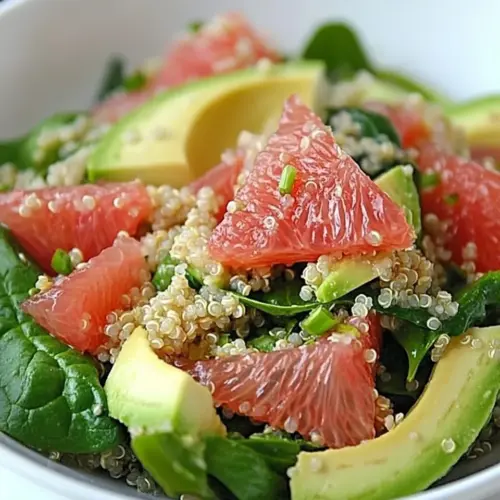
Quinoa Salad with Spinach Grapefruit Avocado
Quinoa Salad with Spinach Grapefruit Avocado is a bright, creamy and nutty combination that feels both light and satisfying. The ruby grapefruit adds vivid citrus tang, while avocado lends silky richness and quinoa brings hearty texture, making it an easy weeknight lunch or elegant side. Make it for spring meals when citrus shines, its quick to assemble and endlessly refreshing.
Equipment
- Saucepan
- Fine-mesh strainer
- Medium Bowl
- Large Bowl
- Paring knife
Ingredients
- 4 oz baby spinach Wilt gently and provide a tender leafy base that adds color, nutrients, and a mild earthy flavor to the salad; pairs well with citrus and creamy components to balance textures.
- 2 ruby red grapefruits, peeled and fruit separated, reserving 3 slices Segment carefully and contribute bright, tangy-sweet citrus notes along with juicy bursts; reserving slices and juice enhances both presentation and dressing depth for the salad.
- 1 haas avocado, diced Dice ripe flesh into cubes and contribute a creamy, buttery texture that contrasts with the quinoa and citrus; adds healthy fats and a rich mouthfeel to bind flavors.
- 1 cup cooked quinoa, 1/3 cup dry Cook and cool until fluffy to provide a nutty, slightly chewy grain element that adds bulk and protein; using the specified cooked amount ensures proper salad proportions.
- 1 1/2 tbsp olive oil Dress lightly to add a fruity, slightly peppery fat component that helps coat ingredients and carry flavors; use measured quantity to avoid overpowering the salad.
- 1 1/2 tbsp champagne vinegar Acidify and brighten flavors with a delicate, slightly sweet vinegar that complements the grapefruit and balances the oil; measured addition keeps acidity balanced.
- 2 tbsp chopped shallots Mince finely and provide aromatic allium notes that add subtle sharpness and savory depth without overwhelming the citrus and avocado when distributed evenly.
- salt and pepper to taste Season sparingly to enhance and balance all flavors by adjusting saltiness and heat; tasting as you go ensures the salad reaches desired savory and peppery balance.
- grapefruit juice from 3 reserved slices of grapefruit Squeeze fresh juice and intensify the citrus dressing with bright acidity and natural sweetness; using juice from reserved slices links the dressing directly to the fruit used in the salad.
Instructions
- Rinse quinoa well under cold water and cook according to package directions.: As the quinoa hits the saucepan and the liquid comes to a gentle simmer, you will notice a subtle nutty fragrance and the pot will give a soft, steady bubbling sound. Rinsing first removes the natural bitter coating so the finished grains taste clean and mild. A common mistake is not rinsing, which can leave a slightly soapy note, so run the quinoa through a fine mesh strainer until the water runs clear. Cook until the grains become translucent and the tiny spiral separates slightly, that visual cue means they are tender yet still hold texture.
- Drain and let it cool.: When you drain the quinoa , you should see individual glossy grains that are plump but not mushy. Letting them cool prevents the heat from wilting the spinach and keeps the salad lively. Spread the quinoa on a shallow tray to speed cooling, and avoid piling it up, which traps steam and leads to sogginess. If you skip cooling, the warm grains will quickly soften the leaves.
- Peel the skin and white membrane off the grapefruit and separate the pieces.: As you slice away the skin and pith, the air will smell intensely citrusy and slightly floral. Using a sharp paring knife, follow the curve of the fruit to expose the bright segments, then gently lift them free. Removing the bitter white membrane is key, because leaving it can add an undesirable bitterness to the salad. One pitfall is cutting too shallowly and losing juicy flesh, so take care to remove only the rind and pith.
- Reserve three grapefruit slices for the vinaigrette and squeeze the juice; set aside.: When you squeeze those reserved slices, you should see bright, pale pink juice with a fragrant citrus aroma. This fresh juice gives the dressing an immediate clarity in flavor that bottled alternatives lack. Use gentle pressure to extract the juice without crushing membranes that can make the dressing bitter. A common error is using pre bottled juice which lacks the lively brightness of freshly squeezed fruit.
- Cut up the remaining grapefruit into small pieces for the salad.: As you dice the remaining segments, their juices will glisten and release a tangy perfume. Smaller pieces distribute the citrus throughout the salad so each bite has a pop of fruit. Work over a bowl to catch stray juices, which you can fold into the salad for extra flavor. Avoid cutting the pieces too large, because bulky chunks can overwhelm the other textures.
- In a medium bowl whisk the olive oil, grapefruit juice (from 3 slices of grapefruit), vinegar, chopped shallots, salt and pepper.: As you whisk, the dressing will emulsify into a glossy, slightly thickened mixture that smells bright from the grapefruit and aromatic from the shallots . The oil carries flavor and helps the vinaigrette cling to leaves and grains. Taste and adjust salt to balance the acidity; under seasoning is a common oversight, so don’t be timid with a small pinch. If the dressing tastes too sharp, a touch more olive oil will round it out.
- In a large bowl toss spinach, quinoa, avocado, grapefruit and vinaigrette.: When you combine these elements, you will see the glossy dressing lightly coat every surface, the spinach leaves glinting and the diced avocado taking on a sheen. Toss gently so the avocado does not mash, and fold with a wide spoon so the quinoa and fruit are evenly distributed. The sound is a soft rustle of leaves and the visual cue is even coverage of dressing. Avoid over tossing which can bruise the avocado and make the salad mushy.
- Divide between four plates.: As you portion the salad, notice how the colors contrast on each plate, with pink segments and green leaves creating an inviting presentation. Serving immediately preserves the textures, while letting it sit too long can cause the spinach to wilt and the dressing to pool. A common mistake is plating from a deep bowl without gently shaking excess dressing off serving spoons, which can lead to watery plates, so use a slotted spoon if needed.
Notes
- Use warm quinoa to slightly wilt the spinach, creating a cozy texture contrast while keeping flavors bright.
- Swap vinegar styles try a milder white wine or sherry style vinegar to adjust acidity without losing the citrus focus.
- Boost shallot presence soak chopped shallots in the juice briefly to mellow their bite and infuse the dressing.
- Control dressing intensity whisk less oil for a lighter coating, or a touch more for a silkier mouthfeel that clings to the quinoa.
- Prepare ahead cook the quinoa a day ahead and store chilled to speed assembly and maintain texture.