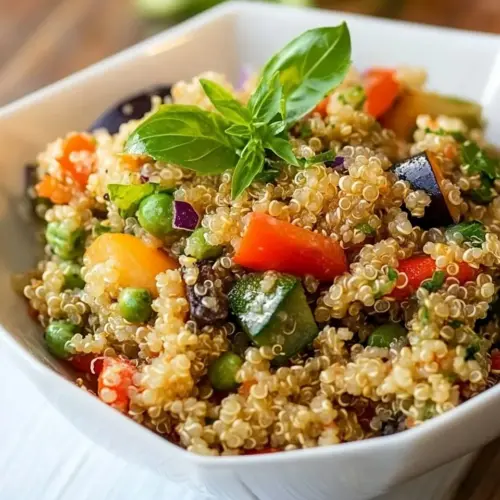
Quinoa Salad with Fresh Vegetables
Quinoa Salad with Fresh Vegetables is a light, refreshing bowl with tender quinoa, smoky grilled vegetables, and bright parsley. This easy, healthy salad offers varied textures and a tangy balsamic vinegar dressing, making it an ideal easy weeknight dinner or make ahead lunch. It’s flavorful, nourishing, and perfect for warm weather meals.
Equipment
- Pot
- Sieve
- Griddle
- Small pot
- Bowl
Ingredients
- 1 cup dry quinoa Rinse and cook to fluffy tenderness; provides the base grain with a light, nutty flavor and pleasant texture that soaks up dressing. Use well-rinsed quinoa to avoid bitterness and ensure separate grains for a salad. Cooled quinoa binds vegetables and dressing into a cohesive, protein-rich foundation.
- 2 cups water Boil to hydrate quinoa and create tender grains; supplies the exact liquid needed for proper quinoa expansion and cooking. Monitor simmering to prevent overcooking and loss of nutrients. Use measured water for consistent texture in the final salad.
- 1/4 cup zucchini grilled, diced Grill and dice for smoky, tender zucchini pieces that add moistness and subtle sweetness to the salad. Pat dry before assembling to avoid watering down the dressing. Chop evenly for balanced bites throughout the dish.
- 1/4 cup peppers bottled - grilled, diced Drain and dice for charred, sweet pepper pieces that contribute bright color and concentrated flavor to the salad. Use bottled grilled peppers for convenience and a slightly tangy note. Combine with other vegetables for textural contrast.
- 1/4 cup eggplant grilled, diced Grill and dice to introduce rich, savory eggplant with a creamy interior that complements firmer vegetables. Remove excess oil or moisture after grilling to maintain salad consistency. Cut uniformly to distribute smoky flavor evenly.
- 1/4 cup peas blanched Blanch briefly to preserve bright color and tender-crisp bite, offering a sweet, fresh contrast to grilled vegetables. Shock in ice water to halt cooking and maintain vibrancy. Fold gently into quinoa to retain texture.
- 2 tablespoons parsley fresh, finely chopped Chop finely to release bright, herbaceous parsley that lifts flavors and adds freshness to each forkful. Mix in near the end to preserve color and fragrance. Use fresh parsley for best aromatic impact.
- 2 tablespoons extra virgin olive oil Drizzle as the primary fat to add silky mouthfeel and a rich, fruity backbone that melds ingredients together. Use extra virgin olive oil for its nuanced flavor and healthy fats. Whisk into the dressing to coat grains and vegetables evenly.
- 1 tablespoon balsamic vinegar Whisk in to provide balanced acidity and a subtle sweetness that enhances and brightens the overall flavor profile. Combine with olive oil to form a cohesive dressing that ties ingredients together. Adjust to taste for brightness.
- 1/4 teaspoons salt Season sparingly to enhance and balance flavors without overpowering the delicate ingredients; contributes subtle salinity to the salad. Dissolve into the dressing for even distribution. Taste before adding more to maintain balance.
- 1/8 teaspoon pepper Crack freshly to add mild heat and aromatic complexity that complements herbs and vegetables. Grind to preferred coarseness to control intensity. Sprinkle cautiously to avoid overwhelming delicate flavors.
Instructions
- Add the quinoa in a sieve and rinse under the faucet. Over medium heat, in a cooking pot, boil the water and the quinoa. When it boils, simmer on low for about 15 minutes or until the water is completely absorbed. Transfer to a bowl and let it cool down.: The first thing I notice when rinsing quinoa is the clear water, that small foamy residue washing away, which signals that any natural coating has been removed. This step reduces the bitter edge and helps the grains puff up more evenly during cooking, delivering a cleaner, nuttier aroma as they simmer. A common mistake is to skip rinsing, which can leave a slightly soapy or bitter taste. Rinse until water runs mostly clear, then drain well so you do not add extra liquid to the pot.
- While waiting for the quinoa to cook, grill the vegetables in a dry griddle. When they are cooked through, dice them. Over a small pot of boiling water, cook the peas for 3 minutes then transfer them to a bowl of ice water. When they have cooled down, drain.: When the pot comes to a gentle boil, you will hear a steady, soft bubbling and see the surface churn, which is the moment to reduce the heat. This vigorous stage brings the grains to life and begins starch release, creating the tender texture you want. If you keep the heat too high after adding quinoa , it can foam up and scorch, so watch carefully. Reduce promptly to avoid sticking, and use a pot with a snug fitting lid to trap steam for even cooking.
- Toss the cooked quinoa, vegetables, parsley, extra virgin olive oil, balsamic vinegar, salt and pepper.: As the quinoa simmers quietly, you will start to see the grains swell and the little germ spiral appear. The aroma will turn softly nutty, and the surface should look matte rather than wet. This gentle simmer ensures tender, separated grains rather than a sticky mass. A common error is lifting the lid too often, which lets steam escape and can lengthen cooking time, so avoid peeking unless necessary. Check visually near the end and feel a grain for doneness.
- Transfer to a bowl and let it cool down: Moving the warm quinoa into a bowl allows steam to dissipate and prevents residual heat from wilting the vegetables later. As it cools, you will notice the texture firm slightly and the scent mellow. If it's still quite warm when you mix it with dressed vegetables, they can release excess moisture and become soggy, so letting it cool is important. A frequent oversight is rushing this step, leading to a damp salad, so spread it out if time allows to speed cooling.
- While waiting for the quinoa to cook, grill the vegetables in a dry griddle: On a hot dry griddle you will hear a satisfying sizzle as the vegetables hit the surface, and you will see char marks develop that signal caramelization. This process concentrates their natural sugars and adds complexity, creating those smoky notes that lift the salad. Avoid overcrowding the griddle, which causes steaming rather than charring, and flip only when you have good color to prevent tearing. If your vegetables are thin, watch closely so they do not burn.
- When they are cooked through, dice them: After grilling, the vegetables should be tender and carry fragrant browned edges, with a soft interior. Dicing them into small, even pieces ensures each forkful has a balance of veg and quinoa . Uniform pieces also help the salad look composed. A common mistake is cutting too large, which makes bites uneven, so aim for consistent sizing and let vegetables cool slightly before dicing to preserve texture.
- Over a small pot of boiling water, cook the peas for 3 minutes then transfer them to a bowl of ice water: Blanching peas briefly keeps them bright green and pleasantly firm, releasing a fresh, sweet aroma. The ice bath shocks them, halting the cooking and locking in color and texture so they remain crisp when tossed in the salad. If you overcook them they will go mushy and lose that pop, so time precisely. Drain thoroughly after the ice bath to avoid extra water in the salad.
- When they have cooled down, drain: Properly draining the peas and other vegetables removes surface water that can dilute the dressing and water down the salad. You should see no visible pooling in the bowl when ready to assemble. Excess moisture is a common problem that makes the dressing runny and the salad limp, so gently pat pieces with a towel if needed. Ensuring dryness helps the extra virgin olive oil and balsamic vinegar coat the ingredients evenly.
- Toss the cooked quinoa, vegetables, parsley, extra virgin olive oil, balsamic vinegar, salt and pepper: At this point the sensory payoff arrives, with the aroma of parsley mingling with warm quinoa and the subtle tang of balsamic vinegar . Tossing distributes flavors and textures so every bite is balanced. Use a gentle folding motion to combine without crushing the grains or vegetables, and taste to adjust seasoning. One mistake is adding too much oil at once, which can weigh the salad down, so add gradually and toss to see how it dresses. Serve at room temperature for the best flavor integration.
Notes
- Herb swap Try replacing some of the parsley with other fresh herbs for a different aromatic note, always finely chop so the herb distributes evenly throughout the salad.
- Vinegar tweak Use a milder vinegar or a touch more balsamic vinegar to dial acidity to your taste, adding it gradually while tasting as you go.
- Grill alternative If you do not have a griddle, you can roast the vegetables in a hot oven until they develop brown edges, stirring once so they cook evenly.
- Warm or chilled Serve the salad slightly warm for comfort or chilled for a refreshing side, both temperatures highlight different flavor notes in the quinoa and vegetables.
- Pea treatment For added texture variety, leave a few whole and lightly mash others to create a creamy contrast when tossing with the extra virgin olive oil.