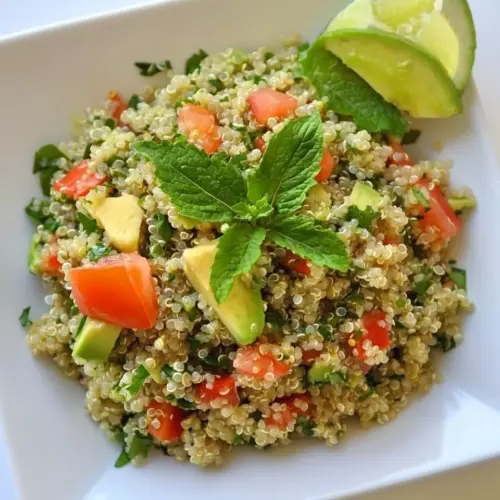
Quinoa Avocado Tabbouleh
Quinoa Avocado Tabbouleh is a creamy and bright grain salad that combines fluffy quinoa with buttery avocado, juicy tomatoes, and a basil lemon dressing. This easy, fresh recipe works as a light main or a hearty side, perfect for summer gatherings or an easy weeknight dinner. Make it for its vibrant textures and balanced flavors, and you will come back to it again and again.
Equipment
- Saucepan
- Salad Bowl
- Blender
Ingredients
- 2 cups quinoa Rinse and cook thoroughly to provide a nutty, protein-rich base that soaks up dressing and flavors; fluff and cool before combining to preserve texture in the salad.
- 3 medium vine-ripened tomatoes (12 oz. total), diced Dice uniformly to add juicy acidity and bright color; fold in gently so tomatoes release some juices to marry with the dressing without becoming mushy.
- 1 ripe avocado, peeled and diced Peel and dice just before serving to maintain creamy texture and prevent browning; toss carefully with lemon juice to balance richness and add healthy fats.
- 1 Persian cucumber, peeled and grated Peel and grate finely to contribute a crisp, watery crunch and mild cucumber flavor; squeeze out excess moisture to avoid watering down the salad.
- 1/4 cup toasted pine nuts Toast lightly until golden to bring out buttery, resinous notes and add a crunchy contrast; sprinkle over the salad just before serving to maintain crispness.
- 1/4 cup chopped flat leaf parsley, fresh basil or mint Chop finely to provide fresh, herbaceous brightness and a slightly peppery undertone; mix in to enhance aromatic complexity and complement the other greens.
- 4 cups salad greens (arugula, spinach or spring greens work well) Tear or chop and use as a verdant base to boost volume and nutrition; combine with quinoa and herbs to introduce varying leaf textures and flavors.
- Salt and pepper to taste Season cautiously to elevate overall taste and balance acidity and richness; add gradually and adjust at the end to avoid over-salting or overpowering delicate ingredients.
- 1/4 cup chopped fresh basil leaves Chop finely to deliver an additional layer of fragrant, sweet, and peppery herbal notes; incorporate sparingly to avoid overwhelming other fresh herbs.
- 2 tablespoons fresh lemon juice Juice freshly and use to brighten and acidify the salad, helping to prevent avocado browning; whisk into the dressing to provide clean, citrusy lift.
- 1 tablespoon mayonnaise Emulsify into the dressing to lend creaminess and help stabilize oil and lemon, creating a smooth coating for quinoa and vegetables.
- 1 teaspoon honey or agave nectar Sweeten gently to balance tart lemon and bitter greens; dissolve into the dressing to round flavors without adding cloying sweetness.
- 1/4 teaspoons salt Season precisely to control salinity, especially since other components already contain salt; add small amounts and taste to achieve balanced seasoning.
- 1/4 cup extra virgin olive oil Whisk in to create a silky, fruity dressing that binds ingredients and adds mouthcoating richness; drizzle evenly to ensure every bite is well dressed.
Instructions
- Rinse the quinoa thoroughly in a mesh strainer, then cook according to package directions. Fluff with a fork, transfer to a large salad bowl, and allow to return to room temperature. Stirring the quinoa every few minutes will help it to cool faster.: The moment you start rinsing quinoa you will notice its faint dusty coating wash away, leaving pearls that glint slightly when wet, and that clean washing prevents any bitter notes. As it simmers, the tiny grains will swell and release little tails, a visual cue that they are done, and when you fluff with a fork you encourage those grains to separate which avoids clumping in the final salad. Moving the cooked quinoa to a wide bowl spreads the heat so it cools sooner, and gently stirring every few minutes lets steam escape for even cooling so the dressing does not get diluted by residual heat. A common mistake is to pack the hot quinoa too tightly into a container, which traps steam and makes the salad soggy, so always give it space to breathe. If your grains stick together, they probably needed a bit more fluffing while still warm. Keep an eye on texture, because slightly chewy is better than overcooked and mushy, and the fork fluffing helps maintain that ideal consistency. For troubleshooting, if the quinoa seems sticky, spread it across a rimmed baking sheet to cool faster and separate the grains with a fork once more.
- Gently stir in the avocado, grated Persian cucumber, toasted pine nuts and chopped herbs. Season the salad with salt and pepper to taste.: When you fold in diced avocado , the salad gains immediate creaminess that contrasts beautifully with the grated Persian cucumber , whose tiny shreds offer a cooling snap and a subtle vegetal scent. The toasted pine nuts add a warm, toasty aroma and a satisfying crunch that pops against the softer components, while the chopped herbs release aromatic oils that perfume everything with freshness. As you combine these elements, use a gentle folding motion to avoid mashing the avocado , and taste early so you can adjust the seasoning; salt wakes up the components and black pepper gives a mild heat that lifts flavor. One mistake people make is stirring too vigorously which bruises the avocado and turns the salad uniform instead of layered, so spoon around the bowl with care. If your avocado starts to brown, it likely sat exposed to air too long, so add it last and serve promptly. Pay attention to mouthfeel as you mix, aiming for diverse textures in each portion.
- In a blender or food processor, combine the chopped basil leaves, lemon juice, mayonnaise, honey and salt. Cover the blender. Pulse a few times till the ingredients are chopped and combined. Scrape the sides of the blender with a spatula. Put the lid on, open the pour spout, and turn on the blender. Drizzle in the extra virgin olive oil very slowly, pausing to scrape the sides of the blender as needed, till the dressing is creamy and emulsified.: As the blender pulses, the basil releases an herbal perfume that smells almost green and floral, and the lemon juice brightens those aromas while the mayonnaise begins to give the mixture body. Scraping the sides ensures there are no dry pockets, and when you turn the blender on you will hear a steady hum and see the mixture change from chunky to silky, this is when you begin the slow olive oil stream to coax a stable emulsion that clings to the grains rather than separating into oil and acid. The gentle drizzle is crucial because adding oil too fast will break the emulsion, leaving the dressing thin and glossy rather than creamy; take your time and watch the texture transform into a luscious coating. If the dressing becomes too thick, a teaspoon of warm water can help loosen it without losing flavor, while if it splits a vigorous whisk and tiny stream of oil can bring it back. Avoid overheating the blender which can cook the basil slightly and alter the bright flavor, so pulse gently and keep an eye on color, aiming for a vibrant green rather than a dull olive tone.
- To serve, place a portion of salad greens on each serving plate to create a bed for the salad. Scoop the salad onto the top of the greens. To mold the salad as seen in the picture, gently pack the salad into a measuring cup or small bowl, then unmold onto the top of the salad greens. Drizzle with dressing to taste. Serve.: The sensory moment of plating offers visual contrast, the deep green bed of salad greens sets off the colorful medley of diced tomatoes and pale avocado , creating an inviting plate. Using a measuring cup to mold the salad yields a neat presentation where the grains and mixins hold their shape, and unmolding reveals a tidy mound that looks intentional and elegant. Drizzling the dressing by eye lets you control the sheen and moisture so the salad is flavorful without being oversaturated, and the first bite should show balanced textures and flavors. A typical error is over dressing which can make the greens limp and drown the delicate herb notes, so drizzle conservatively and pass extra at the table. Listen for the subtle crunch of pine nuts as you serve, that sound signals textural contrast, and take a small sample to check seasoning before serving to guests, adjusting salt and pepper if needed.
Notes
- Rinse the quinoa well, use a fine mesh strainer and rinse until the water runs clear to remove natural saponins that can taste bitter, then cook to tender but still slightly chewy, and fluff immediately after cooking.
- Cool the quinoa evenly, spread it in a thin layer on a wide tray or bowl and stir occasionally so residual steam escapes and the grains separate rather than clump, which preserves the salad texture.
- Add avocado last, dice it just before assembly and fold it gently into the salad to keep pieces intact and vibrant, preventing oxidation and mushy texture.
- Toast pine nuts carefully, cook them over medium low heat and shake the pan frequently to avoid hot spots, because scorched nuts will impart bitterness to the whole salad.
- Emulsify the dressing slowly, start the blender on low and stream in the olive oil while pulsing to achieve a creamy texture that clings to grains, and scrape down the sides as needed for uniformity.
- Season gradually and taste, salt and acid change as ingredients mingle, so season in stages and adjust at the end, balancing lemon with a touch of sweetness if needed.