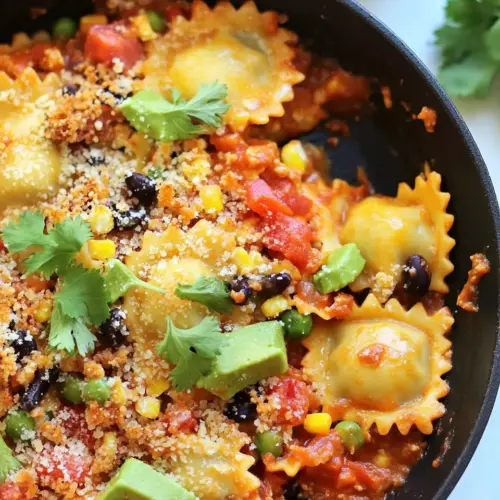
Quick Easy Southwest Ravioli Skillet Pasta
Quick Easy Southwest Ravioli Skillet Pasta is a creamy, smoky, and easy weeknight dinner that combines tender cheese ravioli with sautéed corn, peppers, and bold southwest spices for a one pan comfort meal. Bright lime and fresh cilantro lift every bite, while broiled cheddar cheese adds irresistible melt. Make it for busy nights when you want big flavor with minimal fuss.
Equipment
- Large Pot
- Large Skillet
- Colander
- Broiler or oven
Ingredients
- 2 tablespoons olive oil Sizzle in the skillet to create a flavorful cooking base and help soften aromatics; adds a fruity, rich mouthfeel that carries spices and vegetables throughout the dish.
- 1/2 onion diced Provide a sweet, savory foundation when softened and browned; diced texture integrates with other vegetables and soaks up the seasoned oil for balanced bite.
- 2 cloves garlic minced or grated Impart pungent, aromatic depth when minced or grated; releases volatile oils that bloom in hot oil, enhancing overall savory complexity of the skillet.
- 1 jalapeno pepper seeded and diced Add bright heat and vegetal crunch when seeded and diced; contributes a fresh peppery kick that complements the chili spices without overpowering the dish.
- 2 red bell peppers diced Deliver sweet, crisp flavor and vibrant color when diced; soften during cooking to balance heat and add juicy texture to each forkful.
- 2 cups fresh corn Bring natural sweetness and pop of texture; fresh kernels caramelize slightly in the pan, offering contrast to creamy ravioli and smoky spices.
- 1 chipotle chile minced Introduce smoky, spicy complexity when minced; provides an earthy, slightly acidic heat that deepens the southwest flavor profile of the skillet.
- 1 tablespoon cumin Provide warm, earthy background spice; toast briefly in oil to release aroma and anchor the chili and oregano for a cohesive spice blend.
- 1 tablespoon chili powder Add robust, chili-forward flavor and subtle smokiness; helps define the southwestern character and pairs with cumin for layered heat.
- 2 teaspoons dried oregano Contribute herbal, slightly bitter notes and Mediterranean warmth; dried form holds up to simmering and enhances savory depth throughout the dish.
- 1/4 teaspoon cayenne Deliver concentrated heat and a sharp spicy finish; a small amount brightens the overall spice level and can be adjusted to taste.
- 1/4 teaspoon salt Season and balance flavors with subtle salinity; a pinch enhances sweetness of vegetables and melty cheese without making the dish overtly salty.
- 1/4 teaspoon pepper Provide mild savory seasoning and a peppery edge; adjusts overall seasoning and highlights the aroma of cooked vegetables and spices.
- 1 1/2 cups black beans Offer creamy, earthy body and protein; black beans bring fiber, texture, and hearty density that complements pasta and vegetables.
- 1 lime juiced Add bright acidity and freshness when squeezed; lime juice lifts richness, balances spice, and brightens the overall flavor profile.
- 1/4 cup fresh cilantro chopped + more for garnish Introduce fresh herbal brightness and color when chopped; cilantro adds citrusy, verdant notes that cut through richness and finish the dish.
- 1 pound cheese ravioli 20 ounces Provide tender, cheesy heartiness as the primary pasta component; ravioli soaks up sauces and contrasts with crisped vegetables for satisfying mouthfeel.
- 1 -2 cups sharp cheddar cheese cubed Contribute sharp, melty richness and savory pockets when cubed; cheddar enriches the skillet with gooey texture and pronounced flavor.
- 1 avocado diced Add creamy, buttery texture and mild flavor when diced; avocado cools and contrasts spicy elements while adding healthy fats.
- 1 cup grape tomatoes quartered Bring juicy acidity and slight sweetness when quartered; grape tomatoes burst with freshness that brightens each serving and adds color.
Instructions
- Bring a large pot of water to a boil and boil the ravioli according to package directions.: Steam rises and the kitchen fills with a faint flour scent as the water reaches a rolling boil, signaling the moment to add the cheese ravioli . The bubbling sound should be vigorous enough that the pasta moves freely without sticking. This step ensures the pasta cooks evenly and the filling warms through; if the water is not at a true boil before adding the ravioli , they can become gummy and fall apart. A common mistake is overcrowding the pot, which lowers the water temperature and causes uneven cooking, so give the ravioli room to swim and stir gently once after adding them to prevent clumping.
- Preheat the broiler.: The broiler should be glowing hot and ready to transform the grated or cubed cheddar cheese into a bubbly, golden top in seconds. You will notice an intense, dry heat from above that will rapidly crisp and brown surfaces, giving the dish an irresistible finish. Preheating is crucial because the broiler works best when it reaches full temperature quickly; if you delay or skip preheating, the cheese will melt slowly and not get that signature char. Do not leave the pan unattended under the broiler, because even one minute too long can turn a golden top into a bitter, blackened layer.
- While the water boils and the ravioli cooks, cook the veggies. In a large skillet heat olive oil over medium heat. Add the onion and garlic and saute until soft and caramelized about 5 minutes. Add the jalapeno pepper, red pepper and corn. Saute for 5 minutes and then add the chipotle chili, cumin, chili powder, oregano, cayenne, salt and pepper. Stir in the black beans and saute another 3-5 minutes or until the veggies are soft.: Warm oil should shimmer subtly without smoking, creating a slick surface that translates the first sauté into fragrant layers. As the onion hits the pan you will hear a gentle sizzle and smell sweetening aromatics, a cue that sugars are beginning to caramelize. This technique builds depth, and using moderate heat allows the vegetables to soften without burning; too high heat at this stage will char the outsides while leaving interiors raw.
- When the ravioli is ready, drain and add to the skillet. Turn off the heat and toss well. Add the chopped cilantro and lime juice and toss again. Make sure everything is in an even layer and then spread the cheese all over the dish.: As the onion turns translucent and edges pick up gold flecks, a mellow sweetness appears, and the garlic quickly perfumes the oil. The tactile feeling of stirring with a wooden spoon and the softening resistance under the spatula tell you they are ready. This caramelization creates a foundation of flavor that enhances every bite; rushing here will produce raw-tasting aromatics, so be patient. Be cautious of letting the garlic brown too much, since burnt garlic becomes bitter and will spoil the balance of the skillet.
- Place the whole skillet in the broiler or transfer to an oven safe dish. Broil for 30 seconds to 1 minute. Don't walk away, it goes so fast!: When the diced jalapeno pepper , red bell peppers , and corn meet the hot pan, the sizzle returns and color intensifies, with the corn developing light charred notes and the peppers softening to tender succulence. These vegetables add bright texture and sweet counterpoints to the savory filling. Proper sautéing at this stage keeps edges caramelized while preserving interior crunch; overcrowding the pan will trap steam and make them limp rather than crisp, so give them space and stir occasionally for even cooking.
- Remove and top with the diced tomatoes, avocado and more fresh cilantro if desired. Serve!: Aromas unfold as the dry spices hit the warm oil, releasing an earthy, smoky bouquet that perfumes the whole kitchen and binds the vegetables into a cohesive flavor profile. Toasting the spices briefly amplifies their essential oils and creates a deeper, richer background for the dish. This step matters because it layers heat and complexity, rather than sprinkling flavor on top. A typical mistake is adding too many dry spices at once without stirring, which can create clumps and uneven distribution; sprinkle them evenly and stir so they bloom into the oil uniformly.
- Stir in the black beans and saute another 3-5 minutes or until the veggies are soft: At this point the skillet begins to feel substantial and hearty; the black beans add a creamy heft that contrasts with the tender vegetables. You will hear a softer simmer as the ingredients mingle, and small plumes of steam will carry the spice perfume. This gentle cook time lets flavors marry and ensures beans are warmed through without collapsing. Avoid over stirring which can break up the beans and make the texture mushy, instead fold them in carefully to retain pleasant bite.
- When the ravioli is ready drain and add to the skillet Turn off the heat and toss well: The pasta, now tender and pillowy, is drained so it is not waterlogged before joining the skillet party. The sound is a quiet shift as the cheese ravioli meets the sautéed mix, and residual heat will continue to blend flavors even with the burner off. Turning the heat off prevents the cheese filling from overcooking and leaking out, which would lose creaminess; if you leave the pan on high you risk breaking down the pasta. A frequent error is adding the ravioli to a too-hot pan and over tossing, which can tear delicate pasta, so handle gently.
- Add the chopped cilantro and lime juice and toss again Make sure everything is in an even layer and then spread the cheese all over the dish: The bright cilantro and zesty lime juice cut through richness and lift flavors to the finish line, creating a refreshing contrast that keeps the skillet lively. Tossing distributes the acidity and herb so each bite benefits, and arranging an even layer prepares the surface for the melt. This step matters because the lime brightens heavy notes and the cilantro adds fragrance. Be careful not to overdress with lime which can dominate; add some, taste, and add more if needed.
- Place the whole skillet in the broiler or transfer to an oven safe dish Broil for 30 seconds to 1 minute: Under the broiler the cheddar cheese will bubble, blister, and take on golden flecks, producing a toasty aroma and a pleasing textural contrast. Watch for visual cues, the cheese should just begin to brown and bubble, not blacken. Rapid high heat is what creates that perfect finish, and timing is everything, so stay close. A common pitfall is walking away during broiling; it can go from perfect to burnt in the blink of an eye.
- Remove and top with the diced tomatoes avocado and more fresh cilantro if desired Serve: Once out of the oven, the skillet will smell complex and inviting, with warm spice and melted cheese at the forefront. The cool tomatoes and diced avocado added at the end provide textural relief and juicy pops, making each forkful balanced. Letting it rest a minute helps flavors settle and makes serving easier. Avoid mixing the toppings in too early, which warms and softens them; add just before serving for the best contrast.
Notes
- Make it milder Reduce the amount of jalapeno pepper and omit the cayenne to keep heat low while preserving flavor.
- Extra smoky touch Add a touch more minced chipotle chile or a sprinkle of smoked paprika for deeper smoke, adding slowly to avoid overpowering the dish.
- Cheese variation Swap part of the sharp cheddar cheese for a milder melting cheese if you want creamier melt and less tang.
- Make it heartier Increase the portion of black beans to add more protein and fiber without changing cooking times significantly.
- Vegetable boost Fold in extra diced red bell peppers or another cup of corn to add sweetness and volume while keeping the method identical.