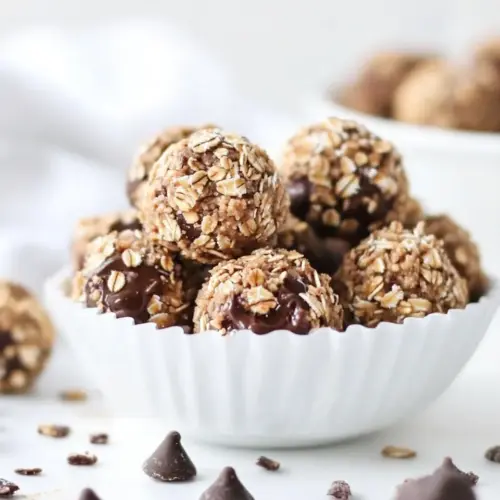
Quick Easy No Bake Oatmeal Peanut Butter Bites
Quick Easy No Bake Oatmeal Peanut Butter Bites are chewy, nutty little snacks made with creamy peanut butter, honey, oats, and crunchy almonds. These no bake bites are quick to assemble, naturally portable, and perfect for easy weeknight snacks or lunchbox treats. Make a batch for an afternoon pick me up, they are satisfying and wholesome.
Equipment
- Large Bowl
- Spoon
- Microwave-safe Bowl
- Measuring Cups
Ingredients
- 1 cup old-fashioned rolled oats Provide a chewy, whole-grain base that gives structure and body to the bites while adding fiber and a hearty texture that holds up without baking.
- 1/4 cup ground flaxseed Add a nutty, slightly earthy boost of soluble fiber and omega-3 precursors that helps bind moisture and improves the nutritional profile and mouthfeel.
- 1/4 cups sliced almonds, chopped Contribute a crunchy, toasted nut texture and subtle flavor contrast; chopped almonds also add healthy fats and protein to support bite cohesion.
- 2 tablespoons chia seeds Introduce tiny gel-forming seeds that absorb liquid and help thicken and bind the mixture while contributing fiber, omega-3s, and a pleasant slight crunch.
- 1/8 teaspoon cinnamon Impart a warm, aromatic note that rounds out sweetness and adds depth to the flavor profile with minimal quantity required for balance.
- a pinch of salt Enhance overall flavor by amplifying sweetness and balancing any bitterness; a tiny amount also helps highlight other flavors in the bites.
- 1/4 cup + 2 tablespoons creamy peanut butter, melted and slightly cooled Provide creamy fat and rich peanut flavor that acts as the primary binder when melted, contributing moisture, richness, and protein for cohesive balls.
- 1/4 cup + 1 tablespoon honey Offer natural sweetness and sticky texture that works as a liquid binder, helping the mixture hold together while adding caramel-like flavor.
- 1/4 teaspoon vanilla extract Bring a floral, sweet accent that enhances complexity and amplifies other flavors without adding bulk or affecting texture noticeably.
- 2 tablespoons mini chocolate chips Add small pockets of intense chocolate flavor and a soft melt-in-the-mouth contrast that complements the nuttiness and sweetness of the bites.
- 1/4 cup ground peanuts or ground almonds, to roll the balls in Create an outer coating that prevents sticking and adds an extra textural layer of ground nuts, enhancing appearance and delivering additional nutty flavor.
Instructions
- Combine oats, almonds, flaxseed, chia seeds, salt and cinnamon in a large bowl and stir.: The moment you stir these dry ingredients together you start building texture and distribution, which matters for every bite. You should notice the varied colors and flecks of chia and flax, and the scent of cinnamon will be faintly warming. A good stir ensures no pockets of salt or spice dominate, and it helps the peanut butter and honey coat everything evenly later. If the mixture looks uneven, take a few extra seconds to fold it well, because dry clumps lead to uneven balls. A common mistake is skimming the surface, so be sure to reach the bottom and scrape the sides.
- Melt peanut butter and allow it to cool slightly (I melted mine in the microwave for about 30 seconds, then stirred), then stir in honey and vanilla extract until it’s combined. Once peanut butter has cooled a bit, pour it over the oat mixture and mix well with a spoon then bring together with your hands. Once mixture is sticking together, fold in chocolate chips.: As the peanut butter melts, its aroma becomes richer and nuttier, and when you stir in the honey the mixture will become glossy. Allowing it to cool slightly keeps the chocolate chips from melting and prevents the oats from getting soggy. Stirring until smooth creates a uniform binder; you should see a silky consistency and smell the sweet honey. If it is too hot, give it a minute, or place the bowl in a cooler spot. Avoid overheating in the microwave which can scald the oils, leading to separation.
- Roll dough into golf-ball sized (or slightly smaller) balls, then roll in ground peanuts or ground almonds. These can be eaten at room temp but we really like them stored in the fridge!: After pouring, the first pass with a spoon will show how the oats begin to glisten as the binder adheres. Touching the mix with clean hands is where you judge moisture and cohesion, because your palms tell you whether the mixture holds. It should clump when pressed, yet still be pliable. The tactile feedback is important, because if it falls apart you may need a splash more honey or a bit more peanut butter . A common error is overworking the mix which can make the bites dense; gently press and fold rather than knead vigorously.
- Once mixture is sticking together, fold in chocolate chips: Folding in the mini chocolate chips at this stage preserves their shape and gives pockets of chocolate without melting them. You will see little dark specks dispersed through the mixture, and the occasional chip will glint as you fold. Use a gentle scooping motion so the chips remain intact and evenly distributed. If the mix still feels warm, pause and chill briefly, because melted chips can turn the whole batch into a sticky mess. Avoid adding the chips too early when the binder is hot.
- Roll dough into golf ball sized or slightly smaller balls then roll in ground peanuts or ground almonds: As you roll, notice how the mix compacts and becomes smooth on the outside, while the interior stays chewy. The subtle crunch of ground peanuts on the exterior adds a finished look and prevents sticking. If the mixture sticks to your hands, chilled briefly it firms up and becomes easier to shape. Roll with light pressure to keep the centers tender; pressing too hard makes the bites dense. One trap is making them too large, which changes the texture and serving size, so aim for a consistent small ball.
- These can be eaten at room temp but we really like them stored in the fridge: Cold storage firms the bites, enhancing the chew and keeping them fresh longer; you will notice the texture tighten and the flavors meld. In the fridge they are pleasantly firm yet yielding, and the chocolate chips regain a slight snap. Store in an airtight container and they last several days, though I find they rarely last that long in my house. Do not leave them too long at room temperature in warm climates, as the oils in nut butter can soften them and affect texture.
Notes
- Swap the nut for seed butters: Try sunflower seed butter if you need a different flavor profile, it keeps the binding qualities while adding a unique taste.
- Use a different rolling coating: Ground almonds give a milder crust than ground peanuts, and cocoa powder mixed with a little sugar creates a chocolatey exterior.
- Adjust sweetness cautiously: Reduce the honey by a tablespoon for a less sweet bite, but note the texture will be slightly drier, so compensate with a touch more peanut butter.
- Make them bite size or bar shaped: Press the mixture into a lined pan to create bars, chill until firm, then cut into portions for an alternative presentation.
- Add toasted nuts for depth: Lightly toasting the chopped almonds brings out their oils and intensifies flavor, but cool them before adding so they do not change the mixture temperature.