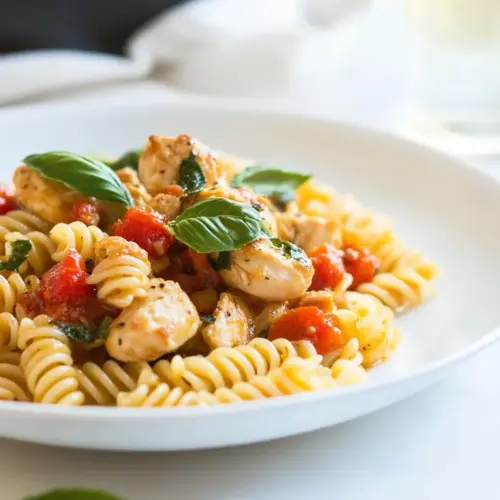
Quick Basil Chicken Pasta
Quick Basil Chicken Pasta is a creamy, savory, easy weeknight dinner that pairs tender chicken with a bright tomato basil sauce and silky pasta. Ready in about 30 minutes, it balances comforting cheese and herb notes with a hint of heat. Perfect for busy evenings when you want something fast but satisfying, this recipe is a strong candidate for your regular rotation.
Equipment
- Pot
- Medium skillet
- Colander
Ingredients
- 4 ounces angel hair pasta or pasta of choice Boil to tender for a quick pasta base; cooks extremely fast and soaks up sauce flavors while providing the primary carbohydrate component for the dish.
- 1 small (about 8 oz) boneless chicken breast cubed 1 inch Cube for even cooking and sear until golden to contribute lean protein and a substantial, meaty texture that complements the pasta while absorbing surrounding flavors.
- 1/4 cup diced onion about 1/4 medium onion Sauté until translucent to build savory sweetness and aromatic depth; provides a mild background flavor that balances the acid in the tomatoes and enhances overall complexity.
- 2 cloves garlic pressed or diced Crush or mince and cook briefly to release pungent, aromatic oils that add sharpness and savory depth, tying together the chicken, tomatoes, and basil in the sauce.
- 1 14-ounce can diced tomatoes Simmer into the sauce to supply acidity, body, and tomato flavor; forms the saucy base that coats the pasta and melds with herbs and cheese.
- 1 1/2 teaspoons dried basil or 1/4 cup chopped fresh basil Sprinkle dried or fold in fresh to deliver warm, peppery, slightly sweet herb notes; acts as the signature flavor that gives the dish its basil-forward character.
- 1/4 teaspoons salt plus more to taste Season to taste during cooking and at the end to enhance and balance flavors; helps bring out natural tastes in the chicken, tomatoes, and cheese without overpowering them.
- 1/4 teaspoon hot sauce Add sparingly to introduce a touch of heat and brightness; aids in lifting the flavors and providing a subtle spicy contrast to the creamy cheese and sweet tomatoes.
- 1/2 cup Parmesan cheese Grate and stir into the finished dish to add salty, nutty, umami richness and creamy mouthfeel; helps bind the sauce and pasta for a cohesive, savory finish.
- Fresh basil optional, thinly sliced Garnish thinly to contribute fresh, herbal aroma and a bright visual pop; adds fresh basil flavor and lightness when scattered over the plated pasta.
Instructions
- Put a pot of lightly salted water on to boil for your pasta.: You will notice the water shimmer and small bubbles forming before a rolling boil begins, that is your cue. Salted water seasons the pasta from the inside as it cooks, making every bite flavorful instead of flat. A common mistake is under salting the water, which leads to bland pasta that forces heavy saucing later to compensate. Keep the pot large enough so the pasta moves freely, and bring it to a full boil before adding the strands so they do not clump together.
- Spray a medium skillet, with cooking spray, or drizzle with a bit of olive oil. Brown cubed chicken over medium heat, 3 to 5 minutes. Lightly salt and pepper the chicken while it is cooking.: When the fat heats it will thin and shimmer and you may smell a hint of fruit or toast depending on the oil. This film prevents sticking and helps the chicken develop those brown, savory edges that create depth. Avoid adding chicken to a cold pan, which causes it to release moisture and steam rather than brown, producing a mealy texture. Make sure the pan is hot enough that pieces sizzle on contact but not so hot that the oil smokes.
- Add onions and garlic, and cook until chicken is cooked through and onions begin to turn translucent at the edges, another 3 to 5 minutes.: As the chicken cooks you will hear a steady sizzle and see the edges take on a golden hue, the Maillard reaction creating flavor. Browning first locks in juices and adds nutty, roasted notes to the final sauce. A frequent error is overcrowding the pan; too many pieces lower the pan temperature and cause steaming. Cook in a single layer and turn pieces only when they release easily and show a golden crust.
- Stir in canned tomatoes (and their juices), basil, and salt. Bring to a simmer and cook, stirring occasionally, until thick and saucy, about 6 minutes.: The salt draws out moisture and seasons the surface, and you will observe beads of juice at the edges that help carry seasoning inward. Seasoning during cooking layers flavor instead of dumping it all at the end. Do not over salt early, because reduction will concentrate flavors later; taste and adjust after the sauce has cooked to be sure.
- Start your pasta, and cook according to package instructions until al dente. Drain and divide into two bowls.: The onion will soften and lose its raw bite, becoming glossy, while the garlic will perfume the pan. This step builds the aromatic foundation for the sauce and signals that the chicken is nearly done. Burning the garlic at this stage ruins the flavor, so lower the heat if you smell bitterness, and stir gently to prevent sticking. Ensure the chicken reaches a safe internal temperature by cutting a piece to check for no pink inside.
- Stir hot sauce into the tomatoes and check the salt level. Add more if needed. Divide the sauce between your two bowls. Top with Parmesan and optional fresh basil.: When you add the tomatoes the pan will hiss and steam, and the mixture will turn into a fragrant simmering pool. The tomatoes provide acidity that balances richness, while the basil begins to perfume the sauce. Stirring helps integrate browned bits from the pan into the sauce for extra flavor. A common misstep is adding too much salt at this point; start with a pinch and taste after reduction since flavors concentrate as it cooks.
- Enjoy!: Watch the sauce reduce, moving from watery to clingy, and listen for a softer, steadier simmer rather than a rolling boil. This concentration concentrates flavors and creates the right cling for the pasta . If you leave it boiling hard you risk drying out or burning, so lower to a gentle simmer and stir to avoid sticking. The sauce should coat a spoon and leave a ribbon as you draw it through.
- Start your pasta, and cook according to package instructions until al dente.: As the pasta softens you will see it swell and release a faint starchy scent that helps thicken the sauce later. Cooking to al dente ensures the texture is firm when combined with sauce, providing a pleasing bite. Overcooking results in mushy strands that collapse in the bowl; taste a strand a minute or two before the package time to be certain. Reserve a small cup of pasta water in case you need to loosen the sauce later.
- Drain and divide into two bowls.: After draining the pasta you will notice steam and a slight sheen from the retained starch. Dividing into bowls early keeps portions even and lets you plate with hot sauce immediately. Do not rinse the pasta , rinsing removes starch that helps sauce cling, making the dish feel disconnected. If the pasta sits too long it can stick, so toss with a touch of oil if there will be a wait.
- Stir hot sauce into the tomatoes and check the salt level.: Adding the hot sauce brightens the tomato base with subtle heat, and you will smell a gentle tang as it integrates. Tasting now ensures balance; acidity, heat, and salt should complement rather than overpower. One mistake is overdoing the hot sauce too early, so add conservatively and build to your preference. If the sauce tastes flat, a pinch of salt or a splash of reserved pasta water can revive it.
- Divide the sauce between your two bowls. Top with Parmesan and optional fresh basil.: As the sauce meets the hot pasta you will notice steam and the cheese begin to melt into glossy ribbons. The contrast of warm sauce, melty Parmesan cheese , and fresh basil creates layered texture and aroma in every bite. A common oversight is waiting too long to add the cheese which prevents melting, so sprinkle it while the bowl is hot for the best result. Finish with thinly sliced basil for fragrance and visual brightness.
- Enjoy!: The first forkful should offer emotive balance, warm and savory with a herbaceous lift. Take a moment to adjust seasoning at the table if needed, perhaps a tiny extra grind of pepper. One mistake is rushing the first bite before flavors settle; letting it sit for a minute helps meld textures and temperature for a truer sense of the final dish.
Notes
- Timing tip: If your chosen pasta takes longer than angel hair, start the pasta earlier so the sauce and pasta finish together, which preserves texture and temperature.
- Pan temperature: Make sure the skillet is hot before adding the chicken so you get a golden sear instead of steaming, which locks in flavor and juices.
- Salt in stages: Season lightly early and taste again after the sauce reduces, adding more only if needed to avoid over salting as flavors concentrate.
- Fresh versus dried basil: Add dried basil during simmering for depth, and reserve fresh for finishing to retain aroma and brightness.
- Pasta water magic: Keep a cup of reserved pasta water to loosen the sauce if it becomes too thick, the starch helps the sauce cling beautifully.
- Cheese finish: Add grated Parmesan cheese right before serving so it melts into silky ribbons and enhances umami without clumping.