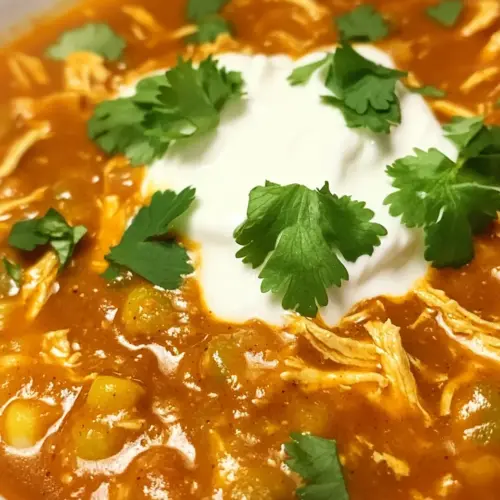
Quick and Easy Chicken Enchilada Soup
Quick and Easy Chicken Enchilada Soup is a creamy, savory bowl loaded with shredded chicken, enchilada sauce, and warm taco spices. This easy weeknight dinner delivers a comforting, slightly spicy profile with minimal hands on time, perfect for busy families. The soup reheats well and invites a variety of toppings, making it a dependable, crowd pleasing choice you will want to make again and again.
Equipment
- Large Pot
- Wooden Spoon
- Ladle
Ingredients
- 2 tablespoons olive oil Heat and sauté to create the cooking medium and help soften aromatics; olive oil provides a smooth base for browning and flavor development. Use a neutral-flavored oil to prevent overpowering the other ingredients and to ensure even heat distribution during sautéing.
- 1 onion small, 1/2" dice Chop and sweat to release sweetness and deepen flavor; small diced onion adds aromatic complexity and texture to the soup. Cook until translucent to balance acidity and provide a savory foundation for the broth and spices.
- 4 cups chicken cooked, shredded (see notes) Shred and fold in to add protein and hearty texture; cooked chicken brings savory richness and makes the soup satisfying and filling. Use pre-cooked poultry to speed preparation, and adjust shredding size to control mouthfeel.
- 1.25 ounces taco seasoning full packet of taco seasoning Season and season again to introduce southwest-inspired heat and depth; taco seasoning blends chili, cumin, garlic, and other spices for consistent flavor. Sprinkle in gradually and taste as you go to achieve the desired spice level without overpowering the soup.
- 20 ounces cream of chicken condensed soup 2 cans Enrich and thicken to provide creamy body and comforting flavor; condensed cream of chicken adds smoothness and a savory base to the broth. Whisk in well to avoid lumps and simmer to integrate its concentrated flavor into the soup.
- 15 ounces enchilada sauce red, mild Spice and color to contribute tangy, savory enchilada flavor; red enchilada sauce adds chile-based depth and a slightly smoky profile. Stir in to combine with the cream base and spices, balancing acidity and heat for a cohesive soup.
- 7 ounces green chilis diced, mild Brighten and mildly spice to introduce acidity and subtle green chile flavor; diced mild green chilis add moisture and gentle heat without overwhelming the dish. Drain if desired for less liquid, and fold in toward the end to preserve texture.
- 6 cups chicken broth low sodium Dilute and build to form the liquid foundation and control soup consistency; low-sodium chicken broth supplies savory stock and prevents oversalting. Add gradually to reach the desired thickness, and simmer gently to meld flavors.
Instructions
- Heat olive oil over medium-high heat in a large pot.: The air will carry a faint fruitiness from the olive oil as it warms, and you may notice a gentle shimmer on the surface when it is ready. Warming the oil properly creates an even heat bed for the onion and prevents sticking, which encourages even browning. A common mistake is overheating the oil until it smokes, which will impart an undesirable bitter note, so lower the heat if you see wisps of smoke. Use a large pot to maintain a stable temperature as you add ingredients, because overcrowding can rapidly drop the oil temperature and lead to steaming instead of sauteing.
- Add diced onion and saute until translucent and fragrant (about 5 minutes).: As the onion softens, you will detect a sweet, savory fragrance that fills the kitchen and a visual change from opaque to translucent. This step builds foundational flavor through gentle caramelization, which is why I keep the heat at medium to medium high and stir occasionally. Avoid rushing by cranking the heat, which can brown the edges too quickly and create bitter bits. If pieces begin to stick, lower the heat and add a splash of broth to deglaze and capture fond.
- Pour in shredded chicken and taco seasoning. Stir.: When the shredded chicken hits the pot, it releases a soft steam and starts to absorb the aromatic spices in the taco seasoning . Stirring ensures the seasoning coats the meat evenly, infusing each bite. The why here is simple, seasoning early helps integrate flavors. A typical misstep is adding cold chicken straight from the fridge which cools the pot, so allow it to come closer to room temperature or increase heat briefly to keep the cooking consistent.
- Pour in condensed cream of chicken soup and enchilada sauce. Stir.: As you add the canned cream of chicken and enchilada sauce , the pot will thicken and take on a glossy, unified appearance. Stirring vigorously helps these dense components combine smoothly with the oil and onion, preventing clumping. This step is crucial to build the creamy base that carries the other flavors. If lumps form, lower the heat and whisk briskly or add a small amount of warm broth to loosen the mixture. Overheating the condensed soup can make the texture grainy, so gentle heat is best.
- Add green chilis and stir.: When the green chilis are added, you will notice a fresh, slightly tangy lift in aroma and bits of green throughout the mixture. These chilis contribute bright contrast to the richer elements, balancing the palate. Mix them through so their moisture integrates without over diluting the base. A common error is draining them completely and losing flavor, so retain a touch of their juices unless the soup seems too thin.
- Pour in 6 cups of chicken broth and stir, adding more as needed.: As the low sodium chicken broth is stirred in, the pot will loosen and steam will rise, carrying a warming scent that promises comfort. This liquid thins the condensed base to a ladle friendly texture, and it is where you control the soup consistency. Add the broth incrementally and taste as you go, because some canned ingredients vary in thickness. People sometimes add all the broth at once and then find the soup lacks depth; simmering and tasting allows you to adjust for a balanced flavor.
- Bring mixture to a boil, reduce heat, and simmer for 15-20 minutes.: At the boil you will hear a steady bubbling, and the aromas will deepen and meld. Reducing to a gentle simmer lets flavors marry and the texture round out without over reducing the liquid. This resting simmer softens any sharp notes from the seasoning and allows the chicken to warm through. Avoid leaving it at a vigorous boil, which can evaporate too much liquid and concentrate saltiness. If you notice the soup reducing too quickly, lower the heat and partially cover the pot to retain moisture.
- Serve with desired toppings (see notes).: When you ladle the soup, the surface should glisten and steam will rise in fragrant waves, inviting garnishes. Toppings add textural contrast and freshness, which transforms each bowl into a custom experience. Common mistakes include overcrowding bowls with too many wet toppings, which dilutes the flavors; instead, add crunchy elements last so they stay crisp. Offer a variety of textures and colors so everyone can personalize their bowl exactly how they like.
Notes
- Start with low sodium broth so you can control the final saltiness; canned ingredients vary widely in salt content, and this keeps the balance flexible.
- Heat the oil gently to properly sweat the onion, coaxing sweetness without burning, which forms the flavor base of the soup.
- Toss in shredded chicken at room temperature when possible to avoid cooling the pot and prolonging the time it takes to come back to a simmer.
- Whisk the condensed soup into warm liquid to prevent lumps and achieve a silky texture without needing extra thickening agents.
- Add toppings just before serving to preserve contrast; crunchy tortilla strips and fresh herbs should be last minute so they stay vibrant.