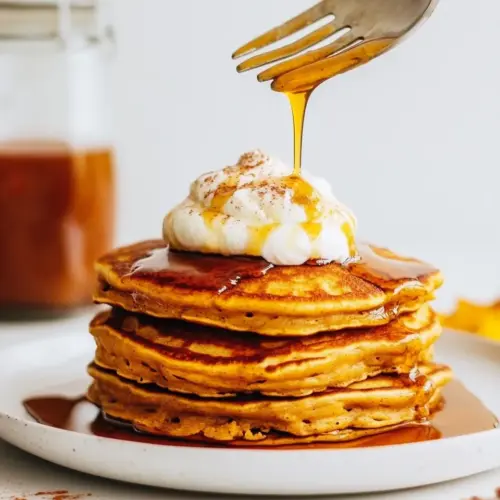
Pumpkin Spice Pancakes
Pumpkin Spice Pancakes are fluffy, warmly spiced pancakes with a tender crumb and cozy fall flavor. Creamy pumpkin puree, aromatic cinnamon and nutmeg, and a hint of ginger and cloves create a comforting breakfast, perfect for an easy weekend brunch or a festive holiday morning. Try them for a quick, seasonal treat that brings autumn to the table.
Equipment
- Mixing Bowl
- Whisk
- Skillet or griddle
- Spatula
- Measuring Cups and Spoons
Ingredients
- 1 1/4 cups all-purpose flour Provide structure and bulk to the batter, creating the tender crumb of the pancakes; sifts easily and combines with leaveners for even rise. Absorb liquids and fats to form a smooth batter while contributing to golden-brown color when cooked.
- 2 tablespoons brown sugar Add sweetness and a hint of deeper caramel flavor to balance spices; dissolve into wet ingredients to distribute sweetness evenly throughout the pancakes. Help with moisture retention, yielding a softer texture and subtle molasses notes.
- 2 teaspoon baking powder Leaven the batter by releasing gas when heated, producing light, fluffy pancakes; activate quickly and work best when combined with wet ingredients just before cooking. Assist in counteracting density from pumpkin puree so pancakes rise properly.
- 1/4 teaspoons salt Enhance overall flavor by providing a mild savory balance that brightens sweetness; control of salt level is important to avoid overpowering delicate spices. Strengthen gluten structure slightly, improving texture and mouthfeel when used sparingly.
- 1 teaspoon cinnamon Impart warm aromatic flavor central to the pumpkin-spice profile; blend into dry ingredients to distribute spice evenly for consistent taste. Complement pumpkin and sugar while elevating perceived sweetness without adding sugar.
- 1/4 teaspoon ground nutmeg Contribute nutty, slightly sweet warmth that rounds out the spice blend; measure precisely because nutmeg can become bitter if overused. Pair with cinnamon to enhance autumnal notes and deepen overall flavor complexity.
- dash of ground ginger Add a bright, peppery warmth in very small amounts to accentuate the spice mix; a dash prevents ginger from overwhelming the other flavors. Provide subtle zing that lifts the pancake batter and complements pumpkin's earthiness.
- dash of ground cloves Introduce a warm, slightly sweet and aromatic depth that complements cinnamon and nutmeg; use sparingly as cloves are potent. Blend into the spice mixture to add complexity and a hint of savory warmth to each bite.
- 1 cup milk Bind wet and dry ingredients while contributing to batter thinness and steam for lift; provides a neutral dairy base that helps achieve a tender crumb. Adjust thickness to preference so pancakes cook through without drying.
- 1/2 cup pumpkin puree Add moistness and rich pumpkin flavor along with a tenderizing effect from its natural fibers; distribute evenly to avoid streaks and ensure uniform color and texture. Contribute subtle sweetness and a dense quality that pairs with leavening to yield soft pancakes.
- 1 large egg Bind ingredients together and add structure from proteins and fats; whisk into liquids to create a cohesive batter that holds together while cooking. Contribute to browning and a slightly richer mouthfeel in the finished pancakes.
- 2 tablespoons vegetable oil or melted butter Supply fat for tenderness and help prevent sticking, yielding moist, golden pancakes; choose vegetable oil for neutrality or melted butter for richer flavor. Emulsify with egg and milk to create a smooth batter and improve mouthfeel.
Instructions
- In a large mixing bowl, whisk together 1 1/4 cups all-purpose flour, 2 tablespoons brown sugar, 2 teaspoon baking powder, 1/4 teaspoon salt, 1 teaspoon cinnamon, 1/4 teaspoon ground nutmeg, dash of ground ginger and a dash of ground cloves. Set aside.: Your nose will notice the spices bloom as you whisk, releasing warm, toasty aromas that hint at the final flavor. Combining these dry elements first ensures even distribution of the baking powder so the pancakes rise uniformly, and it prevents pockets of salt or spice that could create tiny flavor surprises. Use a whisk or fork to aerate the flour , which helps with a lighter texture. A common misstep is skipping the whisking, which can leave clumps of brown sugar or unmixed leavening and produce unevenly textured pancakes. If you see darker flecks of unmixed spice after whisking, sift or pass the mixture through a fine-mesh strainer for an ultra-smooth base.
- In a separate bowl, whisk together 1 cup milk, 1/2 cup pumpkin puree, 1 large egg, and 2 tablespoons vegetable oil or melted butter.: When you whisk these wet ingredients, you should notice the batter taking on a uniform, slightly glossy look, and the egg acts as a binder, knitting the fluids together so they coat the flour evenly. The pumpkin puree adds a velvety thickness and a muted sweetness that makes the batter feel substantial. If the mixture seems lumpy from the pumpkin, it is okay, those little bits will hydrate and meld during mixing with the dry ingredients. A typical mistake is using overly cold milk , which can slow cooking and affect batter cohesion; letting it come closer to room temperature helps everything blend smoothly.
- Add the wet ingredients to the dry ingredients and whisk to combine. The batter may still be lumpy and that is ok.: Once combined, the batter should look slightly thick and glossy, with gentle peaks that fall slowly. Those tiny lumps keep the pancakes tender, because overmixing develops gluten in the all-purpose flour and leads to a tougher bite. As you stir, scrape the bowl edges to incorporate every streak of dry mix, and notice the aroma shift as the spices mingle with the pumpkin and milk . If you overmix, the batter will tighten and lose air, producing flat, dense pancakes, so stop whisking as soon as the ingredients are just combined.
- Pour 1/4 cup batter onto the buttered griddle or skillet and cook until bubbles begin to appear on the surface. Carefully flip and cook the opposite side until golden brown. Repeat with the rest of the batter, greasing when needed.: You will hear a gentle hiss as the batter meets the hot surface, and small bubbles forming across the top are your visual cue that the underside has set. The first pancake is often a test for your heat setting; aim for a medium heat where the exterior browns evenly without burning. When you flip, the color should be a warm golden brown, and the exposed underside releases a toasty scent. If the pancakes brown too quickly, lower the heat; if they take too long to color, raise it a touch. Use a thin spatula and a confident flip to avoid tearing; a wobbly turn is a common error that leaves a ragged edge.
- Serve with maple syrup, cinnamon sugar, and whipped cream if desired.: At serving, the warm syrup will glisten on the pancake stacks, and the spices will perfume the plate, inviting that first fulfilling bite. I like the contrast of the sticky maple syrup with the tender crumb and, when added, a dusting of cinnamon sugar enhances the spice notes without drowning them. If you choose to add whipped cream, it creates a cool counterpoint to the warm pancakes. A misstep at this stage is piling too many toppings that mask the delicate pumpkin and spice balance, so choose one or two accompaniments to complement rather than overpower the pancakes.
Notes
- Swap fats for flavor, use melted butter instead of vegetable oil for a richer, nuttier taste and deeper browning on the pancake edges.
- Adjust milk richness, use whole milk for a creamier batter, or a lower fat milk for a lighter mouthfeel without changing volumes.
- Control spice intensity, reduce the cinnamon or nutmeg slightly if you prefer a more subtle pumpkin note, or increase them for a bolder profile.
- Textural change, fold in a spoonful of oats for a heartier pancake that adds chew and pairs well with maple syrup.
- Make it ahead, prepare the batter and refrigerate for up to 24 hours, then give it a gentle stir before cooking so the baking powder remains effective.