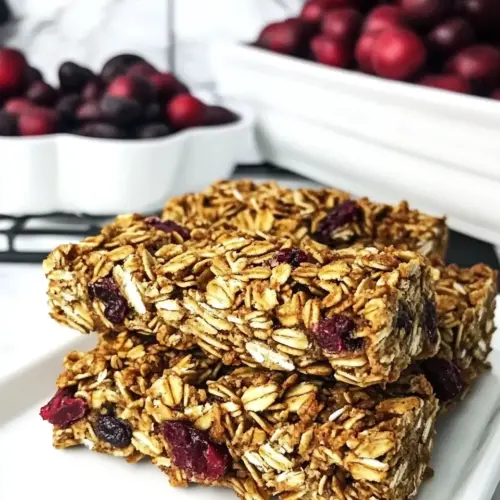
Pumpkin Spice Cranberry Granola Bars
Pumpkin Spice Cranberry Granola Bars are crispy yet chewy snack bars loaded with toasted oats, nuts, seeds, tart dried cranberries and melty mini chocolate chips. The warm spice blend of cinnamon, ginger, nutmeg and cloves adds cosy autumn flavor, while honey and brown sugar hold everything together for an easy make ahead treat, perfect for snacks, brunch spreads, or holiday trays.
Equipment
- Large Baking Sheet
- Parchment Paper
- 9"x 13" cake pan
- Mixing Bowls
- Small Saucepan
- Spatula
- Knife
Ingredients
- 2 cups rolled oats Provide hearty texture and whole-grain body to the bars; oats absorb binder and hold clusters together while adding chewiness and subtle nutty flavor. Offer a source of fiber and help keep bars filling and satisfying for snacks or breakfast on the go.
- 1 cup pecans, chopped Add crunchy, buttery notes and textural contrast; chopped pecans contribute healthy fats and a toasted aroma when baked lightly. Balance sweetness and provide a satisfying bite that complements both seeds and dried fruit.
- 1 cup cashews, chopped Bring a creamy, rich texture and mild sweetness when chopped; cashews supply plant-based protein and a smooth contrast to crunchier nuts. Help create cohesive bars by distributing fat and richness throughout the mixture.
- 3/4 cup pepitas Contribute a crisp, toasty crunch and mild, pumpkin-like flavor; pepitas add green color and nutritious trace minerals. Enhance chew and mouthfeel while boosting protein and healthy fats for a balanced snack.
- 1 cup dried cranberries Offer bright, tart-sweet bursts and chewy texture; dried cranberries provide acidity that cuts through sweetness and accentuates spice flavors. Bring color and visual appeal while contributing chew and concentrated fruit flavor.
- 1/2 cup dried cherries Deliver deeper tartness and varied fruit texture; dried cherries add a slightly more intense, honeyed fruit note than cranberries. Increase flavor complexity and pairing well with chocolate and warm spices.
- 1 tablespoon ground flaxseeds Provide a subtle, nutty binder and gentle texture; ground flaxseeds help thicken and add omega-3 fatty acids and fiber. Aid in cohesion of clusters and contribute a mild earthy flavor that supports the granola base.
- 2 tablespoons chia seeds Enhance structure and nutrient density with gel-forming fibers; chia seeds absorb liquid and help bind ingredients while adding tiny crunch. Supply omega-3s and fiber, improving mouthfeel and stability of the bars.
- 1 teaspoon ground cinnamon Impart warm, sweet-spicy aroma and foundational pumpkin-spice character; ground cinnamon elevates overall flavor and complements the nuts and fruit. Tie together sweet and savory components for classic fall flavor.
- 1/4 teaspoon ground ginger Add a bright, slightly peppery warmth and subtle citrusy zing; ground ginger brightens the spice profile and lifts heavier flavors. Provide balance to sweetness and deepen the seasonal spice blend.
- 1/2 teaspoon ground nutmeg Lend warm, sweetly woody notes and a cozy fragrance; ground nutmeg complements cinnamon and enhances the pumpkin-spice profile. Add aromatic complexity and a hint of savory depth to the bars.
- 1/4 teaspoon ground cloves Introduce a pungent, slightly astringent spice that punctuates sweetness; ground cloves provide sharp, aromatic highlights in small amounts. Intensify overall spiced character and round out the seasonal blend.
- 1/2 teaspoon salt Season the mixture and enhance flavor contrast; salt brightens and balances sweetness while amplifying nut and spice aromas. Prevent the bars from tasting flat by sharpening overall taste.
- 4 tablespoons butter Provide rich creaminess and help bind ingredients when melted; butter adds savory depth and a luxurious mouthfeel to the bars. Promote browning and carry fat-soluble flavors for a satisfying chew.
- 1/2 cup honey Act as a natural sweetener and adhesive binder; honey adds viscosity that helps hold clusters together and contributes floral sweetness. Impart chewiness and a pleasant, slightly sticky texture that keeps bars intact.
- 1/4 cup brown sugar Supply additional sweetness and caramel notes; brown sugar adds moisture and a deeper molasses flavor when combined with butter and honey. Help create chewiness and promote gentle caramelization during baking.
- 1 teaspoon vanilla extract Contribute fragrant sweetness and flavor lift; vanilla extract enhances other ingredients and rounds out the spice profile. Add subtle aromatic complexity and make the overall flavor more cohesive.
- 1 1/2 cups mini chocolate chips, divided Provide chocolate richness and pockets of melty indulgence; mini chocolate chips add sweet, creamy bites throughout the bars. Reserve half for folding in and half for topping or folding in after slight cooling to preserve shape and texture.
Instructions
- Preheat oven to 350 degrees F. Line a large baking sheet with parchment paper. Spread the oats in an even layer on the baking sheet and toast for 10-12 minutes. When finished roasting, remove the oats from the oven and reduce oven temperature to 300 degrees F.: As the rolled oats toast you will notice a warm, nutty aroma rising, signaling that complex flavors are developing. The oats should turn a light golden color and sound slightly crisp when stirred, which indicates moisture has left the surface. This step deepens the flavor base for the bars and prevents a raw oat taste later. A common mistake is leaving them too long, which leads to a bitter aftertaste, so check every few minutes and stir if edges brown faster. If you skip this stage the final bars will be less aromatic and can be softer in texture.
- Meanwhile, line 9"x 13" cake pan with parchment paper and spray lightly with non-stick cooking spray. Set aside.: You will feel the satisfaction of planning ahead when the pan lifts the bars out cleanly after chilling, and the parchment prevents sticking while easing cleanup. Pressing the parchment into corners ensures an even base and tidy edges. One error to avoid is not using enough spray, which makes removal difficult and can tear bars; conversely too much spray can make the paper slide. Taking a moment to fit the paper smooths the pressing process later.
- In a large mixing bowl combine the oats, pecans, cashews, pepitas, cranberries, cherries, flax seeds and chia seeds. Set aside.: When you mix these dry elements, you'll notice a medley of textures and colors, from the pale rolled oats to the green pepitas and red dried fruits. Tossing them together ensures even distribution so every bite has balance. A trap here is uneven chopping of nuts, which can create inconsistent bites; aim for uniform pieces for a harmonious mouthfeel.
- In a small mixing bowl mix together the ground cinnamon, ginger, nutmeg, cloves and salt. Set aside.: Crushing the spice blend briefly between your fingers releases their essential oils, and you'll smell a warm, complex bouquet. Combining the spices before adding them ensures even seasoning throughout the bars. Avoid adding spices directly to the wet ingredients without mixing them first, as that can create concentrated pockets of flavor that read as harsh rather than balanced.
- With everything ready, heat a small saucepan over medium heat. Melt the butter and stir in the honey and brown sugar, stirring constantly until the sugar has dissolved completely.: You will hear a gentle simmer and see the mixture turn glossy and smooth as the sugar dissolves, giving off a toffee like aroma. Dissolving the sugar fully is crucial for a cohesive binder; undissolved sugar can create grainy textured spots in the finished bars. A frequent misstep is overheating, which can burn the sugars and impart bitterness, so maintain medium heat and stir constantly until smooth.
- Stirring constantly add the vanilla and spice mixture and remove from heat. Stir in 1/2 cup chocolate chips (reserving the remaining 1 cup).: The moment you add the warm spices and vanilla extract the syrup will smell intoxicatingly autumnal. Stirring in the reserved mini chocolate chips while hot melts them slightly and distributes chocolate throughout, giving pockets of creamy richness. Pulling the pan from heat prevents the spices from cooking off and keeps their brightness. A trap here is leaving it on the burner too long, which can thin the syrup and make the bars less cohesive.
- Pour the honey and butter mixture over the oat and nut mixture and stir well until fully combined and coated (approximately 2-3 minutes). Add the remaining mini chocolate chips and stir again.: At this stage you'll feel the weight of the mixture come together as the warm syrup glosses every piece; the aroma will become layered with honeyed caramel and spice. Coating thoroughly is key so the bars hold together after baking. If you under stir, pockets of dry ingredients will remain and the bars will crumble when cut. Stir briskly but gently, ensuring even coverage without smashing the nuts or fruits.
- Pour the granola mixture into the prepared cake pan and spread evenly. Press the granola mixture firmly down into the pan and transfer to the oven. Bake for 25-30 minutes or until light and golden.: When spreading, press with the back of a spatula or a piece of parchment to compact the mixture; you will sense resistance as the pieces pack together and the surface smooths. During baking the edges will brown slightly and the top will glisten, signaling that sugars are caramelizing and binding the bar. Pressing firmly is crucial for sliceable bars, and a common error is pressing too lightly which leads to a crumbly texture. Keep a close eye near the end to avoid overbrowning.
- Remove from the oven and allow mixture to cool before covering with foil and transferring to the refrigerator to cool and solidify (at least 2-4 hours).: As the pan cools the aroma will settle and the bars will firm up; refrigeration accelerates this and helps the chocolate re set. Cooling fully prevents the bars from falling apart when cut. A typical mistake is cutting too early while still warm, causing messy, melted bars. Be patient and chill the pan thoroughly for the cleanest slices.
- Gently lift the granola bars from the pan with the parchment paper and cut into desired number of bars. Store in an airtight container for up to 5 days.: Lifting the parchment will reveal a compact slab you can slice evenly. Use a sharp knife and press with steady, confident strokes to get clean edges, wiping the blade between cuts if the chocolate sticks. Storing in a sealed container preserves texture and prevents staleing. Avoid stacking warm bars, which can stick together and lose their individual definition.
Notes
- Reduce baking time slightly, if you prefer a chewier interior rather than a toffee like snap. Watch for a lightly golden top and softer center; the bars will firm as they chill.
- Increase pepitas for more crunch, adding up to 1/4 cup extra if you like a seed forward texture. Stir them in evenly so each bar has a balanced bite.
- Swap brown sugar for coconut sugar, for a slightly earthier sweetness and lower moisture; expect a subtle change in caramel notes.
- Press with parchment and a flat tool, like a measuring cup bottom, to compact the mixture uniformly and avoid uneven thickness.
- Soak very dry dried fruit briefly, in warm water for 10 minutes and drain, to prevent overly chewy pockets that tug at the bite.
- Chill longer for firmer slices, up to overnight, especially useful if you plan to transport the bars to an event or potluck.