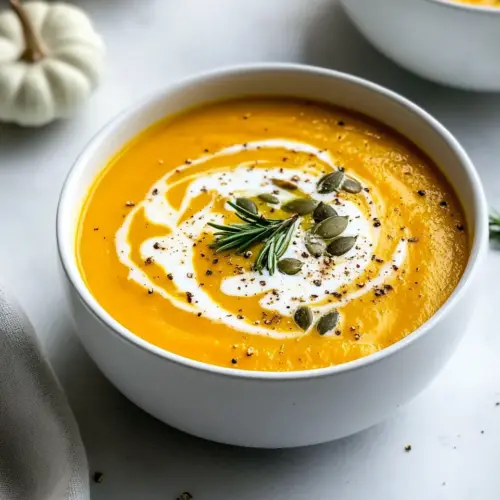
Pumpkin Soup
Pumpkin Soup is a creamy, comforting bowl of roasted pumpkin, warm spices, and silky half and half, perfect as an easy weeknight dinner or Thanksgiving starter. The roasted pumpkin brings caramelized depth while a little honey and spices create a balanced sweet savory profile. Make it for cozy nights when you want something soothing, satisfying, and simple to scale for guests.
Equipment
- Oven
- Baking Sheet
- Parchment Paper
- Dutch Oven
- Immersion Blender
- Spoon
- Knife
Ingredients
- 2 tablespoons extra-virgin olive oil divided Drizzle and sauté to add a fruity, peppery base flavor and help soften aromatics; divide usage between roasting and finishing to layer richness and prevent burning.
- 14 -pound sugar pie pumpkin*, NOT a carving pumpkin; you can also use roasted kabocha squash or roasted butternut squash Roast or puree to provide the soup's primary body and natural sweetness; choose sugar pie pumpkin for dense, creamy flesh and consistent texture when puréed.
- 1/2 teaspoon kosher salt plus a few pinches for roasting the pumpkin Season and balance flavors by enhancing natural sweetness and suppressing bitterness; use a measured amount in the soup and a few pinches to draw moisture out while roasting.
- Ground black pepper for roasting the pumpkin Season the roasting surface to deepen caramelization and add savory contrast; grinding just before use preserves volatile aromatics for brighter peppery notes.
- 1 tablespoon unsalted butter Melt and sweat aromatics to contribute a silky mouthfeel and subtle dairy richness; use early in cooking to help carry flavors and round the soup's finish.
- 1 large yellow onion diced Dice and sauté to create the aromatic base that builds savory depth; softening the onion releases sugars that enhance overall sweetness and complexity.
- 1 tablespoon minced garlic about 3 cloves Mince and cook briefly to infuse pungent, garlicky warmth and aromatic lift; add toward the end of sweating to avoid bitterness from overcooking.
- 1/2 teaspoon ground ginger Season and warm to provide a subtle, citrusy heat that complements pumpkin sweetness; incorporate with other spices to create a balanced, aromatic profile.
- 1/4 teaspoon ground cinnamon Season and sweeten subtly to bring warm, baked-note complexity and uplift the squash's natural sugars; pair sparingly with other warming spices for depth.
- 1/4 teaspoon ground allspice Season and add a woody, slightly sweet background note that deepens the spice blend; use in small amounts to avoid overpowering the soup's delicate flavors.
- 1/8 teaspoon cayenne pepper Season and add a controlled heat that brightens the flavor profile; a pinch provides contrast without overwhelming the other warm spices.
- 4 cups vegetable broth or chicken broth Add liquid and savory backbone to thin, simmer, and deglaze the pot while contributing umami; choose vegetable or chicken broth based on desired flavor intensity.
- 1/2 cup half-and-half Enrich and smooth to add creamy texture and a touch of dairy fat that rounds flavors; stir in near the end to prevent curdling and maintain silkiness.
- 1 tablespoon honey Sweeten gently to enhance natural pumpkin flavors and balance savory-spice elements; add gradually and taste to avoid oversweetening.
- 1/4 cup toasted pepitas or Roasted Pumpkin Seeds Toast and finish to introduce crunchy texture and nutty, roasted flavor as a garnish; sprinkle on top to provide contrast and visual interest.
- Plain Greek yogurt optional Garnish and cool to add tangy creaminess and a refreshing counterpoint to the warm, spiced soup; dollop sparingly for balance and optional richness.
Instructions
- Roast the pumpkin: Place a rack in the center of the oven and preheat to 350°F and line a baking sheet with parchment paper. With your sharpest knife, carefully slice the pumpkin in half from the stem to the base. With a spoon or ice cream scoop, scoop out the seeds. Drizzle 1 tablespoon of the oil over the pumpkin flesh. Sprinkle with a few pinches of salt and black pepper. Rub to evenly coat. Place on the parchment paper cut sides down and pierce the outsides with the tines of a fork. Roast until the flesh is fork tender, about 45 to 55 minutes. Set aside to cool.: Place a rack in the center of the oven and preheat to 350°F and line a baking sheet with parchment paper. : The oven should smell neutral before the pumpkin goes in, and once the flesh begins to roast you will notice a warm, sweet aroma that deepens into caramel as the sugars concentrate. The parchment prevents sticking and makes cleanup simpler. If your oven runs hot, tent foil loosely over the pumpkin if edges brown too quickly, because char on the exterior can impart an acrid taste.
- To make the soup: In a Dutch oven or similar large, heavy-bottomed pot, melt the butter and the remaining tablespoon oil over medium heat. Once the butter melts, stir in the onion and 1/2 teaspoon salt. Cook, stirring occasionally, until the onion is translucent, about 8 to 10 minutes.: As you slice, you will hear a solid, clean cut and see dense, bright orange flesh. A sharp knife reduces the chance of slipping and ensures an even roasting surface. If the stem resists, score lightly and take steady, deliberate pressure; forcing the blade can be dangerous.
- Stir in the garlic, ginger, cinnamon, allspice, and cayenne. Cook until fragrant, about 30 seconds.: You will feel a slight resistance as you scrape the cavity and see strings of fibrous strands clinging to the seeds. Removing seeds thoroughly helps the roast dry and caramelize rather than steaming. Save seeds for toasting if you like, but remove them completely from the roasting halves to ensure even texture.
- Carefully scoop the flesh into pot (discard the skins).: The oil beads on the surface before you rub it in, then dissolves into the pores as you coat the cavity. This thin sheen encourages browning and keeps the flesh from drying out. Use sparingly, because too much oil can make the exterior greasy and prevent proper caramelization.
- With a wooden spoon, mash the pumpkin to break it up and start to combine it with the spices.: You'll notice the salt drawing out a faint moisture at first, then the seasoning beginning to cling as it sits. This step seasons the flesh from the inside out and helps flavor concentration during roasting. Avoid over salting now, as you will add more later when tasting the finished soup.
- Stir in the broth. Increase the heat to high and bring the liquid to a boil. Reduce heat, partially cover, and let simmer gently for 15 minutes.: Your hands or a brush will spread the oil and spice so that the entire surface has consistent coverage, which yields uniform browning. If you see pools of oil, dab them with a paper towel, because excess oil can lead to uneven roast marks and splatter.
- Remove the soup from the heat. Stir in the half-and-half and honey. With an immersion blender, puree the soup in the pot until it is very smooth. Or to use a regular blender, carefully transfer a few ladelfuls of the soup to a blender. Blend until smooth, then transfer to a separate pot or serving bowl. Repeat with the remaining soup. Taste and add salt and black pepper as desired.: Laying cut sides down concentrates heat on the flesh so it roasts rather than dries, and piercing allows steam to escape which prevents bursting and promotes tenderness. If you skip piercing, steam pockets can form and make the roast uneven.
- Serve hot, with a swirl of Greek yogurt and sprinkle of pepitas seeds to taste.: When done, a fork will slide into the thickest part with little resistance and the surface will have golden spots. The aroma will be deeply sweet and slightly toasty. If the pumpkin still feels firm, return it to the oven in 10 minute increments to avoid under roasting, which leaves an uncooked, starchy taste.
- Set aside to cool.: Cooling makes scooping safer and helps the flesh firm slightly for easier handling. The cooled exterior will be less steamy and more pleasant to work with. Don’t rush this step, because scooping hot flesh can cause burns and a watery soup if too much steam is lost.
- To make the soup: In a Dutch oven or similar large, heavy-bottomed pot, melt the butter and the remaining tablespoon oil over medium heat. : The butter will foam and then settle, releasing a nutty aroma as it warms. Combining butter with extra-virgin olive oil raises the smoke point and creates a glossy base for the aromatics. If your pan is too hot, the butter will brown quickly and can color the flavor, so moderate the heat.
- Once the butter melts, stir in the onion and 1/2 teaspoon salt.: The onion will sizzle subtly as it hits the fat and then soften, becoming translucent and sweet. The added salt helps draw out moisture and accelerate caramelization. If you see browning too soon, lower the heat and add a splash of broth to prevent burning.
- Cook, stirring occasionally, until the onion is translucent, about 8 to 10 minutes.: You will notice the pan developing fond, little golden bits that add savory depth. Stirring occasionally encourages even cooking without breaking the onion down into mush. Overcooking here leads to bitter edges, so watch for even softening rather than color change alone.
- Stir in the garlic, ginger, cinnamon, allspice, and cayenne.: Once added, the spices will bloom in the warm fat releasing fragrant, invigorating notes. Garlic should become aromatic in less than a minute, and spices should smell warm and inviting. If you let them cook too long without liquid, they may scorch and taste acrid, so add broth promptly if the pan seems dry.
- Cook until fragrant, about 30 seconds.: This short burst lets the volatile oils awake and deepen the aroma without burning. You should detect a quick uplift in scent from the spices and garlic. If the smell turns sharp or acrid, the heat is too high, so remove from heat and add a splash of broth to cool the pan.
- Carefully scoop the flesh into pot (discard the skins).: The roasted flesh will be soft and spoon easily into the pot, releasing warm steam and a concentrated sweet aroma. Discard the skins as they remain fibrous and will not blend smoothly. If any large roasted bits are too firm, give them a rough chop to help them incorporate during simmering.
- With a wooden spoon, mash the pumpkin to break it up and start to combine it with the spices.: Mashing by hand helps integrate textures and begin flavor melding before adding liquid, and you will see the mixture thicken and darken slightly. This step gives more control over final texture, preventing over thinning. Avoid overworking, which can make the texture gluey.
- Stir in the broth.: As the broth hits the pot, steam will rise and the mixture will loosen into a soup. The broth adds savory balance and provides the liquid medium for simmering. If your broth is low sodium, you may need a bit more salt later; if it is very salty, dilute with water to taste.
- Increase the heat to high and bring the liquid to a boil.: A rolling boil is audible and vigorous, signaling that the soup is reaching full temperature; it helps flavors meld quickly. Watch closely because vigorous boiling can cause splatter and reduce liquid too fast, concentrating salt and altering texture.
- Reduce heat, partially cover, and let simmer gently for 15 minutes.: A gentle simmer allows flavors to marry and any remaining fibrous bits to soften while keeping evaporation moderate. You will hear a soft, steady bubble and see the surface move slowly. If too vigorous, reduce heat to avoid toughening proteins and losing liquid too quickly.
- Remove the soup from the heat.: Taking it off heat stops cooking and preserves the balanced flavors you just coaxed out. The surface will calm and the aroma will remain freshly rounded. Leaving it on retained heat can over reduce and intensify saltiness.
- Stir in the half-and-half and honey.: The half-and-half will add a creamy sheen and smooth the mouthfeel, while the honey brings back bright sweetness that can be diminished by heat. Stir slowly so the dairy integrates without curdling. If the soup is too hot, cool a bit before adding dairy to prevent splitting.
- With an immersion blender, puree the soup in the pot until it is very smooth.: The motor will hum and the soup will transform, going from chunky to velvety. This tool keeps you from transferring hot liquid. If you don’t have one, transfer small batches to a blender, venting the lid slightly. Over processing can remove desirable texture contrast, so stop when smooth but still lively.
- Or to use a regular blender, carefully transfer a few ladelfuls of the soup to a blender.: The soup should be warm, not boiling, when you blend. Blend in batches so the lid does not pop off from steam pressure, and hold a towel over the lid for safety. If you overfill the blender, liquid can spurt out, so work in small batches.
- Blend until smooth, then transfer to a separate pot or serving bowl.: After blending, the soup will have a glossy surface and a uniform texture. Transferring to a clean pot keeps the blended batches consistent and makes reheating easier. If you notice separation, whisk gently over low heat to re emulsify.
- Repeat with the remaining soup.: Keep blending until all batches are done, ensuring uniformity across the whole pot. Taste and adjust seasoning as you go to maintain consistency. If one batch tastes different, combine and correct as needed rather than trying to fix individual bowls.
- Taste and add salt and black pepper as desired.: Final seasoning should brighten flavors and balance sweetness. Season gradually, tasting between additions, because it is easier to add than to remove. If you over salt, a squeeze of lemon juice or a touch more broth can help, but prevention is best.
- Serve hot, with a swirl of Greek yogurt and sprinkle of pepitas seeds to taste.: The contrast of cool yogurt and crunchy pepitas creates a delightful finish, and the aroma will be at its peak. Present in warm bowls so the texture and scents remain inviting. If serving later, warm gently and stir to restore silkiness, avoiding high heat which can alter texture.
Notes
- Short on time: Use pre roasted squash or store bought roasted pumpkin, then proceed from the pot sauté step to save roasting time while keeping deep flavor.
- Make it vegetarian: Choose vegetable broth instead of chicken broth to keep the recipe fully plant based without sacrificing savory depth.
- Dairy free option: Replace half-and-half with full fat coconut milk for creaminess, it will add a subtle coconut note and similar silky texture.
- Richer finish: Stir in a small pat of unsalted butter or an extra splash of half and half just before serving to give a glossy, luxurious mouthfeel.
- Extra texture: Toast pepitas in a dry skillet until they pop and become aromatic, then finish the bowl with them for a crunchy contrast to the smooth soup.
- Adjusting sweetness: If the roast is not sweet enough, a touch more honey or a pinch more cinnamon can lift the profile without making it cloying.
- Blending alternative: If you do not have an immersion blender, use a regular blender in small batches and hold the lid slightly ajar with a towel to release steam safely.