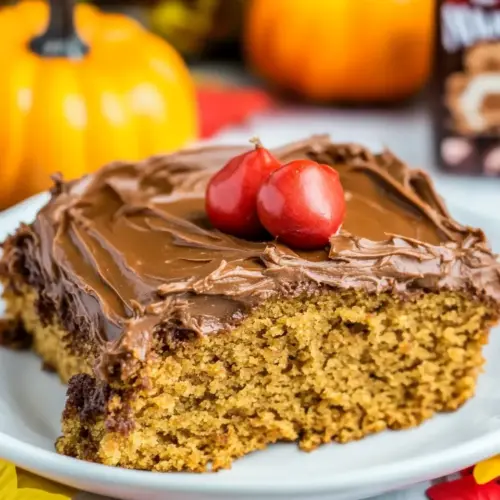
Pumpkin Sheet Cake with Nutella Cream Cheese Frosting
Pumpkin Sheet Cake with Nutella Cream Cheese Frosting is a moist, spiced sheet cake topped with a silky Nutella and cream cheese frosting. The cake combines warm spices, tender pumpkin, and pockets of chocolate chips for texture, making it a crowd pleasing dessert for autumn gatherings and easy weeknight treats. Make it for holidays or casual get togethers for a fuss free, flavor forward finish.
Equipment
- 10×15-inch Jelly Roll Pan
- Mixing Bowls
- Sifter
- Hand-held electric mixer
- Parchment Paper
Ingredients
- 1 (15-ounce) can pumpkin Pureed and smooth, provides moistness, dense texture, and natural sweetness while contributing rich pumpkin flavor and moisture to the cake batter.
- 1 cup packed light brown sugar Packed and moist, adds deep caramel-like sweetness and tenderizes the crumb while enhancing the cake's brown color and flavor complexity.
- 2/3 cup granulated sugar Granular and sweet, balances sweetness, aids in browning, and helps create a fine crumb structure by contributing to the cake's overall sweetness level.
- 1 cup vegetable oil Neutral-flavored oil, ensures a tender, moist cake by coating flour proteins and keeping the crumb soft for days without refrigeration.
- 2 teaspoons vanilla extract Aromatic and vanilla-flavored, enhances overall flavor by rounding out spices and bringing a warm, sweet fragrance to the cake batter.
- 4 large eggs, room temperature Beaten and room temperature, provide structure, lift, and emulsification; eggs trap air when whipped and set the cake as it bakes.
- 2 cups all-purpose flour Refined wheat flour, gives the cake its structure by forming gluten when mixed with liquids and supporting the crumb and rise.
- 2 teaspoons baking powder Leavening powdery agent, supplies additional lift and helps create a light, tender crumb by reacting with batter moisture and heat.
- 1 teaspoon baking soda Chemical leavening agent, reacts with acidic components to produce carbon dioxide for additional rise and tender crumb development.
- 1/2 teaspoon salt Mineral seasoning, balances sweetness and enhances other flavors while strengthening gluten slightly and preventing a flat taste.
- 2 1/2 teaspoons ground cinnamon Warm-spiced powder, imparts classic pumpkin-pie flavor and aromatic warmth, complementing pumpkin and other spices in the batter.
- 1 teaspoon ground nutmeg Earthy-spiced powder, adds subtle nutmeg warmth and complexity that complements the cinnamon and pumpkin flavors in the cake.
- 1/2 teaspoon ground cloves Pungent spice, contributes a sharp, clove-like warmth in small amounts to deepen the overall spice profile without overpowering.
- 1/2 teaspoon ground ginger Zesty-spiced powder, gives a bright, peppery warmth that rounds out the spice blend and elevates the pumpkin flavor.
- 1 cup semi-sweet chocolate chips Small chocolate morsels, provide pockets of melted chocolate throughout the cake for texture contrast and bursts of sweetness.
- 4 tablespoons butter, softened Softened and creamy fat, helps create a smooth, spreadable frosting base while adding richness and stability to the frosting.
- 1 1/2 cups powdered sugar Finely ground sugar, sweetens and stabilizes the frosting while contributing to a smooth, creamy texture when sifted and mixed.
- 1/4 cup unsweetened cocoa powder Bitter cocoa powder, adds chocolate depth and color to the frosting while balancing sweetness and enhancing chocolate flavor.
- 2 -3 tablespoons milk Liquid dairy, adjusts frosting consistency for spreadability and sheen; adds slight richness and can be increased or decreased as needed.
- 4 ounces cream cheese, cut into pieces and softened Softened fresh cheese, contributes tangy creaminess and structure to the frosting while balancing sweetness and enriching texture.
- 2/3 cup Nutella Chocolate-hazelnut spread, brings intense hazelnut-chocolate flavor and creaminess to the frosting, making it decadent and spreadable.
- 1 teaspoon vanilla extract Aromatic extract, rounds and enhances the sweetness and depth of the frosting by reinforcing vanilla notes and overall flavor.
Instructions
- Preheat oven to 350 degrees and line a 10×15-inch pan with parchment paper. Lightly spray the parchment with cooking spray.: When you step into the kitchen you want the oven already warm, the faint hum before baking is comforting and ensures even rise. The parchment prevents sticking and helps you lift the cake out cleanly, while lightly spraying it helps the paper hug the pan without shifting. If the oven is cold when you put the batter in, the cake may bake unevenly, creating a dense middle. A common misstep is not checking oven temperature accuracy, so use an oven thermometer if you suspect variance.
- In a large bowl, whisk together pumpkin, brown sugar, granulated sugar, vegetable oil, vanilla, and eggs.: The wet mixture should look smooth and slightly glossy, with the sugars mostly dissolved into the pumpkin . Whisking incorporates air which helps the crumb lift during baking. You’ll notice the aroma of molasses and spice rising from the bowl, a good sign you’re on track. Avoid overbeating, which can make the batter too loose and affect texture; if you see separation, give it a gentle whisk to recombine.
- In a medium bowl, combine flour, baking powder, baking soda, salt, cinnamon, nutmeg, cloves, and ginger.: Dry ingredients should be thoroughly mixed so each spoonful of batter carries even flavor and lift. Run your fingers through the flour to break clumps, and the spice fragrance should be even. If spices are unevenly distributed, the cake can have pockets of intense flavor, so take a moment to mix well. A mistake here is adding wet to pan without sifting the dry, which risks lumps in the final cake.
- Make a well in the center of the wet ingredients. Sift the dry ingredients into the wet and stir until combined. Stir in the chocolate chips.: After sifting, the batter should fold together into a cohesive, slightly thick mixture with ribbons of spice visible. Stirring gently prevents overworking the flour , preserving tenderness. When you fold in the chocolate chips , they’ll glint through the batter; resist the urge to overmix, which can distribute chips unevenly and make the cake dense. If you overmix, the final texture can be tight rather than tender.
- Pour batter into prepared pan. Bake for 20 to 25 minutes. Let cool.: As the cake bakes you’ll smell the spices intensifying and the top will set to a matte finish with a slight spring when touched. Insert a toothpick into the center; it should come out with a few moist crumbs but not wet batter. Let the cake cool completely before frosting, because warm cake will melt the frosting and make it runny. The common error is frosting too soon, which yields a glossy, sagging top instead of the neat finish you’re aiming for.
- To make frosting, beat butter, cocoa powder, 2 tablespoons milk and powdered sugar with an electric mixer until smooth.: The initial frosting stage should produce a light, velvety base. Beat until the butter and powdered sugar are fully combined and the color deepens from the cocoa powder . The texture will be slightly stiff; the sound of the mixer should be steady, not sputtering. If the mixture seems grainy, continue beating on medium to dissolve sugar, but avoid overheating, which can thin the frosting too much.
- With mixer on, add 1 piece of cream cheese at a time.: Adding softened cream cheese in pieces helps it incorporate smoothly, creating a silky mouthfeel and a subtle tang. You’ll notice the frosting lighten and become creamier with each addition. If the cream cheese is too cold, it will clump and create lumps, so ensure it is fully softened. A frequent mistake is adding all the cream cheese at once, which can lead to uneven texture and longer mixing time to correct.
- Add Nutella and vanilla and beat until blended. Add more milk if too thick.: When the Nutella joins the bowl, the frosting takes on a glossy, hazelnut chocolate sheen and a richer aroma. Beat until the color is uniform and the texture is spreadable but still holds shape. If the frosting becomes overly stiff, add additional milk a teaspoon at a time until you reach a silky consistency. Watch for over thinning, which makes the frosting slide off the cake instead of resting on top.
- Spread frosting on cake.: The final step is tactile and satisfying, as the frosting glides over the cool cake creating a smooth surface. Use an offset spatula for even distribution, and if you like, press a few extra chocolate chips into the top for a rustic look. If crumbs appear, chill the cake briefly and apply a thin crumb coat first. A common issue is trying to spread frosting on a warm cake, which will smear and become glossy rather than set into a neat finish.
Notes
- Swap texture: For a slightly denser crumb, reduce the vegetable oil by two tablespoons and replace with an equal amount of unsweetened applesauce.
- Extra chocolate: Sprinkle additional semi-sweet chocolate chips on top of the frosted cake for visual appeal and melty pockets when served warm.
- Spice level: Increase ground cinnamon by half a teaspoon for more warmth, or reduce cloves if you prefer a milder spice profile.
- Frosting texture: If your frosting is too soft, chill it briefly and then rewhip for a firmer spread that holds decorative swirls.
- Make ahead: Bake the cake a day early and refrigerate; the flavors blend overnight and the texture often improves after resting.