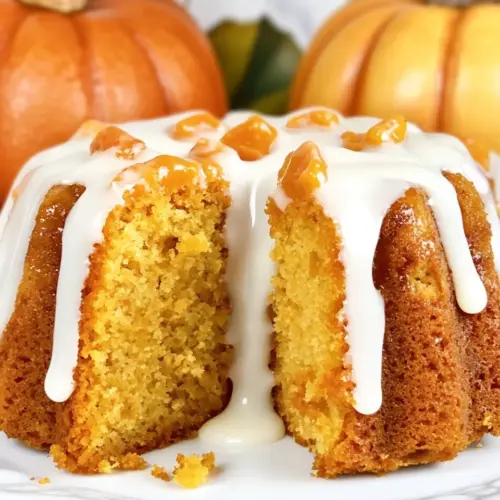
Pumpkin Pound Cake with Buttermilk Glaze
Pumpkin Pound Cake with Buttermilk Glaze is a moist, spiced pound cake with a tender crumb and a glossy, tangy buttermilk glaze. The recipe balances warm spices, sweet and brown sugars, and pureed pumpkin for an easy, crowd pleasing dessert perfect for fall gatherings and holiday brunches. Make it for a comforting centerpiece that slices beautifully and keeps well.
Equipment
- Tube Cake Pan
- Bundt Cake Pan
- Kitchen-Aid Mixer
- Hand Mixer
Ingredients
- 1 (15-oz) can pumpkin Provides smooth, concentrated pumpkin purée that contributes moistness, rich color, and pronounced pumpkin flavor throughout the cake batter while keeping the crumb tender and dense.
- 3/4 cup granulated sugar Adds granular sweetness and structure to the batter, helping to balance the pumpkin's earthiness and promote proper creaming with butter for a lighter texture.
- 3/4 cup packed brown sugar Imparts deep, molasses-like sweetness and moisture; when creamed with butter and sugar it enhances the cake's tenderness and adds caramelized flavor complexity.
- 1/2 cup butter, softened Contributes fat for richness, helps create a tender crumb, and assists in aeration when creamed with sugars to support rise and texture in the pound cake.
- 4 eggs Provides lift, structure, and moisture; beaten with sugars and fats, eggs help emulsify the batter and set the cake’s dense yet tender crumb.
- 1 tsp vanilla Offers aromatic sweetness and depth; folding into the batter enhances the overall flavor profile and complements the pumpkin and warm spices.
- 3 cups all-purpose flour Supplies the bulk of the dry structure, forming the gluten network that defines the cake’s crumb while absorbing moisture from the pumpkin and liquids.
- 2 tsp pumpkin pie spice Blends warm aromatic spices such as cinnamon, ginger, and clove into the batter, reinforcing classic pumpkin pie flavors and adding seasonal warmth.
- 1 tsp baking powder Acts as a chemical leavener to provide moderate rise and lightening of the dense pound cake crumb while reacting with other ingredients during baking.
- 1/2 tsp baking soda Works with acidic components to produce carbon dioxide for leavening; helps balance pH and ensures proper rise and crumb texture in the cake.
- 1/2 tsp salt Balances and enhances the flavors, controlling sweetness and strengthening gluten slightly; also contributes to overall seasoning of the loaf.
- 3/4 cup buttermilk Adds acidity and tang that react with baking soda to contribute lift; also enhances moistness and lends a subtle tang to the cake’s flavor.
- 1/3 cup buttermilk Used in the glaze as a thinner, tangy liquid that adds richness and acidity to balance the glaze's sweetness and provide a smooth finish.
- 1/4 cup granulated sugar Sprinkles sweetness in the glaze, helping to thicken when combined with cornstarch and butter while balancing the buttermilk’s tang.
- 2 tbsp butter Melts into the glaze to provide glossy richness and silky mouthfeel while helping the glaze set more firmly on the cooled cake.
- 1/2 tsp pumpkin spice Boosts warm spice notes in the glaze or batter with concentrated pumpkin spice flavor, reinforcing the cake’s autumnal profile and aroma.
- 1/2 tsp vanilla Contributes aromatic warmth and depth in small quantity for the glaze, enhancing the overall pumpkin-spice interplay and fragrance.
- 2 tsp cornstarch Functions as a thickening agent in the glaze, giving it body and the right viscosity for coating the cake while preventing separation.
- 1/8 tsp baking soda Provides a small additional leavening boost in the glaze or batter; helps neutralize acidity and can subtly affect texture when combined with other leaveners.
Instructions
- Preheat oven to 350ºF. Grease and flour a 10-inch tube pan.: As the oven warms to 350ºF , the kitchen begins to smell faintly warm, a hint of the baking to come, and the preheated air helps the batter set quickly for good rise. Greasing and flouring a 10 inch tube pan ensures the cake will release cleanly, and you will see the batter cling slightly as you spoon it in. The greasy sheen plus a light dusting of flour prevents sticking in the crevices of the tube, which matters because this cake is dense and can grab. A common mistake is skimping on greasing which leads to torn cake when unmolding; take the extra moment to coat the pan thoroughly and tap out excess flour.
- Spread pumpkin over 2 layers of paper towels; cover with 2 additional layers of paper towels. Let stand about 10 minutes. Scrape drained pumpkin into a bowl.: When you spread the pumpkin across paper towels, you will see water bead and be absorbed very quickly, leaving the pulp thicker and more concentrated. After waiting about 10 minutes , the drained puree will be noticeably less watery and feel denser between your fingers, which helps the batter stay structured rather than soupy. Scraping it into a bowl reveals a velvety, matte orange paste full of spice aroma. If you skip this step, the batter can become too loose and the crumb may be gummy, so don't rush the drain.
- In the bowl of an electric mixer, beat granulated sugar, brown sugar, butter at medium speed 3 minutes or until well blended. Add eggs, one at a time, beating well after each addition. Add drained pumpkin and vanilla, mix well.: As you cream granulated sugar , brown sugar , and softened butter , the mixture will lighten in color and become fluffy, giving you tiny air pockets that help lift the dense batter. Three minutes at medium speed usually produces a satin texture; you will hear a soft, steady whir and see the mixture pulling away from the sides. Adding eggs one at a time ensures each incorporates fully, so the batter stays smooth rather than curdled. Once you fold in the drained pumpkin and vanilla , the batter will smell warmly spiced and have a homogeneous sheen. Overbeating after adding flour later can toughen the cake, so stop once everything is just combined.
- Combine flour, pumpkin spice, baking powder, baking soda and salt in a bowl. Add flour mixture and 3/4 cup buttermilk alternately to batter, beginning and ending with flour mixture. Spoon batter into prepared pan.: Mixing the dry flour with pumpkin spice , baking powder , baking soda , and salt ensures even distribution of leavening and spice so there are no salty or bitter pockets. Alternating additions of the dry mix with 3/4 cup buttermilk produces a smooth, cohesive batter and prevents overmixing. The batter will feel dense but pliable and hold a ribbon when lifted slightly with a spatula. Spoon it evenly into the prepared pan and tap once on the counter to release large air bubbles. A frequent mistake is adding all the liquid at once which can lead to an overworked batter and a tougher crumb.
- Bake for 55 minutes or until a wooden pick inserted in center comes out clean. Cool in pan 10 minutes on a wire rack. Remove from pan, and cool completely on wire rack.: While baking, the kitchen will fill with a toasty, spiced aroma and the top will take on a warm, golden brown color. Around the 55 minute mark, insert a wooden pick into the center; a clean pick means the interior is set, though a few moist crumbs are fine. Letting the cake cool in the pan for 10 minutes allows it to firm up so it unmolds without collapsing, and moving it to a wire rack finishes drying the exterior slightly for clean glazing. Don't force removal when too hot, as it can break; patience here preserves the loaf's shape.
- Combine all ingredients in a small saucepan over medium heat; bring to a boil. Cook 1 minute or until thick, stirring constantly; remove from heat. Drizzle cake with glaze.: As you bring the buttermilk , granulated sugar , butter , pumpkin spice , vanilla , cornstarch , and a pinch of baking soda to a boil, the mixture will steam and smell tangy and sweet. Stirring constantly prevents lumps and helps the glaze turn glossy; after about 1 minute of vigorous stirring it will slightly thicken and cling to the spoon. Remove from heat, let it cool a touch so it is viscous but pourable, then drizzle over the cooled cake so it forms shiny ribbons and small puddles. If the glaze is too thin, it will run off the cake; if too thick, warm it gently and whisk to loosen.
Notes
- Drain the pumpkin first: If you find the batter too loose, always drain the pumpkin on paper towels for about 10 minutes as directed. This concentrates the puree and prevents the cake from becoming gummy, ensuring a compact, tender crumb.
- Room temperature ingredients: Let the butter and eggs sit out for 20 to 30 minutes before starting. This helps them combine smoothly during creaming, yielding an aerated batter that improves rise and texture.
- Swap buttermilk style: You can use regular or low fat buttermilk in the batter and glaze. If you do not have buttermilk, make a quick substitute with milk and 1 tablespoon vinegar or lemon per cup, let it rest 5 minutes, then use it to maintain the tangy balance.
- Pan options: This recipe is written for a 10 inch tube pan. If you use a Bundt or loaf pan, watch the bake time carefully and test with a wooden pick early, since different shapes affect heat distribution.
- Make ahead and storage: You can bake the cake a day ahead and store it in an airtight container at room temperature. Add the buttermilk glaze right before serving to preserve its glossy look and fresh tang.
- Freezing guidance: Freeze the cake without the glaze, wrapped tightly, for longer storage. Thaw overnight in the refrigerator and add the glaze on the day you serve to keep it fresh and shiny.