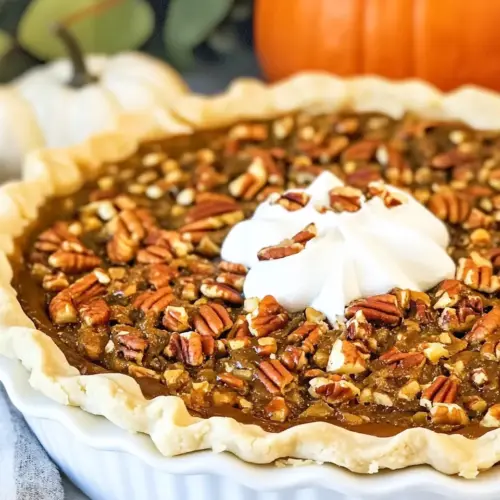
Pumpkin Pecan Pie
Pumpkin Pecan Pie is a creamy, spiced custard topped with a crunchy, glossy pecan layer, perfect for fall celebrations and easy weeknight baking. The texture contrast between silky pumpkin and toasted pecans makes it a crowd pleaser, and it comes together with pantry staples for a simple holiday showstopper.
Equipment
- 9-inch pie dish
- Hand Mixer
- Mixing Bowl
Ingredients
- single pie crust store-bought or homemade Ready-to-use crust provides the flaky base and structure for the pie, supporting the filling and holding edges crisp during baking. Handle gently to avoid cracking and blind-bake briefly if a firmer bottom is desired. Choose store-bought for convenience or homemade for richer flavor and better texture.
- 1 egg whipped with 1 tablespoon of milk or water to make egg wash Beaten egg mixed with milk or water creates a glossy egg wash that promotes even browning and seals the crust edges. Brush lightly over the crust just before baking to achieve an attractive, golden finish. Use immediately after whipping for best results.
- 1 15-ounce can pure pumpkin puree Canned pure pumpkin puree supplies the core pumpkin flavor and smooth texture for the filling while contributing moisture and body. Stir well to ensure even consistency and avoid added sugars or spices so recipe seasonings remain balanced. Use directly from the can for reliable results.
- 3/4 cup dark brown sugar packed Packed dark brown sugar adds deep caramel and molasses notes while sweetening the filling and helping achieve a tender texture. Press firmly when measuring to get the correct volume and ensure it dissolves fully into the mixture. Dark brown delivers richer flavor than lighter alternatives.
- 1 tablespoon cornstarch Cornstarch thickens the filling by absorbing excess moisture and creating a stable, sliceable custard without changing flavor. Whisk into the dry sugars or a portion of the wet ingredients to prevent lumps before combining. Use as directed to avoid a runny pie.
- 2 teaspoons pumpkin pie spice Pumpkin pie spice contributes a warm, aromatic blend of spices that defines the seasonal flavor profile and enhances the pumpkin taste. Add with the other dry spices to ensure even distribution throughout the filling. Adjust slightly if using homemade blends for intensity.
- 1 teaspoon ground cinnamon Ground cinnamon provides warm, sweet spice notes and complements the pumpkin while enhancing overall depth of flavor. Sprinkle into the filling mixture and taste for balance against other spices and sugars. Use true ground cinnamon for consistent heat and aroma.
- 1/2 teaspoon salt Salt enhances and balances sweetness while amplifying the other flavors in the pie, making the profile more rounded and nuanced. Dissolve into the filling mixture to ensure even seasoning. Use measured amounts to avoid over-salting the custard.
- 1/4 teaspoon ground nutmeg Ground nutmeg lends a subtle, nutty warmth that rounds out the spice blend and adds complexity in small quantities. Grate or measure carefully since nutmeg can overpower other flavors when overused. Combine with other spices for a balanced profile.
- 1 cup heavy whipping cream Heavy whipping cream adds richness, creaminess, and silkiness to the custard, contributing to a smooth mouthfeel and helping the filling set properly. Pour in gradually while whisking to create a homogeneous mixture. Use full-fat cream for best texture and flavor.
- 3 large eggs at room temperature Room-temperature eggs bind the filling, provide structure through coagulation during baking, and contribute to a custardy texture and lift. Bring eggs to room temperature to ensure even mixing and minimize curdling. Whisk thoroughly with the other wet ingredients for uniformity.
- 1 1/2 cups pecans raw, roughly chopped Raw, roughly chopped pecans supply crunchy texture, toasty flavor, and a nutty counterpoint to the smooth pumpkin filling when used as a topping or mixed into the streusel. Toast lightly before chopping to intensify flavor if desired. Distribute evenly for consistent bites.
- 1/4 cup light corn syrup Light corn syrup helps create a glossy, tacky pecan topping by adding sweetness and preventing crystallization while strengthening the filling’s set. Stir into the pecan mixture to bind ingredients and produce a cohesive, slightly chewy topping. Use measured amounts for proper sweetness.
- 1/4 cup dark brown sugar Dark brown sugar adds rich molasses flavor and sweetness to the pecan layer or topping, contributing deeper caramel notes and moisture. Mix with corn syrup and butter to form a cohesive, flavorful topping that complements the pumpkin custard. Pack when measuring for accuracy.
- 2 tablespoons unsalted butter melted Melted unsalted butter provides richness, helps bind the pecan topping, and adds a buttery mouthfeel without introducing extra salt. Pour over the pecans and sugars to create a cohesive, glossy mixture that bakes into a crisp, flavorful layer. Use unsalted to control overall seasoning.
- 1/4 teaspoon salt Salt enhances and balances the pecan topping’s sweetness while intensifying the nutty flavors for a more complex finish. Sprinkle into the topping mixture and mix thoroughly to distribute flavor evenly. Use sparingly to avoid overpowering the sweet components.
- 1 teaspoon pure vanilla extract Pure vanilla extract contributes a warm, aromatic backdrop that complements the pumpkin and brown sugar flavors, deepening the overall flavor profile. Add to the wet ingredients and mix to integrate aroma evenly throughout the filling and topping. Use real vanilla for best results.
Instructions
- Preheat oven to 350°F/180°C. Place the pie crust in a 9-inch pie dish, crimp the edges, and brush with egg wash.: Warmth in the oven starts the transformation, and you will smell a mild toasty wheat scent as the crust begins to set. The visual cue is a pale golden rim forming around the edge, and glossy spots where the egg wash catches light. Why this matters, the initial oven heat firms the crust so it can hold the filling without slumping. A common mistake is not chilling the crust first which can lead to shrinking, so pop it in the fridge for 10 to 15 minutes before filling if it warms during handling.
- In a large mixing bowl using a hand mixer on low speed, mix the pumpkin puree, dark brown sugar, cornstarch, spices, and salt.: As you whisk these dry and wet components together, a warm, molasses scented steam will rise from the bowl, and the mixture will go from lumpy to smooth. This step builds the flavor base and ensures the cornstarch is evenly distributed to prevent grainy pockets. The sound is a gentle low whirl of the mixer, not loud or splattering. If you mix too fast you risk splashing and incorporating air, which causes the filling to puff up and crack later, so keep the speed low.
- Then add the heavy whipping cream and the eggs one at a time until just combined. Do not overmix the eggs as it will add too much air into the filling.: Adding the heavy whipping cream and eggs gradually yields a glossy, velvety batter. You will notice a thicker pour and a sheen when properly combined, and the scent rounds into a custard like aroma. This technique gives stable structure, because eggs bind and cream adds fat for silkiness. Over mixing is the usual pitfall; too much air leads to a souffle like rise and cracking, so stop when it looks homogeneous and a spatula drags cleanly across the bowl.
- Pour the mixture into the crust and bake for 50-55 minutes until only the center of the pie is still a little jiggly when you lightly move the pan. If the pie crust browns too quickly, you can cover the edge with aluminum foil or pie shields once it reaches the desired color.: As the pie bakes the kitchen will fill with warm spice and the filling will set from the edges inward. The edges will appear firm and slightly puffed while the center retains a gentle wobble, which is the correct doneness cue. This controlled bake prevents overcooking the custard while ensuring the crust is golden. A common error is relying on a timer alone, which can lead to under or over baking, so use the jiggle test to confirm doneness. If the crust darkens too soon, tent the edges to avoid bitterness.
- In a medium bowl, combine all of the ingredients for the pecan topping. Stir with a spatula until evenly combined and all the pecans are coated in the mixture.: The topping will coat the pecans in a glossy syrup, and you will see the nuts glisten as syrup clings to every piece. This coating step is essential because it melts into a set, brittle layer during the final bake, giving texture contrast. Stir until the mixture looks uniform, because uneven mixing can leave pockets of dry sugar. Watch for sticky hands and use a spatula rather than vigorous whisking to keep nuts intact.
- Spoon the coated pecans evenly on top of the pie and lightly press the filling down so it adheres to the top of the pumpkin layer. Then return the pie to the oven and bake for 15 more minutes.: Pressing the topping helps it bond with the warm filling, and during this final bake the syrup will bubble and caramelize slightly, releasing a toasted nut aroma. Visual cues include bubbling around the pecan edges and a deeper amber color developing. This brief bake binds the topping without soggifying the custard below. A common mistake is pressing too hard which can push the pecans into the filling and make slices messy, so press just enough for adhesion.
- Remove the pie from the oven and cool on a wire rack for at least 2 hours. Transfer it to the refrigerator to finish cooling until ready to serve. Serve with whipped cream or vanilla ice cream.: Cooling lets the custard settle and the topping firm up, and you will notice the pie quiet down from a faint wobble to a clean set. The aroma will mellow and the flavors will meld, producing a balanced sweetness and spice. This resting time is critical for clean slices and proper texture. A common trap is slicing too soon which leads to runny servings, so allow full cooling and chill to achieve tidy pieces that hold shape.
Notes
- Swap corn syrup for maple syrup or honey, noting that each will add a distinct flavor to the pecan topping, with maple giving an earthy note and honey adding floral sweetness, which can complement the pumpkin.
- Use evaporated milk instead of heavy cream and cornstarch for a lighter custard; it will yield a slightly less rich texture but still hold well once chilled.
- Choose light brown sugar if you prefer a milder molasses tone, which softens the depth of the filling without changing structure appreciably.
- Partially bake the crust for a crisper base by blind baking for a few minutes before filling, which helps if your crust tends to become soggy under wet fillings.
- Toast the pecans lightly before mixing to amplify their aroma, but cool them completely first so the topping does not become overly loose from melted oils.
- Make ahead and freeze carefully, by baking through the pumpkin layer, cooling, and freezing, then finishing with the pecan topping the day you plan to serve for the freshest contrast.