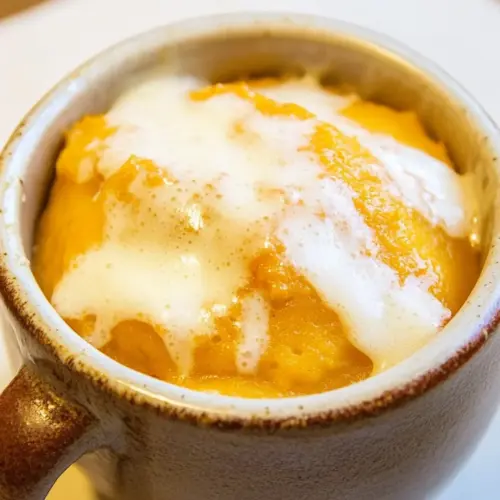
Pumpkin Mug Cake
Pumpkin Mug Cake is a quick, cozy single serving that is moist, spiced, and easy to make. This creamy textured mug cake uses pantry flours and pumpkin puree to deliver a satisfying seasonal treat, perfect for an easy weeknight dessert or late night craving. Whip one up in minutes and enjoy a warm, comforting bite with minimal cleanup.
Equipment
- Mug
- Microwave or Oven
- Fork or small whisk
Ingredients
- 1/4 cup pumpkin puree Adds moisture and a smooth, dense texture to the cake while contributing subtle pumpkin flavor and natural sweetness; helps bind dry ingredients and keeps the mug cake tender during microwaving or baking.
- 6 tbsp spelt, white, or oat flour Provides structure and bulk to the batter while offering a slightly nuttier, heartier crumb compared with all‑purpose flour; can be substituted with white or oat flour without changing proportions for similar results.
- 2 tbsp sweetener of choice Sweetens the cake and balances pumpkin's savory notes while helping with browning and moisture retention; choose granular or liquid sweeteners according to desired sweetness and texture.
- 1/2 tsp baking powder Leavens the batter to create lift and a light, cake‑like crumb; activates quickly in batter and helps small mug cakes rise evenly without lengthy rising time.
- 1/8 tsp salt Enhances overall flavor by balancing sweetness and bringing out pumpkin notes while also slightly strengthening gluten structure in the crumb; a small amount prevents a flat, bland taste.
- 1 1/2 tbsp oil, butter, or additional pumpkin Contributes fat for richness, tenderness, and improved mouthfeel while aiding moisture and preventing a dry texture; can be oil for neutrality, butter for flavor, or extra pumpkin for lower fat and added moisture.
Instructions
- Combine all ingredients in a greased mug or bowl, and bake either in the oven or microwave until fluffy and cake-like. (It takes around 60-90 seconds in the microwave, depending on wattage.): The aroma of pumpkin and sweetener melding together is immediate, offering a cozy scent that hints at the final cake. As you stir, notice the batter thicken and change color, becoming uniformly warm and speckled with flour. The texture should be smooth with no dry streaks, and using a fork or small whisk helps incorporate everything quickly. A common mistake is under mixing, which leaves clumps of flour, so scrape the sides and bottom thoroughly. If the batter seems too thick, a splash of milk or additional pumpkin can help, while too thin a batter may yield a denser cake. Greasing the mug prevents sticking and encourages even browning on the edges.
- Bake either in the oven or microwave until fluffy and cake-like: When you use the microwave, you will hear a near silence followed by a slight change as steam escapes, and within a minute the top should look set and spring back to the touch. If you choose the oven, the surface will take on a faint golden hue and a gentle crust may form around the edges, offering a pleasing contrast to the soft center. Pay attention to visual cues more than exact timing, since microwaves vary in wattage. A common pitfall is overcooking, which leads to dryness and an undesirable rubbery texture, so start with the lower recommended time and add more in short intervals if needed. Let the cake rest briefly after cooking, it will finish setting and be easier to remove from the mug.
- Microwave timing varies depending on wattage: You will notice that higher wattage ovens cook faster and produce a slightly drier exterior if left too long, while lower power models might require the full window to set the center. Listen for the subtle steam release and watch the surface for firmness, testing gently with a fingertip to avoid pressing the cake down. To prevent a tough crust, avoid cooking beyond the point where the top is just set. A typical mistake is assuming one time fits all, so keep notes on your appliance to dial in the perfect window for future attempts. Resting for a minute or two helps redistribute steam and yields a moister crumb.
Notes
- Measure carefully: Because this is a tiny recipe, small differences matter more than in large bakes, so spoon and level flour when possible to avoid a dense texture.
- Check microwave power: Note your microwave wattage and start with the lower end of the time range, adding short bursts as needed to prevent overcooking.
- Mix thoroughly: Scrape the mug sides and bottom to remove any pockets of dry flour, which can lead to uneven texture in the finished cake.
- Use fresh leavening: Baking powder loses potency over time, and fresh powder guarantees a lighter, fluffier cake.
- Customize fat: Swap oil for melted butter for more flavor, or use extra pumpkin for a moister, denser bite depending on your preference.