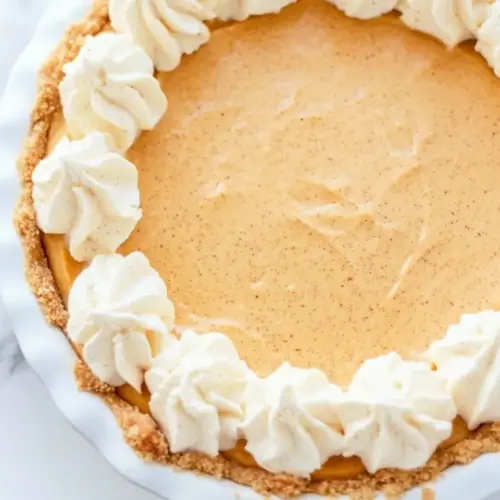
Pumpkin Ice Cream Pie
Pumpkin Ice Cream Pie is a creamy, spiced dessert with a crunchy pecan and gingersnap crust, perfect for holiday tables or easy weeknight treats. The smooth pumpkin and French Vanilla ice cream filling melts into warm autumn spices for a comforting yet breezy finish. Make it ahead for stress free entertaining and enjoy a cool, nostalgic slice that pleases a crowd.
Equipment
- 9-inch pie pan
- Electric Mixer
- Food Processor
- Measuring Cups
Ingredients
- 1 cup ground pecans Ground and toasted to add a crunchy, nutty base that complements the pie's sweet filling; provides structure and richness to the crust when combined with other dry ingredients and butter. Enhances mouthfeel with small crunchy bits and contributes a subtly sweet, buttery flavor profile that pairs well with pumpkin and spices.
- 1/2 cup ground gingersnaps (about 10 gingersnaps) Finely crushed to create a spiced, cookie-like texture that blends easily into the crust; offers warmth and aromatic ginger notes which intensify the overall fall flavor. Helps bind the pecan crumbs and sugar when mixed with butter, producing a cohesive, flavorful graham-cracker-style base.
- 1/4 cup granulated white sugar Sprinkled in to balance the nuttiness and spice with bright sweetness; dissolves into the crust mixture to help caramelize slightly during chilling or brief baking. Enhances overall flavor without overpowering the pumpkin and spices, providing a clean, sweet backbone.
- 4 tablespoons (1/2 stick) salted butter, at room temperature Softened and creamed into the crumb mixture to moisten and bind the ground pecans and gingersnaps into a pressable crust; contributes rich, buttery flavor and tender mouthfeel. Adds moisture and fat which helps the crust set firmly when chilled, improving sliceability.
- 1 cup canned unsweetened pumpkin puree Pureed for a silky, smooth filling that delivers concentrated pumpkin flavor and moistness; acts as the main component of the pie's pumpkin layer and pairs with sugars and spices. Provides natural color and body while absorbing and showcasing the aromatic spice blend.
- 1/2 cup packed dark brown sugar Packed and stirred with pumpkin to lend deep, molasses-like sweetness and moistness; balances the bright granulated sugar and enhances the custard-like texture when combined with ice cream. Contributes complexity and a slight caramel note that complements pumpkin and spices.
- 1/2 teaspoon salt Measured precisely to enhance and balance flavors without overwhelming sweetness; elevates the spices and rounds out the sweetness from sugars. Helps to accentuate savory notes and harmonize the overall taste profile of the filling.
- 1/2 teaspoon ground ginger Ground and blended into the pumpkin mixture to introduce warm, peppery spice that brightens the filling's flavor profile; works in concert with cinnamon and nutmeg for classic pumpkin pie seasoning. Provides aromatic lift and a gentle heat that complements the sweetness.
- 1/2 teaspoon ground cinnamon Sprinkled into the filling to impart sweet, woody warmth and a familiar aromatic backbone to the pumpkin mixture; deepens the comfort-food spice character. Balances the ginger's zing and nutmeg's earthiness for a rounded spice blend.
- 1/4 teaspoon ground nutmeg Ground and added sparingly to contribute warm, slightly sweet, and nutty aromatics to the filling; enhances complexity without overpowering other spices. Provides subtle depth and pairs particularly well with cinnamon and ginger in pumpkin-based desserts.
- 1 quart French Vanilla ice cream Softened slightly and folded into the pumpkin-spice mixture to create a rich, creamy base that freezes firmly while remaining scoopable; supplies sweetness, creaminess, and body to the pie. Melts smoothly into the filling and helps the pie maintain a silky, indulgent texture when served.
- whipped cream, optional Piped or dolloped on top as an optional finish to add light, airy creaminess and visual appeal; offers a cool contrast to the dense, spiced filling. Can be sweetened or flavored to complement the pie and provides a classic finishing touch for presentation.
Instructions
- Preheat the oven to 450 degrees F.: When you set the oven to 450 degrees F , you will notice the kitchen warming and the dial climbing steadily; this high heat is brief but crucial for toasting the crust. The hot oven helps the fats in the crust bubble slightly and form a light toasted aroma, signaling the nuts and crumbs are crisping and will bind. A good sensory cue is a gentle, nutty fragrance about five minutes after the crust has been in, which means the surface is starting to brown. Why this matters, the quick high heat gives the crust structure without drying it out, creating contrast with the frozen filling. Be careful not to leave the crust too long, or the pecans can singe and develop a bitter edge. A common mistake is preheating too early and then opening the oven repeatedly; try to set the oven once and avoid peeking so the temperature remains steady.
- Combine the pecans, crumbs, sugar and butter. Press into the bottom of a 9-inch pie pan. Bake 5 to 7 minutes. Let cool.: As you combine ground pecans , the ground gingersnaps , granulated white sugar , and softened butter , you should feel the mixture come together into a damp, sandy texture that holds when pressed between your fingers; this tactile feedback tells you the crust will compact properly. Press the mixture firmly and evenly into a 9 inch pie pan so the bottom is uniform; inconsistent packing causes thin spots that crack when sliced. When baking for 5 to 7 minutes, watch for a golden darkening and a toasty aroma, the sounds are subtle, just a quiet settling as moisture escapes. Cooling lets the butter set and the crust firm up, making it easier to fill without breaking. This step creates the foundational crunch and prevents a soggy bottom once the filling is frozen. If the crust is under pressed, it may crumble when cutting, so press with steady, even pressure to avoid collapse.
- In a large bowl, use an electric mixer to beat the pumpkin, brown sugar, salt and spices for several minutes. Stir in the softened ice cream. Pour into the crust - even out the top; freeze overnight.: As you beat pumpkin puree with dark brown sugar , salt , and the spice trio, you will notice the mixture lighten slightly in color and become smoother, releasing warm aromatic notes that tell you the spices are evenly distributed. The rhythm and hum of the electric mixer help incorporate air, making the filling silkier once the ice cream is folded in. When you stir in softened ice cream, aim for a uniform texture with no streaks; visually the filling should look homogenous and glossy, with a creamy sheen. Pouring into the crust, use a spatula to level the surface carefully so the pie freezes evenly, avoiding high spots that freeze harder. Freezing overnight allows the filling to set into a scoopable, dense creaminess that keeps shape when sliced. This technique prevents iciness and promotes a scoopable, velvety mouthfeel. A typical pitfall is over softening the ice cream until it is watery, which can lead to ice crystals forming in the final pie, so soften it just enough to fold gently.
- Remove the pie from the freezer about 15 minutes before serving. Top with whipped cream, if desired.: When you bring the pie out of the freezer and let it sit for roughly 15 minutes, the edges will loosen slightly and the filling will soften enough to slice cleanly while still holding shape; you should feel a subtle give when pressing a finger to the surface. The slight tempering helps the flavors open and the texture shift from rock hard to scoopable, producing a creamy mouthfeel rather than icy shards. Adding whipped cream at the last moment adds a cool, airy counterpoint and a bright visual contrast. Avoid leaving the pie out too long or it will slump and lose the crispness of the crust. A common error is slicing straight from fully frozen, which can crack the crust and create ragged pieces rather than neat slices.
Notes
- Gluten free swap Replace ground gingersnaps with certified gluten free gingersnaps and ensure the ice cream is gluten free to make the pie safe for gluten sensitive guests.
- Nut alternative If you want to avoid pecans, try substituting another toasted nut of equal weight, but be mindful this will subtly change the crust flavor profile and texture.
- Ice cream texture control Soften the French Vanilla ice cream until it is scoopable yet still cold, this ensures a creamy final texture and reduces the risk of ice crystals forming during freezing.
- Spice tuning Adjust the amounts of ground ginger, ground cinnamon, and ground nutmeg to taste, adding a touch more if you prefer a bolder autumn spice character.
- Crust pressing technique Use the back of a measuring cup to press the crust firmly and evenly into the pan, which yields a uniform thickness that slices cleanly.
- Advance prep timing Make the pie a day ahead to free up kitchen time on the day of serving, and store it covered in the freezer to prevent freezer burn and flavor transfer.