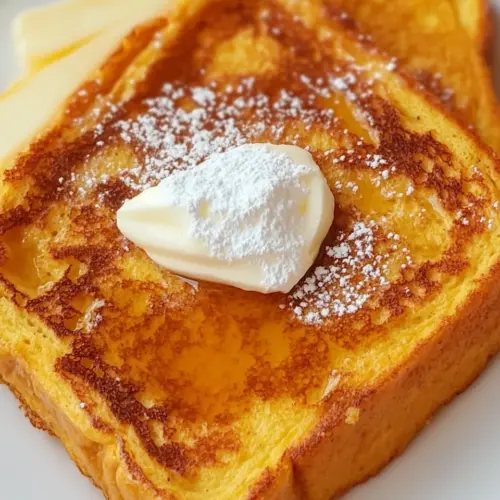
Pumpkin French Toast
Pumpkin French Toast is a creamy, spiced breakfast that combines custardy eggs and pumpkin with thick slices of bread for a cozy, easy weeknight or weekend treat. Warm notes of cinnamon and nutmeg make it perfect for fall mornings, and it scales well for a crowd. Try it when you want a simple, comforting meal that tastes like the season.
Equipment
- Griddle
- Shallow Dish
- Whisk
- Spatula
Ingredients
- 1 loaf Texas Toast, or other thick white bread Provide structure and hearty slices ideal for soaking; Texas Toast or thick white bread soaks up the custard without falling apart. Toast or slightly stale slices help hold shape while cooking and yield a crisp exterior when grilled or fried.
- 3/4 cup milk Add creaminess and thin the custard mixture to a pourable consistency; milk balances richness and prevents an overly dense filling. Use whole or reduced-fat milk depending on desired richness and texture of the finished French toast.
- 1/2 cup pumpkin puree Contribute moistness and a concentrated pumpkin flavor while enriching the custard; pumpkin puree provides natural sweetness and body. Incorporate smoothly to ensure even distribution and a cohesive custard that bakes or fries evenly.
- 4 eggs Bind the custard and create a rich, set interior; eggs coagulate when heated to give French toast a custardy texture. Whisk thoroughly to combine yolks and whites for uniform color and consistent cooking throughout each slice.
- 2 tablespoons brown sugar Impart caramel-like sweetness and deepen flavor; brown sugar adds molasses notes that complement pumpkin and spices. Dissolve fully into the custard to avoid graininess and to help achieve a golden-brown finish.
- 2 teaspoons vanilla Enhance aroma and round out sweetness with warm vanilla notes; vanilla adds depth without overpowering other flavors. Use pure vanilla extract for the most natural flavor in the custard.
- 1 teaspoon cinnamon Provide warm, earthy spice that pairs with pumpkin; cinnamon adds classic autumn flavor and enhances perceived sweetness. Sprinkle evenly into the custard for balanced spice in every bite.
- 1/4 teaspoon nutmeg Offer a warm, slightly nutty undertone that complements pumpkin and cinnamon; nutmeg adds subtle complexity to the spice blend. Use sparingly to avoid overpowering the custard and to maintain harmony with other flavors.
Instructions
- Preheat a griddle to medium heat. In a shallow dish, whisk the milk, pumpkin puree, eggs, brown sugar, vanilla, and cinnamon.: You will notice a dry, warm scent as the surface comes up to temperature, and a properly heated griddle produces a steady sizzle when the bread hits it. This heat setting allows the exterior to brown while the interior sets without burning. If your griddle is too hot, the outside will char before the center cooks, so test with a small piece first.
- Dip the bread into the pumpkin mixture, coating both sides, then cook on the preheated griddle for 2-3 minutes on each side, until the bread is lightly brown.: As you whisk, you should see the mixture become smooth and slightly glossy, and the aroma of cinnamon and vanilla will lift pleasantly. Whisking thoroughly ensures even distribution of the pumpkin and prevents streaks of egg white. A common mistake is under mixing, which can yield uneven pockets of flavor and texture.
- Serve hot with butter and maple syrup.: When the slices soak, they will feel heavier and slightly tacky. Allowing just enough soak time ensures the center becomes custardy without turning mushy. If you leave the bread in too long, it can become oversaturated and fall apart when flipped, so watch the bread closely and lift it when it feels saturated but still holds shape.
- Cook on the preheated griddle for 2 to 3 minutes on each side, until the bread is lightly brown: You will hear a soft sizzle and see edges set, then golden brown color develop, signaling caramelization of sugars in the brown sugar and custard. Flip once the underside is deeply golden to maintain a tender interior. Avoid flipping repeatedly, as that can prevent proper browning and lead to a soggy texture.
- Serve hot with butter and maple syrup: The finished slices should steam slightly and smell warmly spiced. Adding a pat of butter and a drizzle of syrup creates a glossy finish and a sweet contrast to the pumpkin spiced custard. Serving immediately preserves the crisp edges; stacking slices while warm steams them and softens the crust, which is a frequent pitfall to avoid.
Notes
- Choose sturdy bread Use a loaf like Texas toast or slightly stale brioche so slices absorb custard without falling apart.
- Room temperature eggs They blend more evenly into the milk and pumpkin mixture, preventing white streaks and helping the custard set uniformly.
- Mind your griddle heat Medium heat gives a golden crust while allowing the center to cook through, reducing the risk of burned outsides and raw interiors.
- Soak briefly Allow bread to absorb enough custard to feel heavy but not dripping, which keeps the structural integrity during flipping.
- Serve immediately The contrast between a crisp edge and a soft center is best right off the griddle, so plan to plate as you cook.
- Swap spices thoughtfully If you prefer, use a pumpkin pie spice in place of separate cinnamon and nutmeg to streamline flavor, but adjust to taste so it does not dominate the custard.