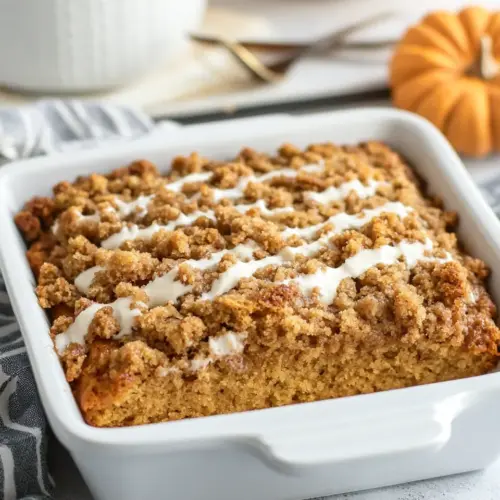
Pumpkin Crumb Cake
Pumpkin Crumb Cake is a moist, spiced autumn bake with a buttery, crunchy topping and a sweet glaze. Rich with pumpkin, warm pumpkin pie spice, and balanced by brown sugar, it’s an easy seasonal treat perfect for brunch or dessert, and makes an inviting, crowd pleasing addition to holiday gatherings.
Equipment
- 8-inch square baking pan
- Mixing Bowls
- Whisk
- Small pot
- Wire Rack
Ingredients
- 1/4 cup butter Softened and creamed to create a tender crumb and add rich moisture; helps bind sugars and air for a light texture when mixed into the crumb topping.
- 1/3 cup brown sugar Packed and stirred into the crumb topping to provide deep caramel notes and moisture; aids in creating a crisp, flavorful streusel when combined with butter and flour.
- 1 tsp vanilla extract Added for warm aromatic depth and to enhance sweetness; blends into both batter and fillings to round flavors and brighten pumpkin notes.
- 1/4 tsp salt Sprinkled to balance sweetness and enhance overall flavor; strengthens gluten control and elevates other spices when included in batter or topping.
- 3/4 cup all-purpose flour Measured for the crumb topping to provide structure and a pleasant crunch; combines with butter and brown sugar to form coarse streusel pieces.
- 2 cups all-purpose flour Combined as the primary dry structure for the cake layer, supplying gluten and stability; ultimately determines cake texture when mixed with wet ingredients and leaveners.
- 1 cup brown sugar Mixed into the cake batter to sweeten and caramelize during baking; contributes to moistness and a tender crumb while complementing pumpkin spice.
- 1 1/2 tsp baking powder Whisked into the dry mix to provide lift and a tender crumb; reacts with wet ingredients to create lightness and proper rise in the cake.
- 1 1/2 tsp baking soda Paired with baking powder and acidic components to create controlled leavening; reacts with wet ingredients to produce carbon dioxide and fine crumbs.
- 1 1/2 tsp pumpkin pie spice Folded into the batter for characteristic warm spice and depth; blends cinnamon, nutmeg, and clove notes to complement pumpkin and brown sugar.
- 1/2 tsp salt Added separately to fine-tune seasoning and enhance balance; helps control sweetness while supporting leavening reactions and overall flavor.
- 1 cup pumpkin puree Pureed and incorporated as the primary moistening agent and pumpkin flavor source; provides natural sugars, moisture, and a tender crumb while reinforcing autumn character.
- 3 large eggs Beaten into the batter to enrich structure and emulsify fats; contributes to lift, color, and a silkier mouthfeel while helping bind ingredients.
- 3/4 cup vegetable oil Poured into the batter to add fat and tenderness without weighing the cake down; helps retain moisture and improve mouthfeel throughout the crumb.
- 1/2 cup sour cream, or plain greek yogurt Stirred in as a creamy acidic component to tenderize gluten and add tang; enhances moisture, richness, and slight tang whether using sour cream or Greek yogurt.
- 1 tsp vanilla extract Added for aromatic lift and a touch of sweetness; enhances overall flavor cohesion and supports vanilla notes already present in the recipe.
- 1 cup powdered sugar Sifted or whisked into a glaze to provide smooth sweetness and structure; dissolves easily to form a glossy, sweet finishing layer over the cake.
- 2 tbsp milk, or cream Mixed with powdered sugar to adjust glaze consistency and add silkiness; thins the icing to a pourable texture while contributing richness if using cream.
Instructions
- Preheat oven to 350 degrees F. Lightly spray an 8" square baking pan with non-stick spray and set aside.: The kitchen immediately fills with a faint warm note as the oven comes up to temperature, and preheating ensures even rise and predictable bake times. I like to measure out my pan preparation first, because a well greased pan prevents sticking and preserves the crumb topping as you slice. A common mistake is skipping the spray or not reaching the full temperature before the batter goes in, which can lead to uneven baking. Keep a close eye on the oven gauge to confirm it reads the correct heat before you pop the pan inside.
- To prepare the topping, start by melting the butter in a small pot over medium-low heat. Add the brown sugar, vanilla extract and salt. Stir until smooth. Remove from heat and stir in flour, then let cool completely.: As the butter melts and combines with brown sugar , you’ll notice a glossy, syrupy mixture that smells toasty and sweet. Stirring gently ensures the sugar dissolves and the flavors meld. When you add the flour , the mixture turns into a loose, sandy crumb, and letting it cool is critical so it firms slightly and is easier to crumble over the batter. If you skip cooling, the topping can sink into the batter, losing its crunchy contrast. Watch for any signs of burning, and keep the heat low so the sugar doesn’t scorch.
- Combine the flour, brown sugar, baking powder, baking soda, pumpkin pie spice and salt in a large bowl, then whisk to combine.: You’ll see a uniform, pale mixture flecked with warm spice as the dry ingredients are blended. Whisking aerates the blend and distributes the pumpkin pie spice evenly so every bite has consistent flavor. The aroma of spices becomes more pronounced as they mix, offering an anticipatory lift. A common misstep is under mixing, which leads to pockets of baking soda or spice; take a moment to sift or whisk thoroughly so the leaveners are evenly dispersed.
- Combine the pumpkin puree, eggs, vegetable oil, sour cream (OR plain greek yogurt) and vanilla in another large bowl and whisk to combine.: The wet mixture becomes glossy and smooth, with the pumpkin puree lending a dense, vibrant orange hue and a vegetal, earthy scent. Whisking eggs and vegetable oil together emulsifies the fat and liquid, creating a cohesive batter that traps air when combined with the dry ingredients. The sour cream adds tang and silkiness, which you can almost feel as the batter slides from the whisk. Avoid overwhisking to keep the mix from becoming runny; a uniform, thick consistency is ideal.
- Whisk egg mixture into flour mixture just until smooth, and pour into prepared pan. Crumble the topping and sprinkle it over the batter.: When the wet and dry components meet, steam lifts slightly off the bowl and the batter takes on a velvety sheen, signifying proper hydration. Stir only until the streaks disappear to prevent toughness, and pour the batter into the pan, noticing how it settles into a level surface. Crumbling the cooled topping between your fingers gives you control over chunk size, from coarse clumps to finer crumbs, and sprinkling it across the batter in an even layer ensures consistent crunch. A trap to avoid is overmixing after combining, which can tighten the gluten and result in a dense cake rather than the soft crumb you want.
- Bake for 40 minutes or until a wooden toothpick inserted in the center comes out clean. Let cool completely in pan on a wire rack.: As the cake bakes, your kitchen will fill with a warm, spiced aroma and the topping will turn a deep golden brown, emitting a faint crackle as the sugar caramelizes. The edges will pull slightly from the pan and the center should spring back gently when touched. Using a toothpick tests doneness without relying on time alone, because ovens vary. Overbaking dries the cake, so check a few minutes before the suggested time if your oven runs hot. Cooling in the pan allows the cake to finish setting and keeps it moist while the crumb firms up for easier slicing.
- Whisk together the powdered sugar and milk until smooth and then drizzle over the cooled cake. Enjoy!: The glaze becomes glossy and opaque, and when you drizzle it across the cooled top it forms delicate ribbons that settle into crevices, adding a sweet sheen and slight snap when set. The contrast between the soft cake and the sugary drizzle is delightful, and the aroma of powdered sugar with a hint of milk rounding always feels like a finishing touch. If the glaze is too thick it can clump, so thin gradually; if too thin it will run off, so add powdered sugar a spoonful at a time. A final note, apply the glaze only after the cake is fully cooled to prevent melting and a runny finish.
Notes
- Room temperature eggs: Letting the eggs come to room temperature helps them incorporate more evenly into the batter, producing a smoother texture and better rise.
- Cool topping thoroughly: Allow the crumb topping to cool completely so it firms up slightly, making it simple to crumble and preventing it from melting into the batter.
- Use plain, unsweetened pumpkin: Stick with canned or homemade pure pumpkin puree rather than pie fillings to control sweetness and texture in the cake.
- Whisk dry ingredients well: Thoroughly mixing the all-purpose flour, leaveners, and spices ensures even distribution and prevents pockets of baking soda or clumps of spice.
- Don't overmix: Combine wet and dry ingredients until just smooth to avoid developing gluten, which can make the cake tough rather than tender.
- Adjust glaze thickness: Add milk a little at a time to reach the desired consistency, whether you want a thick dollop or a thin drizzle.