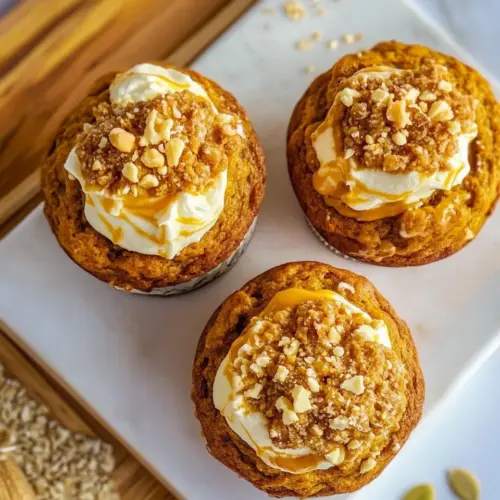
Pumpkin Cream Cheese Muffins
Pumpkin Cream Cheese Muffins are creamy and spiced, offering a soft pumpkin crumb with a luscious cream cheese center. These easy to make muffins balance warm cinnamon and nutmeg with brown sugar richness for an irresistible autumn treat, perfect for brunch or snack time. Try them for a seasonal bake that is comforting and reliably crowd pleasing.
Equipment
- Muffin Tin
- 12 muffin liners
- Medium Bowl
- Large Bowl
- Whisk
Ingredients
- 1/2 cup (65 g) all purpose flour Provide a light structure and tender crumb when combined with liquids and leaveners; sift or whisk to remove lumps and ensure even distribution in the batter.
- 1/4 cup (50 g) white granulated sugar Add necessary sweetness and help dissolve into the batter for uniform flavor; measure precisely to balance sweetness without weighing down the muffins.
- pinch of salt Enhance overall flavor by balancing sweetness and rounding other spices; dissolve into the wet ingredients to ensure even seasoning throughout the batter.
- 1/4 (57 g) cup unsalted butter, melted and slightly cooled Contribute fat for richness and moist mouthfeel while adding a subtle buttery flavor; melt and cool slightly to incorporate smoothly without cooking eggs in the batter.
- 6 ounces cream cheese Create a creamy, tangy filling or swirl that adds moisture and contrast; soften to room temperature for smooth blending into the cream cheese layer.
- 3 tablespoons granulated sugar Sweeten and stabilize the cream cheese filling so it tastes balanced; dissolve into the softened cream cheese for a silky texture.
- 2 teaspoons heavy cream Loosen and slightly thin the cream cheese filling to reach a spreadable consistency; add sparingly and mix until the filling is smooth.
- 1/2 teaspoon pure vanilla extract Impart warm, floral vanilla notes that enhance sweetness and deepen overall flavor; add to the cream cheese or batter for aromatic complexity.
- 3/4 (150 g) cup granulated sugar Provide bulk sweetness for the muffin batter and help with caramelization and moisture retention; measure carefully to prevent overly sweet results.
- 1/2 (104 g) cup dark brown sugar Contribute deep, molasses-like sweetness and moisture, enhancing the overall brown-sugar flavor profile; pack lightly when measuring for consistent sweetness.
- 2 teaspoons ground cinnamon Add warm, aromatic spice that complements pumpkin and other fall flavors; mix into dry ingredients to distribute the spice evenly.
- 1/2 teaspoon ground nutmeg Lend a nutty, slightly sweet warmth that pairs with cinnamon and pumpkin; combine with other spices in the dry mix for balanced flavor.
- 2/3 (133 g) cup neutral oil Supply neutral fat for moistness and tender crumb without adding strong flavor; pour at room temperature to blend uniformly into the batter.
- 2 large eggs Provide structure and volume through protein coagulation and emulsification; beat or whisk into the wet ingredients until homogeneous.
- 1 1/4 (300 g) cup pumpkin puree Deliver intense pumpkin flavor, moistness, and body to the muffins; drain any excess liquid if overly wet and fold gently into the batter.
- 3/4 teaspoon baking soda Offer leavening power and contribute to the rise by reacting with acidic components; mix with other dry ingredients for even distribution.
- 1/2 teaspoon baking powder Provide additional leavening and a light texture when combined with baking soda and liquids; whisk into dry ingredients to prevent clumping.
- 1/2 teaspoon kosher salt Enhance overall flavor depth and control fermentation of leaveners; dissolve evenly with other salts for consistent taste.
- 1 3/4 (228 g) cups all-purpose flour Create the bulk of the flour component to build structure and chewiness in the final muffins; sift or whisk with other dry ingredients for uniform incorporation.
Instructions
- In a small bowl, pour in the all-purpose flour, sugar, salt and pour in the melted butter. Mix it up with a fork. I like the crumbs to be pea-sized. Set aside.: When you press the mixture between your fingers you should feel small, pea sized crumbs that hold their shape but break apart easily. The scent will be faintly sweet and buttery, and as the melted unsalted butter cools slightly it helps the crumbs cling together rather than form a paste. This texture becomes a lightly crisp topping after baking, and it should not be powdery or overly wet, which would mean the butter was too hot. If the crumbs are too fine, they will not provide enough contrast; if too large, they may fall off the muffin. A common mistake is adding warm butter that melts the sugar, so always let it cool briefly.
- In a medium bowl, combine the cream cheese, sugar, heavy cream and vanilla. Using an electric hand mixer, beat until smooth. Transfer to a piping bag or a ziploc bag. Set aside.: You will notice the cream cheese transform from lumpy and cold to glossy and smooth as you beat it, and the aroma will shift to a sweet, tangy fragrance as the granulated sugar dissolves. The addition of heavy cream loosens the texture so the filling pipes cleanly and holds shape during baking. If the filling seems too firm, a touch more heavy cream will help, but avoid making it soupy. One pitfall is working with cold cream cheese , which resists smoothing; bring it closer to room temperature before mixing for the best texture.
- Preheat the oven to 350 F. Place muffin liners in the cavities of a muffin pan. In a large bowl, add the granulated sugar, brown sugar, cinnamon, nutmeg, oil, eggs, pumpkin puree, baking soda, baking powder and salt. Whisk together until smooth.: You should smell warm spices and see the sugars dissolve into the pumpkin puree as you whisk. The batter will be glossy and thick but pourable, and the eggs will help emulsify the oil and pumpkin together. Whisk just until combined to avoid overworking the batter. A common error here is using a whisk too vigorously, which can trap excess air and lead to uneven oven spring, so mix gently until homogeneous.
- Pour in the all-purpose flour and mix until you no longer see any flecks of flour, being sure not to over mix the batter.: The batter will change from glossy to slightly thicker as the all purpose flour absorbs moisture. Stop mixing as soon as you no longer see streaks of dry flour because overmixing develops gluten and yields tough muffins. You want a batter that still has a little movement and looks cohesive. Watch for a uniform color with no dry pockets. If you find stray clumps, fold them in with a spatula rather than beat vigorously.
- Add a tablespoon of the batter to each muffin liner. And then add a teaspoon or two of cream cheese filling. Using a skewer, swirl the cream cheese. It needs to be a good layer of cream cheese so it doesn’t just melt into the batter as it bakes.: The sensory clue here is the contrast between the thicker pumpkin batter and the silky filling; when you pipe the cream cheese , it should sit as a distinct dollop. Use a skewer to create a gentle swirl, not to fully mix the layers, so the filling remains visible after baking. If you underfill the center, the cream cheese can vanish into the batter, so be generous but controlled. Avoid over stirring when swirling, which will blend the layers completely and defeat the point of the filling.
- Add the remaining batter on top of each of the muffins evenly.: As you cover the filling, the sound is quiet and the batter settles, smoothing into the liner. Aim to fill each cup evenly to promote uniform baking. An uneven fill will cause different bake times and may result in some muffins collapsing while others are set. A useful trick is to use an ice cream scoop or measuring cup for consistent portions.
- Pipe on the remaining cream cheese icing. Swirl it into the tops of each of the muffins.: Piping a little more cream cheese on top creates an appealing visual and adds another layer of creamy texture after baking. The top swirl should retain some definition as it bakes, offering a marbled look. If the topping spreads too thin, chill the filled pan for a few minutes before baking to help it hold shape. Avoid piping too much on top, which can cause excessive browning or a gooey dome that lingers raw in the center.
- Add the crumb topping to about half of the muffins.: Drop the pea sized crumbs on half the muffins so you get both textures across the batch. The crumbs will crisp and take on a golden hue while the rest of the muffins remain smooth. This variety is great for pleasing different preferences. A mistake would be pressing the crumbs into the batter, which prevents them from crisping; instead, let them sit loosely on top.
- Transfer to the oven to bake for about 20-22 minutes, until a skewer inserted into the center comes out clean.: Listen for a faint crackle as the tops set and watch the edges pull away slightly from the liners. The internal temperature will rise steadily, and the aroma of spices will fill the kitchen. Use a skewer to test near the edge of the cream cheese so you avoid the filling; a clean skewer through the muffin portion means done. Underbaking will produce a gummy texture, while overbaking dries the crumb, so aim for that clean skewer result.
- Allow to cool in the pan for 5 minutes and then transfer to a cooling rack.: Cooling in the pan for a few minutes helps the muffins set so they do not fall apart when removed. You will notice steam relaxing from the tops, and the muffins will firm slightly. Transferring to a rack prevents condensation from making the bottoms soggy. A common error is leaving them in the pan too long, which can trap steam and soften the crumb; move them after the brief rest.
- I like to eat these on their own with a bit of butter.: The first bite after cooling offers a contrast between the slightly crisp top, the soft pumpkin crumb, and the creamy center. If you add a smear of butter , it will melt into the warm muffin and heighten richness, but they are delightful plain as well. Be mindful that warm muffins will have a looser cream cheese center, so let them cool enough to hold shape if you prefer a firmer filling.
- To store the muffins, place them in an airtight bag (like a ziploc) and store at room temperature for up to 4 days.: Proper storage keeps the crumb tender and prevents the cream cheese from drying out. If you stack them, separate layers with parchment to protect the topping. Refrigeration may extend life but can firm the crumb and chill the fat; room temperature storage in an airtight container is recommended for the first few days. Avoid leaving them uncovered which leads to staling.
Notes
- Room temperature swap: If your cream cheese is cold, set it out for 20 to 30 minutes to soften for easier whipping and a smoother filling.
- Crumb shortcut: If you prefer not to make a crumb topping, skip that step altogether, the muffins are still excellent and the batch will be slightly less sweet.
- Make ahead batter: You can prepare the batter and store it in the fridge overnight, but bring it back to room temperature and stir gently before portioning to ensure even rise.
- Even muffin portions: Use an ice cream scoop for uniform muffins so they all bake evenly and finish at the same time.
- Storing leftovers: Place cooled muffins in an airtight bag with a piece of paper towel to absorb excess moisture and keep the tops from getting soggy.