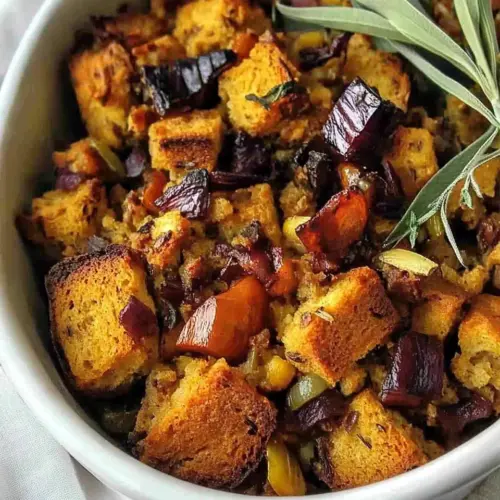
Pumpkin Cornbread Stuffing
Pumpkin Cornbread Stuffing is a cozy, textured side with sweet pumpkin cornbread croutons, tart cherries, and savory chicken sausage. Creamy interior meets a crispy top for an easy holiday side that also works for weeknight dinner. Make it for Thanksgiving or any fall gathering for a comforting dish that stands out on the table.
Equipment
- 12-inch oven-safe skillet
- Oven
Ingredients
- 1 tablespoon olive oil Sauté in a skillet to provide a fragrant fat base for browning other aromatics and coating the sausage and vegetables during cooking; helps prevent sticking and adds a subtle fruity richness to the stuffing.
- 8 ounces fully cooked chicken sausage links, sliced Brown in the pan to add savory, meaty flavor and a hearty texture; pre-sliced fully cooked links warm through quickly and contribute protein and spice depending on seasoning.
- 3 ribs celery, diced Dice and sweat until softened to contribute a mild, aromatic crunch and vegetal sweetness; celery adds texture contrast and moisture-absorbing fibers to balance the bread and pumpkin.
- 1 medium yellow onion, diced Dice and caramelize to bring out sweet, savory depth and aromatic complexity; onion forms a flavor foundation that melds with garlic and poultry seasoning for classic stuffing taste.
- 2 cloves garlic, minced Mince finely and cook briefly to release pungent, savory oils that deepen overall flavor; garlic provides a warm, aromatic note that complements the onion and poultry seasoning.
- 1 teaspoon poultry seasoning Season into the mixture to introduce a warm, herby blend of sage, thyme, and other spices that define traditional poultry-side flavors; poultry seasoning ties the savory components together.
- 1/2 teaspoon kosher salt Measure and add to control overall saltiness and enhance other flavors without overpowering; kosher salt dissolves well and helps proteins and aromatics season evenly.
- 1 cup dried tart cherries Soak or mix in to add bursts of sweet-tart fruitiness and chewy texture; dried tart cherries provide contrast to savory elements and brighten the stuffing's flavor profile.
- 8 cups pumpkin cornbread croutons Tear or cube into croutons to supply the primary absorbent base that soaks up stock and pumpkin, providing structure and a tender, bread-forward mouthfeel; pumpkin cornbread croutons add sweet corn flavor and moist crumbs.
- 3 -4 cups chicken stock Pour gradually to moisten the bread and bind ingredients while building savory depth; chicken stock determines the stuffing's final consistency and infuses savory, meaty undertones.
Instructions
- Preheat oven to 350 degrees F.: You will feel the warm anticipation of a properly heated oven when you push the rack in, and the air takes on a gentle dry heat that browns tops evenly. Preheating ensures the final bake starts immediately, creating a crisp surface while keeping the interior moist. A common mistake is putting the skillet into a cold oven, which prolongs baking and can make the top soggy. If your oven runs hot or cold, use an oven thermometer to confirm it reads 350 degrees F before baking.
- In a 12-inch oven safe skillet add olive oil and place over heat.: As the oil warms, look for it to shimmer slightly and move easily across the pan, which tells you it is ready. This creates a slick surface for browning, and you might hear a faint hiss when the first ingredient hits the pan. If the oil smokes, lower the heat and wipe the pan if necessary, because smoking oil can make flavors bitter. Use an oven safe skillet so you can move directly from stovetop to oven without disrupting the mixture.
- Add in chicken sausage and lightly brown.: When the sausage hits the hot oil you will hear a lively sizzle and see its edges caramelize to golden brown, releasing rich, savory aromas. Those browned bits are key flavor contributors, so give the slices space to color rather than crowding them. A common misstep is stirring too frequently, which prevents browning; let each side get color before turning. Browning also renders some fat that will flavor the vegetables that follow.
- Add in celery and onion and cook together until the sausage is fully browned and the vegetables are just starting to soften.: You should hear a softer sizzle and see the onion turn translucent while the celery loses its raw sheen. This stage builds sweetness and aromatic depth as natural sugars begin to surface. Stir occasionally to cook evenly, but avoid overcooking, which will lead to limp vegetables and loss of texture contrast. If your pan looks dry, add a splash of stock or a touch more oil to prevent sticking.
- Add garlic and stir until fragrant, about 30 seconds.: Garlic fragrance blooms quickly, and you will notice a warm, savory perfume almost immediately. Keeping this step short prevents the garlic from browning and tasting bitter. If you smell anything acrid, that is a sign to reduce heat since burnt garlic will carry through the entire dish. The brief burst of garlic ties the savory components together without dominating them.
- Sprinkle in poultry seasoning and kosher salt. Stir to combine.: The moment you add the seasoning you will sense the aroma of herbs lift, giving the pan a classic stuffing scent. Salt helps draw moisture out of the vegetables and deepens their flavor, so stir thoroughly so the seasoning distributes. Be cautious with salt if your chicken sausage is already seasoned; you can always add more after tasting but cannot remove excess.
- Stir in tart cherries and croutons.: As you fold in the cherries and croutons the mixture will take on a mosaic of color and texture, with ruby cherries contrasting golden cornbread pieces. The croutons will start to absorb some of the pan juices immediately, softening at the edges. Make sure the pieces are evenly mixed so each bite gets both chewy fruit and savory crumbs. Using uneven sizes can cause some pieces to remain dry while others over-soak, so aim for uniform crouton size.
- Remove from heat and pour 2 cups chicken stock over the mixture in the pan and stir to combine. Let the stock soak into the bread.: After pouring the first measure of stock you will see the liquid darken the croutons and hear small sizzling sounds as it meets the hot pan. Letting it sit for a minute allows the assembly to hydrate and settle. This pause is important because it helps the croutons absorb evenly rather than turning into a puddle. If you skip the resting step you risk uneven moisture distribution in the bake.
- Add more chicken stock to soften mixture if needed. The amount of stock needed will depend on how you like your stuffing (dry or very moist) and how dry your croutons were before adding to the mixture. I find that 3 cups works best for me, remember you will be baking for 40 minutes so add a little more than you think necessary.: Pay attention to how the mixture feels as you add stock, adjusting to get a slightly wetter texture than you want in the final product because baking will evaporate liquid. You will see some excess pooling initially, but after a few minutes the croutons will drink it up. A common mistake is underestimating the absorption, resulting in overly dry stuffing after baking. If you prefer a drier result, use less stock and check halfway through baking.
- Add skillet to the oven and bake for 40 minutes until the top is crisp and the inside is moist but not soaking wet.: During baking the top will transform into a bronzed, slightly crunchy layer while the interior sets into a tender, cohesive texture. You will smell deep toasted cornbread and savory herb notes filling the kitchen. Check the center near the end of baking for firmness, and if the top browns too quickly, cover loosely with foil to avoid burning. Overbaking will dry out the interior, so trust the visual cues of a golden top and a moist but set center.
Notes
- Swap sausage styles carefully — If you prefer a milder or more herby profile, choose a different fully cooked chicken sausage variety, keeping in mind that flavor intensity and salt levels will change, so taste before adding extra salt.
- Control moisture with stock — Start with the recommended amount of chicken stock and add gradually, because baking will reduce liquid, and it is easier to add more than to fix an overly wet bake.
- Boost texture with extra toasting — If you want extra crunch, toast the pumpkin cornbread croutons lightly before combining so they hold up to stock and still give a crisp finish on top.
- Play with fruit ratios — Increase or decrease the tart cherries to adjust sweetness and chew, remembering that more fruit will add moist pockets and a sweeter overall note.
- Make ahead and reheat — Assemble, refrigerate, and then bake on the day of serving, adding a few extra minutes to the bake time if cold; this keeps flavors melded and saves time on a busy day.