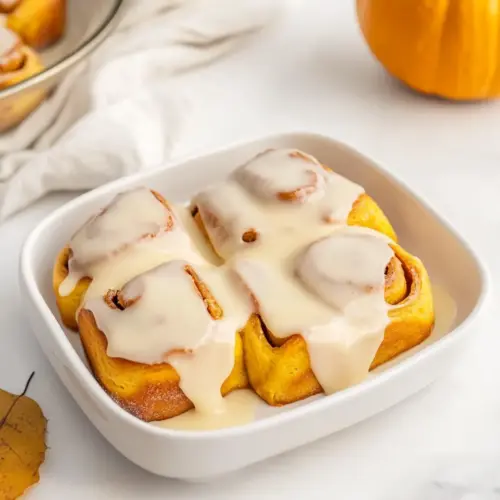
Pumpkin Cinnamon Rolls with Maple Icing
Pumpkin Cinnamon Rolls with Maple Icing are tender, spiced rolls with a pillowy interior and a glossy, maple cream cheese glaze. The subtle pumpkin keeps the crumb moist while the brown sugar and spice filling creates deeply aromatic swirls, perfect for autumn brunch or holiday mornings. Make ahead friendly and delightfully sticky, these rolls are worth baking for warm, comforting bites.
Equipment
- Mixing Bowls
- Measuring Cups and Spoons
- Baking Pan
- Whisk
- Oven
Ingredients
- 4 tablespoons salted butter, melted Melted and salted to add richness and moisture to the dough while contributing a subtle savory balance that enhances the sweetness; used in both the dough and brushing to create a tender crumb and golden crust.
- 1/4 cup granulated white sugar Granulated white sugar added to feed the yeast and sweeten the dough, helping with browning and structure; balances the pumpkin's natural earthiness and assists in fermentation when combined with yeast.
- 1/2 teaspoons salt Salt used to strengthen gluten structure and regulate yeast activity; enhances overall flavor by balancing sweetness and rounding out the dough’s taste.
- 1 cup canned unsweetened pumpkin puree Canned unsweetened pumpkin puree used to provide moisture, tenderizing the dough while contributing autumnal flavor and natural color; adds fiber and helps create a soft, slightly denser crumb.
- 1 large egg, beaten Beaten large egg used to enrich the dough, improving texture, structure, and browning while contributing protein and emulsification for a smoother, more cohesive batter.
- 1/2 cup lukewarm water (105 to 110°F) Lukewarm water kept between 105 to 110°F to activate the yeast without killing it, helping the dough rise; hydrates flour and contributes to proper dough consistency.
- 1 packet active dry yeast Active dry yeast used as the leavening agent to ferment sugars and produce carbon dioxide, creating a light, airy roll texture and developing flavor through fermentation.
- 1 tablespoon granulated white sugar Granulated white sugar added specifically to the yeast mixture to provide an immediate food source for the yeast and encourage a rapid, reliable rise.
- 3 3/4 cups all purpose flour, plus extra as needed All purpose flour provides the bulk and structure through gluten formation; measured as 3 3/4 cups with extra as needed to achieve proper dough consistency and elasticity.
- cooking spray Cooking spray used to prevent sticking in pans and on dough surfaces, ensuring easy release and clean presentation without altering flavor.
- 4 tablespoons (1/2 stick) butter, at room temperature Room temperature butter used in the filling to create a rich, spreadable layer that melts into the dough while contributing flavor and a tender mouthfeel.
- 2/3 cup light brown sugar Light brown sugar used in the filling to provide caramel-like molasses notes and moist sweetness that pairs with pumpkin and spices for a gooey interior.
- 1 tablespoon ground cinnamon Ground cinnamon used to deliver warm, familiar spice and depth to the filling, enhancing sweetness and providing classic roll flavor.
- 1 teaspoon ground ginger Ground ginger added to contribute warm, slightly sharp spice that complements cinnamon and pumpkin, deepening the pastry’s autumnal spice profile.
- 1/4 teaspoons salt Salt added in the filling to enhance spice flavors and balance the sweetness, ensuring the overall taste is rounded and not cloying.
- 1/4 teaspoon ground cloves Ground cloves used sparingly to introduce pungent, aromatic depth that enhances the spice blend and adds complexity to the rolls’ flavor.
- 1/8 teaspoon ground allspice Ground allspice incorporated for its combined cinnamon, nutmeg, and clove-like notes, enriching the spice mixture and providing warm complexity.
- 1/8 teaspoon ground nutmeg Ground nutmeg used to contribute sweet, nutty warmth that complements pumpkin and other spices, adding traditional autumn flavor nuances.
- 3 ounces cream cheese, at room temperature Room temperature cream cheese used in the icing to create a tangy, creamy base that balances sweetness and yields a smooth, spreadable texture.
- 1 cup powdered sugar, sifted Powdered sugar sifted to ensure a silky, lump-free icing that provides sweetness and structure when combined with cream cheese and maple, dissolving smoothly.
- 1/4 cup pure maple syrup Pure maple syrup used to flavor and sweeten the icing with natural maple complexity, adding depth and a glossy finish to the glaze.
- 1/4 teaspoons salt Salt added to the icing to round flavors and temper sweetness, enhancing the maple and cream cheese notes for a balanced finish.
Instructions
- In a medium bowl, whisk together the maple cream cheese frosting ingredients until smooth, then spoon evenly over all of the cinnamon rolls, allowing it to drizzle down the sides.: The frosting should feel cool and silky as you whisk cream cheese , powdered sugar , maple syrup , and salt together, and you will notice a glossy, ribbon like texture when it is ready. The aroma is rich and maple forward, and you want a pourable consistency so it flows into the swirls rather than sitting as a thick dollop. If it feels too stiff, a teaspoon of warm water will loosen it gently, but be careful not to over thin. A common mistake here is working with cold cream cheese , which makes lumps and prevents smooth whisking, so be sure it is at room temperature. The why is simple, a smooth glaze clings to each roll for balanced bites, and the visual shine invites people in.
- Once your cut cinnamon rolls are in the pan, you can wrap them with plastic wrap at this point and refrigerate them overnight. Take them out of the fridge and let them warm up in the morning (at room temperature) and then do their rising. Then you can continue with baking. This makes it a breeze to make pumpkin cinnamon rolls in the morning.: The dough lying chilled in the pan will develop deeper flavor while the fats firm up, producing a more controlled rise the next morning. When you take them out, allow the pan to sit at room temperature as the dough warms, and you will hear faint, lively bubbles as the yeast becomes active again, and you should see the rolls slowly puff. This hands off overnight method saves morning time and often yields more complex tasting rolls. Avoid leaving them in a very cold fridge for too long without covering, which can dry edges, and don't bake them straight from fridge cold unless you want a tighter crumb. The purpose here is flavor development and convenience, and it is a technique I use frequently for busy mornings.
- Store your pumpkin cinnamon rolls covered or in an airtight container at room temperature for a couple of days. They can be stored in the refrigerator for up to 5 days. Simply reheat them in the microwave to soften them up again.: As the chilled dough warms, watch for the rolls to increase in size by about half, becoming soft to the touch and slightly springy. The surface will look smoother and you may smell faint fermentation notes, a pleasant yeasty sweetness that signals they are ready to bake. If you rush baking, the centers will be denser and underproofed, so patience is rewarded. A troubleshooting tip is to gently press a roll with your finger, if the indentation springs back slowly it is ready; if it springs back instantly, give it more time. This final rise allows the dough to achieve the light, airy texture that makes a memorable roll.
- Then you can continue with baking: When you slide the pan into the oven you will immediately notice a burst of oven heat and a filling of toasty, caramelizing scent as sugars brown, and the tops will turn golden and slightly glossy. Baking encourages final oven spring, separating delicate layers and creating that coveted pull apart texture. Keep an eye on the edges for golden caramelization without burning, and rotate the pan if your oven browns unevenly. A common mistake is opening the oven frequently, which can knock the temperature and shorten oven spring, so check through the window when possible. The reason to watch carefully is the balance between a soft interior and a nicely browned exterior.
- Store your pumpkin cinnamon rolls covered or in an airtight container at room temperature for a couple of days: After they cool to warm, not hot, cover them to retain moisture and prevent drying, and you will notice the texture stays tender for longer when stored together. If you plan to keep them beyond two days, refrigeration will extend shelf life to about five days though it will firm the butter and cream cheese frosting, making reheating desirable before serving. When reheating, short bursts in the microwave will soften the center and revive that just baked feel, but avoid over microwaving which can make them gummy. Storing as a group helps maintain edge softness, and that communal warmth keeps them tasting fresh.
- They can be stored in the refrigerator for up to 5 days: Cold storage slows spoilage and preserves the dairy elements in the frosting, though it also dulls aroma slightly; reheat gently to bring back the roll to its ideal eating temperature. The smell after reheating should bring forward maple and spice notes again, which indicates the sugars and fats have loosened. A mistake I see often is reheating at too high a power, which can dry the dough or cause the frosting to separate, so aim for short increments. Understanding storage preserves your work and lets you enjoy the effort across several mornings.
Notes
- Bring ingredients to room temperature, especially the egg and cream cheese, to ensure smooth blending and even baking.
- Check yeast activity by proofing it in the warm water with a pinch of sugar when uncertain, watching for foam in 5 to 10 minutes.
- Don’t overflour the dough, add just enough flour until the dough is soft and slightly tacky, which preserves tenderness in the final roll.
- Use a sharp knife or unflavored floss to cut the log for cleaner edges and better swirl definition without squishing the rolls.
- Loosen sticky frosting with a teaspoon of warm water if it thickens, stir gently until glossy and pourable for even coverage.
- Rotate the pan midway through baking if your oven runs hot on one side, ensuring even browning of the rolls.
- Keep rolls together for storage to prevent edges from drying out, and reheat briefly before serving for best texture.