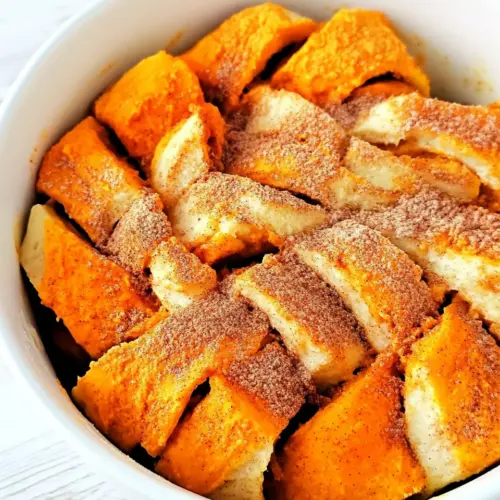
Pumpkin Cinnamon Roll Casserole
Pumpkin Cinnamon Roll Casserole is a creamy, spiced, and easy morning treat that layers canned cinnamon rolls with smooth pumpkin puree and warming spices for a cozy breakfast or brunch. The result is tender, syrupy bites with pockets of frosting and a light whipped topping finish, perfect for an easy weekend or holiday morning. Try it when you want crowd pleasing comfort with minimal fuss.
Equipment
- Oven
- 1 1/2 quart baking dish
- Mixing Bowl
- Spatula
- Knife
Ingredients
- 35 oz . Jumbo Cinnamon Rolls (canned) with cream cheese frosting typically 2 cans of 17.5 oz (*5 rolls per can) Provides soft, sweet, cinnamon-layered dough and a ready-made glaze that forms the casserole base; canned jumbo rolls save time and ensure consistent texture. Can be torn into pieces to soak up pumpkin mixture and bake into a gooey, pull-apart casserole with creamy frosting melted on top. Quantity listed yields ample volume for a 9x13-inch pan and delivers the classic cinnamon roll flavor throughout the dish.
- 15 oz . pumpkin puree Adds moist, velvety pumpkin body that binds with eggs and spices to create the custardy filling for the casserole. Supplies earthy sweetness and moisture that balances the enriched dough, while contributing the characteristic fall flavor and orange color to the finished bake.
- 1 tsp . pumpkin spice Imparts warm, fragrant, multi-spice notes of nutmeg, cloves, ginger, and allspice to echo traditional pumpkin pie flavor. Enhances depth and aromatic complexity so the casserole tastes distinctly seasonal without overpowering the cinnamon notes from the rolls.
- 1 tsp . ground cinnamon Contributes pure cinnamon warmth and a focused, sweet-spicy backbone that complements both the rolls and the pumpkin. Strengthens the familiar cinnamon-roll flavor and helps tie the flavors together for a cohesive, comforting dessert.
- Cool Whip for topping Provides a light, airy whipped topping to finish the casserole with creamy sweetness and a cool contrast to the warm baked dish. Adds a decorative, cloud-like layer when dolloped or spread over portions just before serving for added visual appeal and indulgence.
Instructions
- Preheat oven to 350 and grease a 1-1/2 quart baking dish with nonstick cooking spray.: When you turn on the oven to 350 degrees, you'll soon notice the air warming and a faint electrical hum, which signals a dependable, steady bake. Greasing a 1 1/2 quart baking dish ensures the casserole releases cleanly; the slick surface prevents sticking and allows edges to brown evenly. The sound of the spray is small but satisfying, and visually the dish should look evenly coated. This step controls how the casserole lifts at the edges and helps the bottom cook without burning, so don't skip it. A common mistake is under-greasing, which leads to tearing when you serve; take a slow, deliberate pass with the spray, and if you prefer, use a light brush of oil for extra insurance.
- Cut each cinnamon roll into six wedges and place into the prepared baking dish.: As you slice each canned cinnamon roll into quarters or sixths, you will notice the soft, pillowy dough give under the knife, and the spiral cut reveals sticky layers that will caramelize when baked. Tucking the wedges into the dish in a single layer or gentle mosaic creates pockets for the pumpkin to nestle into. The visual cue is slightly exposed swirl edges that will brown into glossy curls in the oven. If pieces are overcrowded, the center can remain underdone, so arrange them with a little breathing room. Avoid cutting too small, which can turn the texture mushy rather than pleasantly chewy.
- In a bowl, combine Pumpkin Puree and spices.: As you whisk the pumpkin puree together with pumpkin spice and ground cinnamon , the mixture becomes fragrant, releasing warm, cozy notes. The texture should be smooth and unchunky, with spices evenly distributed so each spoonful tastes consistent. Stirring creates a silky surface and a subtle sheen that promises moistness once baked. I always scrape the sides of the bowl to capture any clinging spice. If you under-mix, you can get pockets of concentrated spice that feel bitter, so take your time to blend until homogenous.
- Spoon pumpkin puree into the pan and mix well to combine.: When you dollop the spiced pumpkin over the arranged wedges, the puree sinks into crevices and begins to coat the dough's coils. Use a spatula to fold and press gently so the pumpkin seduces into the swirls instead of just sitting on top. Visually you want even distribution, with the dough appearing mottled with orange ribbons. This step affects texture significantly, as uneven coating can leave dry pockets. The common error is dumping all the pumpkin in one spot, which can swamp part of the casserole; instead, distribute and then gently fold until everything looks uniformly speckled.
- Bake for 15 minutes, stir the mixture and return to the oven for 15 minutes more or until a toothpick inserted into the center yields cinnamon rolls that are done.: The initial 15 minutes lets the dough start to set and the pumpkin warm through; you will smell the first waves of spice and notice edges beginning to firm. After stirring, which redistributes moisture and encourages even browning, the second 15 minutes deepens color and creates slightly caramelized spots. A toothpick test in the center should come out with moist crumbs but not raw dough. Look for bubbling around the edges and a golden top to signal readiness. If you rush this step, the interior may remain doughy, so be patient and check visually as well as with the toothpick.
- Remove from oven and optionally sprinkle with additional pumpkin pie spice and cinnamon.: Once out of the heat, the kitchen fills with intensified aroma, and the casserole will settle while piping hot. A light dusting of extra pumpkin spice and cinnamon adds a polished, fragrant top note and makes the surface shimmer slightly. This final sprinkle contributes aroma and a hint of texture contrast. Be careful not to add too much spice, which can overwhelm sweetness; a gentle hand is best. One pitfall is adding heavy toppings while still too hot, which causes them to blur into a paste, so wait a minute for the surface to cool slightly.
- Let cool until warm, and drizzle with cream cheese icing.: Allow the casserole to rest until it is warm rather than scalding, which helps set the internal structure and makes serving neater. The canned cream cheese icing, when drizzled, will melt into glossy ribbons and form sweet pockets that complement the spiced pumpkin. The contrast between warm, tender cake and the cool, tangy frosting is part of the appeal. If you drizzle immediately while it is too hot, the frosting will liquefy excessively; give it a short breather to preserve texture.
- Serve this sweet breakfast casserole topped with Cool Whip whipped cream.: At serving, a scoop of Cool Whip brightens each portion, offering a soft, airy counterpoint to the rich, dense bites. The visual is inviting: white cloudlike mounds perched atop warm, spiced squares. This finishing touch reduces perceived richness and makes the casserole feel celebratory. If left sitting, whipped topping will soften further, so add it right before plating for the best presentation. A common oversight is plating too early and losing the pleasing contrast between warm casserole and cool topping.
Notes
- Swap pumpkin types: It's fine to use preseasoned canned pumpkin pie filling in place of plain pumpkin puree, but be aware it contains sweeteners and spices, so reduce added spice if you prefer a subtler profile.
- Adjust sweetness: If your canned cinnamon rolls are very sweet, skip adding extra sugar in any optional variations, letting the frosting and Cool Whip provide the final sweetness layer for balance.
- Scaling up: To feed a larger crowd, increase the number of canned rolls and move to a larger baking dish; monitor bake time closely as a bigger casserole may need additional minutes for the center to set.
- Make ahead: Assemble the casserole the night before and refrigerate uncovered so the surface firms slightly; bake from cold and allow a few extra minutes if the dish is chilled straight from the fridge.
- Serving temperature: Serve warm rather than hot to preserve the texture contrast between the casserole and the cream topping, and to let flavors meld so the spices taste integrated rather than sharp.