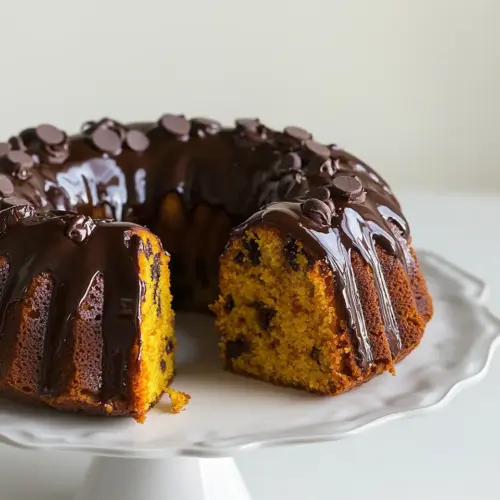
Pumpkin Chocolate Chip Bundt Cake
Pumpkin Chocolate Chip Bundt Cake is a moist, spiced bundt filled with pockets of melted chocolate and topped with a glossy dark chocolate glaze. The tender crumb, warm cinnamon notes, and silky finish make it a perfect fall treat for brunch or easy entertaining, promising comforting bites that are both familiar and indulgent.
Equipment
- Bundt Pan
- Stand mixer or hand mixer
- Mixing Bowls
- Wire Rack
- Small Saucepan
Ingredients
- 2 1/2 cups all-purpose flour Measure and sift to ensure even texture and to provide the cake’s primary structure and bulk; flour combines with liquids and leaveners to form the gluten network that traps air and supports the crumb. Properly aerated flour yields a tender yet sturdy bundt cake capable of holding add-ins like chocolate chips and glaze. Use spoon-and-level measuring to avoid dense results.
- 1 teaspoon baking powder Leaven gently to provide an initial rise and help create a light crumb; baking powder reacts with moisture and heat to produce carbon dioxide bubbles during baking. Balance with baking soda and acidic components to achieve an even lift without metallic taste. Ensure freshness for reliable rising power.
- 1/2 teaspoon baking soda Activate and complement the baking powder to control acidity and contribute to rise; baking soda reacts with acidic elements in the batter to produce additional leavening. Use the specified amount to avoid soapy or bitter flavors while ensuring proper texture. Distribute evenly to prevent uneven pockets of lift.
- 1/2 teaspoon salt Enhance flavor and balance sweetness while strengthening gluten slightly; salt heightens other flavors and controls yeast or chemical leavening perception. Even a small amount improves the overall taste profile and depth of the cake. Dissolve evenly in the batter for consistent seasoning.
- 1 teaspoon ground cinnamon Season warmly to give the cake its characteristic autumn spice and aromatic depth; cinnamon pairs naturally with pumpkin to impart sweet, woody notes. Measure precisely to avoid overpowering the batter and distribute evenly for consistent flavor. Toast or use fresh-ground cinnamon for brighter impact if available.
- 1/4 teaspoon ground nutmeg Add warm, slightly sweet-spicy background notes to complement cinnamon and pumpkin; nutmeg contributes a nutty, floral nuance that enhances complexity. Use sparingly to avoid bitterness, and ensure it’s ground fine for even distribution. Freshly grated nutmeg will be more vibrant.
- 1/4 teaspoon ground cloves Introduce pungent, slightly astringent spice to deepen the seasonal spice profile; cloves add warmth and intensity in small amounts. Balance with cinnamon and nutmeg to prevent dominance and create a cohesive spice blend. Grind finely to avoid gritty texture.
- 1 cup granulated sugar Provide sweetness and moisture to the batter while contributing to tender crumb through sugar’s interaction with butter; granulated sugar also aids browning and caramelization during baking. Cream with butter to incorporate air pockets that help leaven the cake. Adjust technique rather than amount for desired sweetness.
- 3/4 cup (1 1/2 sticks) unsalted butter, room temperature Cream to incorporate fat, richness, and aeration; unsalted butter contributes flavor, moisture, and structure while allowing control over salt levels in the recipe. Room temperature butter facilitates proper creaming with sugar to trap air for lift and tenderness. Use high-quality butter for best flavor.
- 1 (15 oz) can pumpkin puree (not pie filling) Contribute moistness, dense texture, and earthy pumpkin flavor; pumpkin puree adds liquid fat-free moisture, fiber, and natural sweetness that complement spices. Avoid canned pie filling which contains extra sugar and spices; puree should be well combined to ensure uniform crumb. Helps create tender, richly flavored cake.
- 2 eggs, room temperature Bind ingredients, add richness and structure from protein, and assist with leavening through steam and coagulation; eggs provide moisture, emulsification, and color. Use room-temperature eggs to improve emulsification with butter and liquid, promoting uniform texture. Beat or mix as directed to incorporate air without overworking.
- 1 teaspoon vanilla extract Enhance overall flavor and provide aromatic complexity; vanilla extract rounds out the spice and chocolate notes while masking any metallic or eggy flavors. Dissolve and mix in with wet ingredients for even flavor distribution. Use pure vanilla for best results.
- 1/2 cup whole milk Contribute to batter moisture and tenderness while slightly thinning the batter for proper consistency; whole milk adds fat and lactose for flavor and browning. Warm or bring to room temperature to prevent chilling the batter, which can affect creaming and texture. Adjust slightly if batter seems too thick.
- 1 cup mini semisweet chocolate chips, tossed with 2 tablespoons flour Add concentrated chocolate flavor and texture while contributing small pockets of melting chocolate distributed throughout the cake; tossing with flour prevents sinking during baking. Mini semisweet chips provide sweet-bitter balance against pumpkin and spices. Ensure even coating to keep chips suspended in batter.
- 6 ounces 65-70% dark chocolate, chopped Provide intense chocolate flavor and form the base of a glossy ganache when melted with cream and butter; chopped dark chocolate lends depth and balance to the cake’s sweetness. Use quality 65-70% cacao for complexity and proper melting characteristics. Chop uniformly to ensure smooth, consistent melting.
- 1/4 cup unsalted butter Melt into ganache to add richness, mouthfeel, and sheen; unsalted butter blended with chocolate enhances gloss and gives the glaze a silkier texture. Use room-temperature butter cut into pieces to melt evenly and emulsify with chocolate and cream. Adds flavor without increasing salt content.
- 1/4 cup heavy cream Create a smooth, rich ganache by contributing fat, body, and creaminess; heavy cream allows melted chocolate to emulsify into a pourable, stable glaze. Warm gently to avoid scorching and whisk until glossy. Use full-fat cream for optimal texture and shine.
- 1/4 cup whole milk Thin the ganache slightly and add a touch of dairy flavor to adjust pouring consistency; whole milk lightens the ganache and softens the final glaze without diluting flavor excessively. Warm slightly before incorporation to maintain emulsion stability. Adjust amount for desired drip and thickness.
- 2 tablespoons corn syrup Stabilize and gloss the ganache while preventing crystallization; corn syrup imparts shine and a smooth, elastic texture to the glaze, helping it set with a professional sheen. Add during warm mixing to fully incorporate and avoid graininess. Use light corn syrup for neutral sweetness and clarity.
Instructions
- Preheat oven to 350 degrees F. Generously butter a standard (12-cup) bundt pan, making sure to get in all the nooks and crannies. Dust with flour, tapping out any excess.: As the oven warms, you will notice a faint metallic hum from the heating elements and the temperature dial reaching its mark. The sound of butter creaking as you press it into the pan and the soft rustle of flour dusting the grooves signal careful preparation. This step ensures the cake releases smoothly, preserving the sculpted ridges that make a bundt special. If you skip thorough greasing, the cake can cling and tear when inverted, so take your time to coat every indentation. The aroma of the oven preheating is a subtle cue that the kitchen is ready for the batter, and the even dusting of flour should appear as a thin, uniform veil after you tap out the excess. Troubleshoot any sticking by revisiting the buttered corners and making sure pockets are not missed.
- In a bowl, sift together flour, baking powder, baking soda, salt, cinnamon, nutmeg, and cloves.: The sifted mixture will smell faintly of spice, with the cinnamon leading and cloves offering a sharp whisper. Sifting aerates the dry components so the leaveners distribute evenly, preventing dense pockets and promoting a fine crumb. The visual cue is a lighter, more powdery texture and the fragrant blend floating up when you lift the sifter. If the mixture looks lumpy, press it through again, because lumps of baking powder or soda can create odd tunnels or uneven rise. This step matters because even dispersion of the leavening agents is key to an even dome and tender interior.
- In a large mixing bowl or the bowl of a stand mixer, beat sugar and butter until fluffy, 1 to 2 minutes. Add eggs, one at a time, mixing well after each addition. Scrape down the sides of the bowl, then mix in pumpkin and vanilla. Add dry ingredients in three additions, alternating with milk, mixing until incorporated. Fold in chocolate chips.: When you cream sugar and butter , listen for a softer, lighter sound as the mixture aerates; it should lighten in color and hold a faint ribbon when lifted. Adding eggs slowly allows the emulsion to form, and your batter should appear smooth after each incorporation. The first swirl of pumpkin will release a warm, earthy scent, while vanilla lifts the sweetness. Alternating dry ingredients with milk yields a batter that is neither too stiff nor too runny, providing the correct viscosity for a bundt. Folding in the floured mini semisweet chocolate chips should be gentle, using a spatula to preserve some air and ensure the chips stay suspended. Avoid over mixing at this stage because that will develop gluten and tighten the crumb. If you hear a slurry or see separation, stop and scrape well, because overbeating is the most common mistake that leads to a denser cake.
- Pour batter evenly into prepared pan. Bake for 50 to 55 minutes or until a toothpick inserted in the deepest part of the pan comes out clean or with a few moist crumbs attached. Move to a wire rack and let cool; invert onto wire rack, cake should come out cleanly.: As the cake bakes, you will notice the kitchen filling with the scent of pumpkin and spice while the top develops a warm, golden tone. The sound inside the oven is subtle, but you may hear gentle settling as steam escapes. Use a toothpick in the deepest channel to check doneness, aiming for mostly clean with a few moist crumbs, which avoids over baking. Letting the cake rest briefly allows the crumb to stabilize; rushing the inversion can cause breakage. If the cake seems to stick, gently run a thin spatula along the inner rim before turning it out. A common mistake is removing the cake while it is still too warm, resulting in a torn silhouette, so trust the cool down period until it feels set but not cold.
- To prepare glaze, heat all ingredients in a small saucepan over medium-low heat until melted and smooth. If necessary, add more milk or cream, 1 tablespoon at a time, until glaze is the consistency of maple syrup. Place wire rack with cake inside a sheet pan or cookie sheet. Pour glaze evenly over cake, letting it drip down and completely cover the top and sides, using a spatula if necessary to cover any missed spots. Let sit for 30 minutes to allow glaze to set. Slice and serve. Leftover cake will keep in an airtight container for up to 3 days.: As the dark chocolate , unsalted butter , heavy cream , whole milk , and corn syrup melt together, expect a glossy, velvety mixture that gives off a deep cocoa perfume. Stir gently, and reduce heat if you notice any smoking or separation, because high heat can cause the chocolate to seize. The ideal glaze drips slowly like warm syrup and clings to the ridges as it cools. Pouring over a rack set in a sheet pan catches drips and creates an even finish. The glaze should set to a soft sheen after about 30 minutes, and slicing too soon can result in a smeared surface. If the glaze is too thick, whisk in a tablespoon of milk or cream to loosen it; if it is too thin, let it cool slightly to thicken. A common pitfall is overheating the glaze which dulls the shine, so keep heat gentle and steady.
Notes
- Room temperature ingredients matter: Using room temperature butter, eggs, and milk helps the batter emulsify smoothly, giving a consistent texture and better rise.
- Don’t over mix the batter: Once you add the dry ingredients, fold gently until just combined to avoid activating too much gluten, which would make the crumb tougher.
- Prepare the bundt pan thoroughly: Butter every nook and dust with flour so the cake releases intact, showcasing the pan's pattern without tearing.
- Check oven accuracy: If your oven runs hot or cool, use an oven thermometer to ensure the 350 degrees F target is real, preventing over or under baking.
- Test glaze consistency carefully: Aim for a maple syrup like texture by adding milk or cream a tablespoon at a time, so the glaze coats and pools in the ridges attractively.