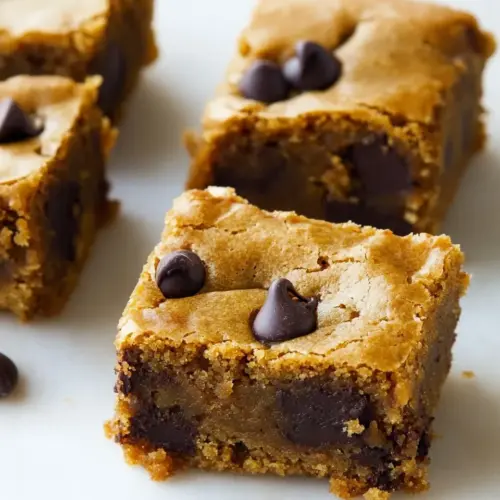
Pumpkin Chocolate Chip Bars
Pumpkin Chocolate Chip Bars are moist, spiced, and studded with melty chocolate, offering a comforting autumn treat that is easy to make and great for sharing. The tender pumpkin batter balances warm pumpkin pie spice and semisweet chocolate chips for a crowd pleasing dessert perfect for gatherings or cozy afternoons. Try them for a simple, satisfying bake that always disappears fast.
Equipment
- 9-by-13-inch baking pan
- Parchment Paper
- Mixer
- Offset Spatula
- Serrated Knife
Ingredients
- 1/2 cup unsalted butter, melted Melted and rich, provides fat and moisture to create tender, soft bars while enhancing flavor depth; helps distribute heat evenly during baking and contributes to a golden-brown crust.
- 1 1/2 cups sugar Sweet and granular, balances pumpkin earthiness and adds structure by dissolving into the batter; contributes to browning and helps create a slightly chewy texture in the finished bars.
- 2 large eggs Beaten and binding, adds lift and structure by trapping air and setting the batter as it bakes; contributes richness and helps emulsify wet and dry components.
- 1 tablespoon vanilla extract Aromatic and sweet, imparts fragrant flavor notes that complement pumpkin and chocolate; enhances overall depth and rounds out the sweetness profile of the bars.
- 1 cup canned pumpkin puree Pureed and moist, provides primary pumpkin flavor, moisture, and tender crumb while reducing the need for excess fat; adds natural color and subtle sweetness to the batter.
- 2 cups all-purpose flour Starchy and structural, supplies the bulk and gluten needed to form the bar’s crumb and chew; helps absorb moisture and creates the framework that holds other ingredients together.
- 1 teaspoon pumpkin-pie spice Warm and spiced, contributes characteristic pumpkin pie flavor with cinnamon, nutmeg, and clove notes; intensifies aroma and balances sweetness for a cozy taste profile.
- 1 teaspoon baking soda Leavening and reactive, produces carbon dioxide to help the batter rise and develop a light yet dense texture; also interacts with acidic components to affect flavor and crumb.
- 1 teaspoon kosher salt Salty and enhancing, intensifies and balances sweetness while elevating other flavors; controls overall taste and helps regulate yeast-free leavening reactions.
- 1 1/2 cups semisweet chocolate chips Sweet and melty, adds pockets of concentrated chocolate flavor and texture contrast; melts during baking to create gooey bites and complements the pumpkin’s earthiness.
Instructions
- Preheat oven to 350 degrees and line the bottom and sides of a 9-by-13-inch baking pan with parchment paper or grease the pan.: The kitchen fills with a faint warm scent as the oven approaches 350 degrees , which helps set your expectations for baking time. Lining the pan with parchment prevents sticking and makes it easier to lift the bars out when cooled, preserving clean edges. Rub a little melted butter on the pan if you skip parchment to add flavor and prevent adhesion. A common pitfall is skipping parchment and over greasing, which can create oily spots; take a moment to ensure the paper is snug and has no folds that will warp during baking.
- In a large bowl, beat the butter and sugar on medium-high speed until smooth with a mixer; beat in eggs and vanilla until combined. Beat in pumpkin puree. Reduce speed to low, and mix in flour, pumpkin pie spice, baking soda, and salt until just combined. Fold in chocolate chips reserving 1/4 cup for the top.: As you mix, you will notice the melted butter and sugar amalgamate into a glossy mixture that smells rich and slightly caramelized. When you add the eggs and vanilla , the batter lightens visually and becomes more cohesive, producing a ribbon-like fall from the beater which indicates proper emulsification. This step creates the base texture; if you under-mix, the sugar may remain grainy, and if you over-mix, the batter could trap too much air and collapse during baking, so stop when smooth and uniform.
- Spread batter evenly in prepared pan and sprinkle with reserved chips. Bake until edges begin to pull away from sides of pan and a toothpick inserted in center comes out with just a few moist crumbs attached, 28 to 35 minutes. Do not overbake! Cool completely in pan.: When you incorporate the pumpkin , the aroma shifts to a cozy, earthy note, and the batter will become visibly darker and thicker. The puree adds moisture and richness, so ensure it blends fully with no streaks, scraping the bowl sides so there are no concentrated pockets. If you add cold puree straight from the can, the batter may tighten; try to temper components to similar temperatures. A mistake here is adding too much puree, which can lead to an underbaked center, so stick to the measured amount.
- Lift cake from pan, peel off parchment and use a serrated knife to cut into 24 squares.: On low speed the dry mix will disappear into the wet batter without creating excess gluten, yielding a tender crumb. The scent of pumpkin pie spice will bloom as it disperses, and you should see a uniform batter with no streaks of all purpose flour . Mixing just until combined preserves lightness; overmixing activates the flour and can make the bars tough, so stop when you no longer see dry pockets. If the batter feels slack, let it rest for a few minutes to hydrate the flour before moving on.
- Fold in chocolate chips reserving 1/4 cup for the top: As you fold in the semisweet chocolate chips , pockets of dark brown will punctuate the orange batter, promising melty bites. Folding is gentler than stirring, helping keep the air incorporated while distributing chips evenly. Reserve the quarter cup so the top looks attractive after baking. Beware of overworking here, which can cause the chips to break apart or partially melt into the batter, losing distinct chocolate pockets.
- Spread batter evenly in prepared pan and sprinkle with reserved chips: The batter should spread easily into the pan, and you can smooth the surface with a spatula to create uniform thickness that bakes evenly. The reserved chips on top will create a glossy studded finish and give a visual cue when the bars are done. If the batter is lumpy, tap the pan gently on the counter to release air bubbles and level the surface. A mistake to avoid is pressing the batter too thin at the edges, which can overbrown and dry out.
- Bake until edges begin to pull away from sides of pan and a toothpick inserted in center comes out with just a few moist crumbs attached, 28 to 35 minutes: During baking you will notice the aroma intensify, with sweet and spiced notes filling the kitchen; the surface will set and the edges will take on a light golden tone. Watch for the visual cue of edges pulling slightly from the pan and test with a toothpick; a few moist crumbs means the bars are tender and not overbaked. Avoid opening the oven repeatedly, which drops temperature and affects rise. Overbaking leads to dry bars, so err on the side of slightly underdone in the center because they continue to set as they cool.
- Do not overbake! Cool completely in pan: Cooling in the pan lets the bars firm up and finish cooking gently from residual heat, which produces clean slices. As they cool you will sense a soft crackle from settling, and the top will become less glossy. Resist the urge to cut while warm because warm bars tend to crumble; patience here preserves shape and presentation. A common error is inverting the pan too soon, which can cause the bars to break apart.
- Lift cake from pan, peel off parchment and use a serrated knife to cut into 24 squares: Lifting the slab on the parchment reveals a uniform underside and makes slicing straightforward. Using a serrated knife with a gentle sawing motion creates neat edges without compressing the crumb, and wiping the blade between cuts keeps slices tidy. If your bars feel sticky, chill briefly to firm up before slicing. Avoid pressing down hard with the knife which will compress the texture and create uneven pieces.
Notes
- Room temperature ingredients: Bringing eggs and canned pumpkin closer to room temperature helps the batter combine evenly, reducing mixing time and improving texture.
- Check oven accuracy: An oven thermometer can prevent over or under baking, since many ovens run a few degrees off the set 350 degrees.
- Fresh baking soda: Ensure your baking soda is fresh; old leavening can lead to dense, flat bars instead of the desired tender lift.
- Even spreading: Use an offset spatula to smooth the batter so the bars bake uniformly and you avoid a thin, crispy edge on one side.
- Chill for cleaner cuts: If you prefer perfectly square bars, chill the pan briefly after cooling, then slice with a serrated knife for neater edges.