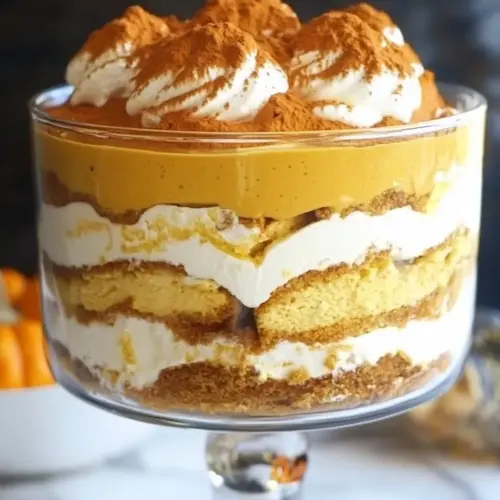
Pumpkin Cheesecake Trifle
Pumpkin Cheesecake Trifle is creamy, airy, and irresistibly seasonal with layers of fluffy Angel Food Cake, spiced pumpkin cheesecake, and billowy whipped cream. This easy make ahead dessert delivers cozy pumpkin spice flavor and elegant presentation, perfect for holiday gatherings and easy weeknight celebrations. Try it for a fuss free centerpiece that tastes like fall and will disappear fast.
Equipment
- Mixing Bowl
- Stand mixer or hand mixer
- Spatula
- Trifle dish
- Measuring Cups
Ingredients
- 22 ounces Angel Food Cake Provide light, airy cake pieces to build layers and absorb creamy fillings; cut or tear into bite-sized cubes for even distribution through the trifle and to add a delicate sweetness and tender texture that contrasts with denser components.
- 1 pint heavy whipping cream Whip to soft peaks to create a stable, fluffy whipped cream that lightens the cheesecake layers and adds a silky mouthfeel; chill bowl and beaters beforehand to ensure proper whipping and keep refrigerated until assembling for best structure.
- 1/2 cup powdered sugar Sweeten whipped cream gently to balance tartness and pumpkin spice; sift powdered sugar into cream while whipping to dissolve quickly and maintain a smooth, velvety texture without grittiness.
- 1/2 teaspoon vanilla extract Enhance the whipped cream with a warm, floral vanilla note and deepen overall flavor; add toward the end of whipping to preserve aromatic intensity and avoid overmixing that could deflate the cream.
- 16 ounces cream cheese (I used light) Provide a creamy, tangy base for the cheesecake layer and contribute structure when beaten until smooth; bring to room temperature for easy mixing, then beat until no lumps remain to achieve a silky filling.
- 15 ounces pure pumpkin (not pumpkin pie filling) Make your own! Supply rich pumpkin flavor and moistness while keeping the dessert distinctly autumnal; use pure pumpkin purée for natural texture and flavor, and ensure it is well combined with sweeteners and spices to avoid pockets of uneven seasoning.
- 3/4 cup brown sugar Add deep, molasses-like sweetness to complement pumpkin and balance cream cheese tang; brown sugar also contributes moisture and a subtle caramel note when folded into the pumpkin mixture.
- 2 teaspoons vanilla extract Introduce warm vanilla warmth to the pumpkin-cheesecake mixture to round and highlight other flavors; add during mixing to evenly distribute aroma and enhance overall sweetness perception.
- 3 teaspoons pumpkin pie spice plus extra for dusting the top Impart the signature spiced aroma and warm flavors of fall while seasoning both pumpkin and whipped layers; mix into the pumpkin-cheesecake base and reserve a pinch for dusting the finished trifle to create an inviting presentation.
Instructions
- In a large bowl or bowl of a stand mixer, beat heavy whipping cream, powdered sugar and 1/2 teaspoon of vanilla extract together until stiff peaks form. Set aside.: You will notice the cream go from shiny and liquid to a thicker ribboning stage, then to fluffy peaks that hold their shape, with a faint sweet vanilla aroma filling the kitchen. The sound is quiet, a steady whir if using a mixer, and the surface will appear glossy before mattifying slightly as peaks form. This step ensures the topping is stable and airy, which contrasts the denser cheesecake layer. A common mistake is over whipping until grainy; stop when stiff peaks form and avoid prolonged mixing which can split the cream.
- In another medium bowl, beat cream cheese until light and fluffy.: The cream cheese should start chalky and then smooth into a cream that looks lighter in color and texture, with a velvety sheen. Work it at medium speed, scraping the bowl so no lumps remain, and inhale the slightly tangy, milky scent that signals proper aeration. This makes the filling lighter and easier to fold, preventing dense pockets. Avoid leaving cold lumps by starting with room temperature cream cheese , otherwise you'll get uneven texture and a lumpy filling.
- Add pumpkin puree, brown sugar, vanilla extract and pumpkin pie spice and continue beating until thoroughly combined. Fold in one third of the whipped cream.: As you add the pumpkin it will loosen the cream cheese , creating an orange hued cream that smells warmly spiced. Beat until smooth, then gently fold in a portion of the whipped heavy whipping cream to lighten the mixture; you will see the filling become silkier and more spoonable. The reason for folding is to preserve the aeration of the whipped cream for a delicate texture. A typical error is vigorous stirring which deflates the mix, making the filling dense, so use slow folding motions and stop when streaks disappear.
- Cut Angel Food Cake into small pieces and line the bottom of your trifle dish with one third of the cake.: As you cut the Angel Food Cake , it should feel airy and slightly springy, releasing a subtle sweet scent. Arrange the pieces to form an even, though not perfect, base; they will soak a little moisture and become tender without turning mushy. The cake functions as a textural counterpoint to the creamy layers. A common slip is placing pieces that are too large, which can make biting awkward, so aim for bite sized pieces for even distribution.
- Layer with one third of the pumpkin cheesecake mixture followed by one third of the remaining whipped cream.: Spoon or pipe the pumpkin cheesecake filling over the cake; it should settle with a creamy, glossy surface and a faint spice aroma. Follow with the whipped topping to create a bright contrast, smoothing gently with a spatula. These distinct layers create visual appeal and textural variation on the palate. Avoid piling too deep in a single layer which can collapse when cut, instead keep layers consistent and even.
- Repeat layers twice, finishing with remaining whipped cream.: With each repetition you will see the trifle build into a pleasing mosaic of cake and cream. The filling becomes slightly melded into the cake edges, signaling a well integrated dessert without losing distinct bands. Finishing with the whipped topping gives a clean, airy crown that dresses the dish. One mistake is overfilling the dish causing spills, so leave a little headspace for the top layer to sit comfortably.
- Sprinkle with additional pumpkin pie spice if desired.: A light dusting of pumpkin pie spice adds an aromatic finish and signals the flavor inside, while creating a pretty contrast on the white cream. Use a small sieve or your fingertips for an even dusting, and enjoy the warm scent that rises immediately. Avoid heavy sprinkling which can overwhelm the cream and look uneven.
- Refrigerate until ready to serve. Best after 2 hours of chilling.: Chilling allows flavors to meld and layers to set; you will notice the cake soften slightly and the filling firm a touch, making for cleaner serving slices. The kitchen quiets as the dessert cools, and the textures come together into a cohesive whole. A typical issue is serving too soon, which results in runny layers, so aim for the recommended chilling time for best structure and flavor integration.
Notes
- Stabilize whipped cream by whisking until firm peaks form, and avoid overwhipping which can turn the cream grainy or buttery.
- Room temperature cream cheese ensures a perfectly smooth pumpkin cheesecake layer, preventing lumps and uneven mixing.
- Use pure pumpkin not pumpkin pie filling so you control the sweetness and spice profile of the trifle.
- Layer evenly to make every serving balanced, cutting cake into similar sized pieces and using measured dollops of filling when possible.
- Chill for best texture at least two hours to let the cake absorb moisture, the filling firm, and the flavors to knit together.
- Serve from a clear bowl to show off the layers, which increases the wow factor when you bring the dessert to the table.