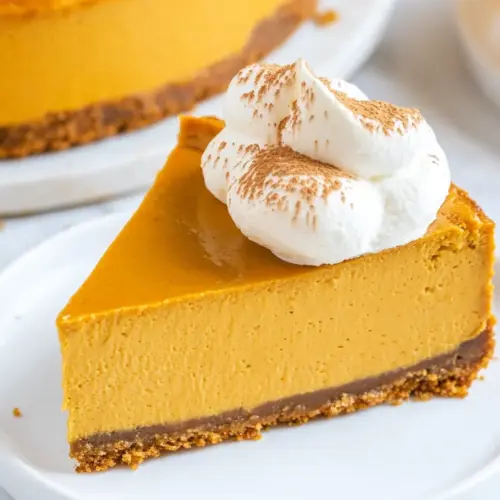
Pumpkin Cheesecake
Pumpkin Cheesecake is a creamy, spiced dessert with a buttery graham crust and silk smooth filling. This easy to share cheesecake has warm pumpkin pie spice and a cloud like whipped cream topping, perfect for an easy weeknight dessert or a show stopping Thanksgiving centerpiece. Make it ahead for stress free entertaining and enjoy a rich slice that tastes like fall in every bite.
Equipment
- 9-inch Springform Pan
Ingredients
- 1 1/2 cups graham cracker crumbs about 12 sheets Provide a crunchy, buttery base for the cheesecake crust and help absorb moisture from the filling; press firmly into the pan to form an even foundation and bake briefly to set for best texture.
- 1 tablespoon (12 g) granulated sugar Add a touch of sweetness to balance the crust's flavor and enhance browning; sprinkle evenly into the crumbs before mixing with melted butter to ensure uniform taste.
- 6 tablespoons (84 g) unsalted butter melted Bind the graham cracker crumbs and sugar together while adding rich, mellow flavor; melt and mix thoroughly with crumbs to create a compact crust that holds its shape.
- 32 ounces (900 g) full fat cream cheese softened to room temperature, See Note 1 Bring a rich, creamy texture and tangy depth to the cheesecake filling while contributing structure and stability when beaten smooth; allow to reach room temperature before mixing for a lump-free, silky batter.
- 3/4 cup (150 g) granulated sugar Provide sweetness to the cheesecake filling and help with texture and browning during baking; cream with the cream cheese until fully dissolved for a smooth consistency.
- 1/2 cup (100 g) light brown sugar lightly packed Introduce a deeper, caramel-like sweetness and moisture to the filling, enhancing overall flavor complexity; lightly pack before measuring to ensure accurate sweetness balance.
- 3 large eggs at room temperature, Note 1 Contribute richness, structure, and leavening control to the filling while helping to set the custard; bring to room temperature to blend smoothly and avoid curdling when mixed.
- 1 teaspoon (5 ml) pure vanilla extract Impart warm, aromatic flavor and enhance the perceived sweetness of the filling; stir in near the end of mixing to preserve its volatile flavor compounds.
- 15 oz can (425 g) pumpkin puree Provide the signature pumpkin flavor and moisture, contributing to color and autumnal taste; use pure pumpkin puree rather than pie filling to control sugar and spice levels.
- 1 tablespoon pumpkin pie spice Offer a warm, spiced blend that defines the seasonal flavor profile and complements pumpkin; measure carefully to avoid overpowering the delicate cream cheese base.
- 1 cup (82 g) sour cream at room temperature Add creaminess and a slight tang that lightens the filling while contributing to mouthfeel; fold in gently to maintain a smooth, luscious texture without overbeating.
- 1/4 teaspoon salt Balance sweetness and enhance overall flavor by cutting richness slightly; dissolve evenly into the batter to prevent pockets of saltiness and bring out other flavors.
- 1 cup (240 ml) whipping cream Create a light, whipped topping or add extra richness when whipped to soft peaks; chill before whipping for best volume and stability when serving.
- 1 tablespoon powdered sugar Provide delicate sweetness and help stabilize the whipped cream while improving texture and mouthfeel; sift or sprinkle in while whipping to avoid graininess.
- 1 teaspoon (5 ml) pure vanilla extract Introduce a sweet aromatic note to the whipped cream or filling and enhance underlying flavors; add near the end of whipping to preserve its fragrance.
Instructions
- Adjust the oven rack to the lower-middle position. And preheat the oven to 350°F (180°C,) or 160°C for a fan oven.: Warm air circulating in a properly preheated oven gives you even baking and consistent rise. You should hear the low hum of the oven and smell a faint clean heat as it comes up to temperature. If the oven is not fully preheated the crust may underbake and the filling could take longer, causing overbrowned edges. A common mistake is placing the pan too high, which leads to a browned top and undercooked center.
- Lightly grease a 9-inch (23 cm) springform pan with butter, then line it with parchment paper (bottom and sides).: Greasing and lining ensures the crust releases cleanly and the sides come away without tearing. The parchment will also prevent any sticky edges and makes transferring easier. Press the parchment into the corners so there are no air gaps. If you skip the lining, the crust may cling stubbornly to the pan, making presentation difficult.
- To make the crust, in a food processor break down the graham crackers to create crumbs.: The sound will change from crunch to a fine, sandy whisper as the crumbs form, and the aroma becomes toasty. Fine crumbs bind better with melted butter , creating a cohesive crust. If you pulse too long you may heat the crumbs slightly, which can affect texture when baked. Avoid leaving large chunks that prevent an even press.
- In a bowl combine the graham cracker crumbs with sugar and butter.: As you stir the crumbs with melted butter and granulated sugar , you will notice the mixture darken slightly and take on a glossy sheen, indicating it will compact well. The sugar aids in caramelized edges while the butter provides adhesion. If the mixture looks too dry it will not bind, and if too wet it will be greasy; adjust with a teaspoon of melted butter or a touch more crumbs as needed.
- Press into a 9-inch springform pan, with about 1/2 inch on the sides up. Bake for 8 minutes, then cool on a wire rack.: Pressing the crust firmly produces a compact base that will hold slices. You should hear a faint crackle as the crust bakes and smell a nutty butter aroma. Cooling sets the fats so the crust remains crisp under the filling. One mistake is not pressing evenly, which causes uneven support for the filling and uneven slices.
- Wrap the springform pan with two layers of foil from the outside.: The foil barrier shields the pan from moisture in the water bath and keeps the crust dry. You should wrap tightly so no gaps allow water in. If the foil is loose water can seep in, which ruins texture and appearance. I always double check the seal to avoid a soggy bottom.
- Boil water for the water bath, this will help the cheesecake not crack. See note 2: The steam from hot water creates a humid, steady oven microclimate which reduces rapid temperature shifts that cause cracking. You will see a gentle steam when pouring into the larger pan. If the water is lukewarm it won’t stabilize the oven enough, leading to surface cracks. Be careful when adding boiling water to avoid splashing.
- Keep your oven temperature the same.: Maintaining a steady temperature prevents the cheesecake from bumping or cracking as it bakes slowly. The oven should hum steadily, not surge, and the heat should stay constant. Opening the oven repeatedly causes temperature drops that can set the edges too quickly. Avoid peeking often; use the oven light instead.
- In a large bowl, heat the cream cheese with the sugars until creamy and well combined (about 4 minutes).: When you beat the cream cheese with sugars, the texture should transform to smooth and glossy, with no lumps. The aromatic sweetness becomes noticeable, and the mixture should be velvety to the touch. Cold cream cheese will resist mixing and create curdles, so room temperature is essential. Overbeating at high speed can whip in air, leading to cracks during baking.
- Add in the eggs, vanilla, pumpkin spice, pumpkin puree, sour cream and salt- beat until combined scraping down the sides as needed.: As you fold these ingredients the batter will take on a uniform color and a silken sheen. The scent of pumpkin and spices will rise, and the batter should pour slowly and evenly. Scraping the bowl ensures no dense pockets remain. A common error is to add eggs too quickly, which can cause an uneven batter; add them one at a time if needed.
- Pour the mixture into the pre-baked graham crust, place the pan into a larger pan and add the water into the larger pan to create a water bath.: Pouring slowly helps avoid displacing the crust, and you will hear a soft settling as the filling levels. The surrounding hot water will cradle the pan and surround it with gentle heat. If the water level is too high it can lap over the foil and seep in, so keep it below the foil rim. Also, transfer the assembly carefully to avoid sloshing.
- Bake for one hour until the cheesecake sets at the edges, and the center is not very jiggly (it will still have a little jiggle).: The surface will become set with a subtle sheen and the edges will feel firmer to the touch while the center retains a slight wobble. The aroma will deepen and the crust will finish browning. Underbaking leaves a liquid center, while overbaking yields a dry, crumbly texture. Aim for that gentle jiggle as your cue.
- Switch off the oven, open the oven door slightly and let the cheesecake rest in the oven until the oven cools down (about 45 minutes to one hour).: This slow cooldown allows residual heat to finish cooking without shock, minimizing cracks. You will notice condensation dissipate and a mellow fragrance as it relaxes. Removing it too quickly invites cracking from rapid contraction, while leaving it too long may over-soften the surface.
- Remove the cheesecake from the water bath, cover with plastic wrap and let it cool down completely then chill in the fridge until it has been fully chilled and set, minimum 4 hours but preferably overnight. To release the cheesecake run a knife around the edges and release from the pan.: Cooling fully firms the texture; the slice will cleanly separate and the flavors will meld. The chilled cheesecake slices better and slices hold their shape. If you slice while still warm the texture will be sloppy. Run a warm knife blade between cuts for neat slices.
- To make the whipped cream, in a cold bowl, combine all of the ingredients and beat on high speed until fluffy (do not over beat, takes about one and half minutes). Top the cheesecake with whipped cream, and sprinkle with ground cinnamon or pumpkin pie spice.: The whipping cream will thicken rapidly, turning from liquid to pillowy peaks, with a light sweet scent from the powdered sugar and vanilla extract . Stop when soft peaks form to keep it smooth and glossy. Overbeating will create grainy, buttery curds, so watch the bowl closely.
Notes
- Room temperature dairy matters Bring the cream cheese, sour cream, and eggs to room temperature for about an hour before mixing so the batter blends smoothly and avoids lumps.
- Seal the pan well Wrap the outside of the springform pan with two layers of foil, pressing tightly, to make a waterproof barrier for the water bath and protect the crust from sogginess.
- Monitor for the gentle jiggle Bake until the edges are set and the center has a faint wobble; this prevents overbaking and preserves a silky texture rather than a dry or crumbly one.
- Use a slow cooldown Turn off the oven and let the cheesecake rest inside with the door slightly open for about 45 minutes to one hour to reduce cracking from sudden temperature changes.
- Chill thoroughly Refrigerate for a minimum of four hours, but overnight is best; chilling allows flavors to meld and the filling to firm for clean slicing.
- Whip cream last minute Chill the mixing bowl and whipping cream and whip just before serving for the freshest, fluffiest topping; avoid overbeating to prevent graininess.