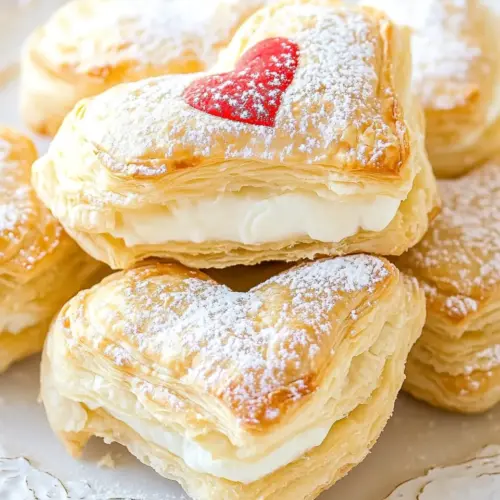
Puff Pastry Hearts
Puff Pastry Hearts are crisp, flaky little pastries filled with airy whipped cream and juicy strawberries, perfect for an easy celebration or special breakfast. They deliver a delightful contrast of textures and an elegant look with minimal effort, ideal for an easy weeknight dessert or romantic brunch. Make them to impress without the fuss.
Equipment
- Cookie Sheet
- Pastry Brush
- Sifter
Ingredients
- 2 puff pastry sheets Provide a flaky, buttery base for the hearts and create layers when baked; thaw and keep cold until ready to roll and cut for best puffing results.
- 1 egg, beaten Brush egg wash over the pastry edges to promote a glossy, golden finish and help any decorations adhere; beat until smooth for even application.
- 1 -1/2 cups sliced strawberries Add sweet, juicy filling and bright color when sliced; macerate lightly with a bit of sugar if desired to release juices and concentrate flavor.
- 1 cup whipped cream, store bought or homemade Fold or pipe as a creamy, airy filling to complement the pastry and fruit; stabilize homemade whipped cream with a touch of powdered sugar or chill well before assembling.
- powdered sugar, sifted Dust over the finished hearts to add delicate sweetness and an elegant visual finish; sift lightly to avoid clumping and enhance presentation.
Instructions
- Preheat oven to 425°F.: The first sensory cue is the warm, slightly sharp scent that fills the kitchen as the oven comes to temperature, signaling the right environment for rapid steam formation in the puff pastry . A hot oven ensures the layers rise quickly and separate, creating distinct flakiness. Avoid placing the tray in a lukewarm oven, which can make the pastry spread and become dense rather than airy. A common mistake is not allowing the oven to fully heat, so use an oven thermometer if you suspect your appliance runs cool.
- Unfold puff pastry sheets and press layers on top of each other. Lightly press them together. Using a heart-shaped cookie cutter, cut out heart shapes in the dough. Discard excess dough.: You will feel the cool, supple texture of the dough under your fingers as you unfold it. Pressing two sheets together gives a pleasing thickness that holds filling well while still puffing up. When cutting, listen for a clean, paper like edge as the cutter slices; ragged cuts can seal layers together and inhibit lift. Keep any excess dough chilled to avoid it getting sticky, and avoid overhandling which warms the butter inside and reduces flakiness.
- Remove the heart shapes and place them onto a parchment paper-lined baking sheet. Lightly brush with beaten egg and bake for 10 minutes.: As the tray goes into the oven you will notice a gentle, toasty aroma emerging around the seven to eight minute mark, with edges turning a rich golden color. The egg wash contributes to that glossy hue and helps create an appetizing crust. If you brush too heavily, the egg can drip and create dark spots; use a pastry brush and a gentle touch. A frequent error is overbaking; watch for even browning rather than deep mahogany, which indicates dryness.
- Let cool, then cut heart dough pieces in half. Right before serving, fill with whipped cream and sliced strawberries.: Cooling is crucial so the warm interior does not melt the whipped cream . You should feel the shells firm up and hear a faint crackle when tapped, a sign they are properly crisp. When assembling, the contrast of cool cream and juicy strawberries against the still slightly warm pastry is delightful. Avoid slicing while piping the cream because residual heat can cause the filling to weep. A typical mistake is overfilling, which makes the hearts messy and hard to eat; aim for balance.
- Sprinkle with sifted powdered sugar and enjoy.: The final step provides a soft, sweet note and a pretty visual finish; the powdered sugar dust will lightly catch on the textured surface. When you sprinkle it, do so from a height to create a gentle, snow like cover. If you do this too early, the sugar can absorb moisture and vanish, so wait until just before serving. One common oversight is using coarse sugar instead of sifted powdered sugar, which can look grainy rather than delicate.
Notes
- Prep ahead: Bake the heart shells in advance and store unfilled in an airtight container in the fridge for two to three days, or freeze for up to three months, then fill just before serving.
- Keep things cold: Handle the puff pastry as little as possible and return it to the fridge if it warms while you work, to preserve its layered structure and ensure a flaky rise.
- Watch the oven: Because ovens vary, start checking for color at eight minutes; you want a warm golden tone rather than deep brown, which indicates overbaking.
- Even slices: Slice the strawberries thin and uniform so every heart gets similar distribution of fruit and a consistent bite.
- Make whipped cream stable: If you want slightly firmer cream, fold in a small amount of sifted powdered sugar while whipping to help it hold shape during assembly.
- Use a light touch with egg wash: Apply a thin, even coat to avoid pooling which can create dark spots on the pastry surface.