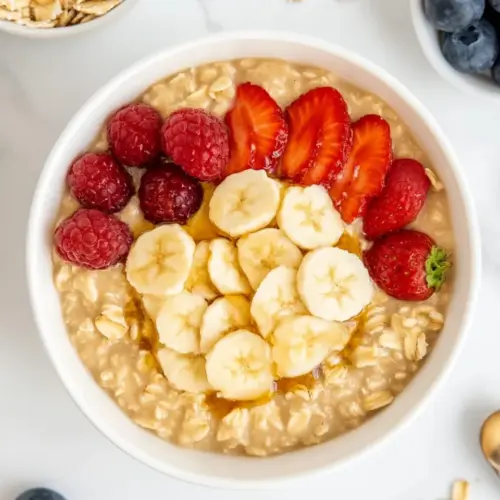
Protein Oatmeal
Protein Oatmeal is a creamy, filling breakfast bowl that blends rolled oats with protein powder for a quick, easy meal. It yields a smooth, comforting texture that keeps you satisfied for hours, perfect for busy weekdays or post workout refueling. Simple pantry ingredients make it a dependable choice, and it adapts well to different milks and toppings for variety.
Equipment
- Small Saucepan
- Microwave-safe Bowl
- Whisk
Ingredients
- 1/2 cup rolled oats gluten-free, if necessary Provide a hearty, chewy base that absorbs liquid and thickens the dish while delivering whole-grain fiber and sustained energy; soak or cook until tender to avoid gritty texture and adjust liquid for desired creaminess.
- 1/4 cup protein powder Add concentrated protein and a boost of amino acids to increase satiety and support muscle repair; choose a flavor that complements the oats and whisk in gradually to prevent clumping.
- 1 cup water Contribute necessary hydration and help cook the oats to the proper consistency while keeping the dish light; use boiling or hot water and adjust amount to control thickness.
- 1/2 cup milk any milk works Enhance creaminess, mouthfeel, and richness while adding calcium and optional extra protein depending on milk choice; warm or stir in at the end to meld flavors and achieve desired texture.
- 1/4 teaspoons salt Provide subtle seasoning to balance flavors, enhance sweetness perception, and bring out the natural nuttiness of oats; add sparingly and taste as you go to avoid oversalting.
Instructions
- Add the oats, water, milk, and salt to a small saucepan or microwave-safe bowl.: The moment you bring the ingredients together you begin shaping texture, and the mixture should look wet but not soupy. In a saucepan you will see the individual flakes soak up liquid and swell, and in a microwave safe bowl the surface will flatten and tiny bubbles may form at the edge as it starts to heat. Use a spoon to stir everything until the liquids fully coat the rolled oats , the milk disperses evenly, and the sprinkle of salt is distributed. A common mistake is overcrowding the bowl or pot, which can lead to uneven cooking, so pick a vessel with a little extra room. The mild nutty aroma of oats will be faint at this stage, and that gentle scent is a good indicator you are beginning on the right foot.
- Bring the oats to a boil, then once boiling, reduce to a simmer. Let the oats simmer until they are nice and thick, about five minutes.: As the heat rises you will hear a faint bubbling and see small foam forming on the surface, that is your cue to watch closely. When the mixture reaches a rolling tiny bubble, lower the heat to achieve a gentle simmer so the interior cooks steadily without sticking. Simmering allows the starches in the rolled oats to release slowly, creating a creamy body rather than a sticky clump. If you keep the heat too high you risk scorching the bottom and getting an unpleasant burnt note, so always reduce promptly. You should notice the scent deepen into a warm, toasty aroma which signals the oats are cooking properly.
- Remove the oatmeal off the heat and whisk in the protein powder.: During these minutes watch for visual changes, the mixture will transition from loose to visibly thicker, and the bubbles will slow down and become more languid. Stir occasionally to prevent a skin from forming and to check texture. Proper thickness should coat the back of a spoon and gently pull away when stirred, creating a velvety ribbon, which is what you want for a satisfying bowl. An error to avoid is overcooking until the oats become gluey; remove them from heat when they reach a creamy stage because residual heat will continue to thicken them slightly. The kitchen will smell comforting, with a light cereal like sweetness that hints at readiness.
- Add toppings and enjoy immediately.: Once off the burner, the porridge will still be hot enough to integrate the protein powder without clumps if you whisk briskly. Immediately whisking creates a smooth texture and prevents the powder from settling into chalky pockets. Expect a brief change in aroma as the protein mixes in, sometimes a faint sweet or neutral note depending on your powder. If you notice clumps forming, add a splash of milk or water and whisk vigorously until smooth. A common pitfall is adding protein too early while the oats are boiling, which can denature some powders and alter texture, so always add after removing from heat.
- Add toppings and enjoy immediately: The final step is where personality comes in, and adding toppings right away ensures contrast in temperature and texture. Consider crunchy nuts, seeds, or a spoonful of fruit to introduce freshness against the warm, creamy base. Expect an inviting steam and layered textures as you combine soft porridge with crisper elements. One thing to avoid is letting the bowl sit too long before eating; the oats will continue to thicken and textures may become heavy. Plate or bowl the oats, arrange your toppings, and taste once more to see if a tiny pinch of additional salt or splash of milk improves balance.
Notes
- Microwave method — Use a microwave safe bowl and cook for two minutes, stir, then continue in one minute increments until the oats are tender and thick. This saves time on busy mornings and gives good control over doneness.
- Milk swap — Try different plant based milks for flavor shifts; almond milk gives a lighter profile while oat milk adds extra creaminess. Choose based on how rich you want the bowl to be.
- Protein timing — Always stir the protein powder in off heat to avoid clumping and to preserve a smooth texture. If it seems grainy, add a splash of liquid and whisk vigorously.
- Batch cooking — Cook larger quantities and portion into containers for easy breakfasts. Reheat with extra liquid to revive creaminess and keep the texture pleasant.
- Salt balance — A tiny pinch of salt highlights sweetness and rounds flavors. Start small and adjust after tasting your finished bowl.