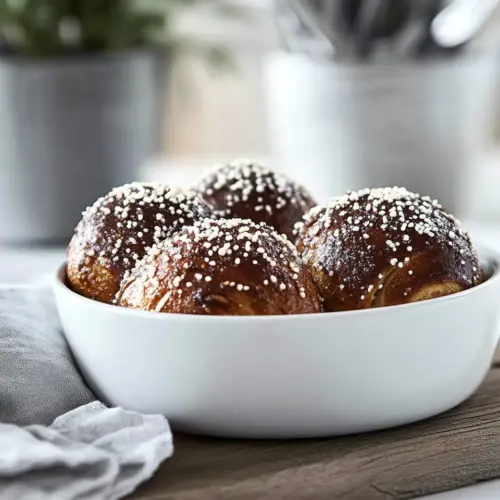
Pretzel Rolls
Pretzel Rolls offer a chewy crust and soft, tender interior with warm notes of butter and brown sugar. These easy to follow rolls are perfect for an easy weeknight dinner or a party basket, delivering bakery style results with pantry staples. Make them for family meals or gatherings, they are irresistibly satisfying and worth the small extra step of a baking soda bath.
Equipment
- Mixer
- Large Pot
- Slotted Spoon
- Baking Sheet
- Wire Rack
Ingredients
- 1 cup milk Warm gently and provide moisture and richness to the dough while activating yeast when combined with other wet ingredients.
- 2 tablespoons butter OR margarine Melt for fat content that tenderizes the crumb and contributes to flavor; use as an alternative to margarine without changing texture significantly.
- 2 tablespoons brown sugar Sweeten mildly to enhance browning and flavor, and feed yeast slightly to encourage fermentation and color development during baking.
- 2 1/4 teaspoons Fleischmann's® RapidRise Yeast1 envelope Leaven rapidly to create rise and aeration in the dough; sprinkle or dissolve before mixing to ensure consistent fermentation and volume.
- 2 teaspoons salt Season the dough to balance flavor and control yeast activity by regulating osmotic conditions within the mixture.
- 3 to 3-1/2 cups all purpose flour Build structure and absorb liquids to form a pliable dough; add gradually until the correct consistency and elasticity are achieved.
- 3 quarts water Boil for the alkaline bath that gives pretzels their characteristic chewy crust and deep brown color when combined with baking soda.
- 3/4 cup baking soda Create an alkaline solution when dissolved in the boiling water bath to promote Maillard reaction and glossy, dark crust formation.
- 1 egg Brush on the surface to help egg wash bind salts and promote deep golden sheen and attractive finish after baking.
- 1 teaspoon water Thin as needed to adjust the egg wash consistency so it spreads evenly and helps toppings adhere during baking.
- 2 tablespoons butter melted Brush melted on top to add shine and extra buttery flavor after baking, enhancing crust richness and mouthfeel.
- pretzel salt or kosher salt Sprinkle coarse crystals on the surface to provide crunchy, salty bursts that define pretzel flavor and contrast the soft crumb.
Instructions
- Heat milk and butter until warm (120° to 130°F); the butter will not completely melt. Combine with undissolved yeast and brown sugar in a large mixer bowl. Stir in salt and 2 cups flour, beat for 3 minutes. Gradually add enough remaining flour to make a soft dough.: You will feel the warmth first, and a faint buttery aroma will rise as you heat the mixture, signaling the correct temperature range. Using a thermometer is the safest way to land between 120° to 130°F , because if it is cooler the yeast will be sluggish, and if it is hotter you risk killing the yeast. Stir gently until the butter is mostly incorporated, leaving small bits is fine. A common mistake is overheating, which leaves the yeast lifeless and the dough refusing to rise, so always test the liquid on your wrist if you lack a thermometer.
- Knead on a floured surface until smooth and elastic, about 8 to 10 minutes. Place in a greased bowl, cover and let rise for 1 hour, or until doubled in size.: When you sprinkle the yeast and brown sugar into the warm milk, you should notice the sugar dissolving and a slight yeasty scent developing after a few minutes, suggesting the yeast is waking up. Stir briefly to combine, creating a uniform, glossy mixture. If there is no activity or no faint yeasty smell within ten minutes, the yeast might be expired, which will prevent a proper rise.
- Preheat oven to 400°F. Grease a baking sheet or line with parchment paper.: As you add the first portion of flour and the salt , the batter will thicken and start to pull away from the bowl edges. Beat vigorously for the full three minutes to build initial gluten structure, which helps the dough become elastic later. Overmixing can make the dough tough, while undermixing leaves it slack and sticky, so aim for a smooth, slightly tacky texture.
- Combine water and baking soda and bring to a boil.: You will see the dough transform from sticky to cohesive as you add more flour . Use gentle folds and a scraper to incorporate the flour gradually, feeling for a soft dough that still yields slightly to your touch. If you add too much flour you will end up with dry, heavy rolls, and if you add too little the dough will be too sticky to handle easily.
- Punch dough down and divide dough into 8 pieces and roll each piece into a tight, smooth ball.: The sound of the dough changes as you knead, becoming quieter and more uniform, while its texture shifts to a satiny sheen that springs back when pressed. This is where gluten develops, creating the structure that traps gases for a good rise. If you skimp on kneading, the crumb will be dense; if you overwork it, the dough can become tight and resist rising.
- Boil each roll in the solution for 2 minutes, turning after 1 minute. Remove rolls from pot using a slotted spoon and place on prepared baking sheet.: As the dough rests, you will see it puff and become aerated, and the surface may show small bubbles. The room temperature affects how quickly this happens, so check for a clear doubling rather than strictly timing if your kitchen is cool or warm. A common pitfall is underproofing, which yields small, heavy rolls, so give the dough the visual check for doubling.
- Brush with egg wash and cut a cross in the top.: You should notice the oven coming to temperature steadily, and a hot oven is crucial to set the crust quickly. Preheating ensures that when the rolls go in they begin browning immediately. Avoid placing dough into a cool oven, as it will disrupt the bake and produce pale, underdeveloped crust.
- Bake for 15 minutes then reduce the temperature to 350°F and bake an additional 10 to 12 minutes until the rolls are evenly browned. Remove from pan and cool on a wire rack.: A greased or lined sheet provides a nonstick surface and helps the bottoms brown evenly, producing a clean release. I prefer parchment for easier cleanup, and you will also see the rolls sit neatly instead of spreading. Forgetting this step can mean sticky bottoms that tear when removed.
- Before serving, brush with melted butter and sprinkle with pretzel salt.: When the water reaches a rolling boil, add the baking soda carefully, because it will bubble and steam as it reacts. The solution should be at a steady boil to firm the dough surface during the dip. If the boil is too gentle, the surface reaction will be uneven; if it is too vigorous, the rolls may knock together and lose shape.
- Punch dough down and divide dough into 8 pieces and roll each piece into a tight, smooth ball: Pushing the air out gives the rolls a uniform crumb, and rolling into tight balls builds surface tension, which helps them rise upward rather than spreading out. You will feel the dough tighten as you roll, and the surface should be seamless and smooth. If the balls are not tight, the rolls can flatten during baking and lose their height.
- Boil each roll in the solution for 2 minutes, turning after 1 minute: As you lower a roll into the boiling bath, listen for a soft hiss and watch the surface firm. Turning after one minute ensures even exposure and consistent browning later on. Remove carefully with a slotted spoon so excess liquid drains; letting them sit wet on the sheet can prevent proper crust formation. A common error is overcrowding the pot, which cools the bath and prevents the chemical reaction.
- Remove rolls from pot using a slotted spoon and place on prepared baking sheet: The rolls should glisten slightly and feel firmer to the touch after their dip, and spacing them with a small gap allows hot air to circulate for even browning. If you place them too close, sides may stick and the bottoms may not crisp properly. Use a slotted spoon to minimize carrying too much liquid.
- Brush with egg wash and cut a cross in the top: The egg wash gives a glossy, deep brown finish and helps the salt adhere, while the cross invites controlled expansion in the oven. When you slice, you should see the surface part cleanly rather than tear. Cutting too deeply can deflate the rolls, so keep the incision shallow.
- Bake for 15 minutes then reduce the temperature to 350°F and bake an additional 10 to 12 minutes until the rolls are evenly browned: Initially baking at the higher temperature sets the crust, and lowering it finishes the interior without overbrowning. Watch for an even, deep golden color across the tops, and listen for a faint hollow sound when tapped on the bottom as a doneness cue. If you remove them too early they will finish gummy inside, and if you leave them too long they can become overly hard.
- Remove from pan and cool on a wire rack: Cooling on a rack prevents the bottoms from steaming and softening, maintaining the crispness of the crust. You will notice a continued faint aroma of baked dough as they cool. Serving while too hot can cause the crumb to be gummy, so allow a brief rest to set the interior.
- Before serving, brush with melted butter and sprinkle with pretzel salt: The final brush adds a soft sheen and extra flavor, and the coarse pretzel salt gives that classic crunchy finish. Apply the butter lightly so it soaks in without making the crust limp. Waiting too long to add the salt can cause it to fall off when the rolls are handled.
Notes
- Make ahead: Prepare the dough up to the first rise, refrigerate overnight, then shape and continue the recipe the next day for fresher flavor and convenience.
- Smaller rolls: Divide the dough into more pieces for slider sized Pretzel Rolls, adjusting boiling and baking time slightly to avoid overbrowning.
- Egg wash alternative: Use a beaten egg with a teaspoon of water for a glossy finish, or skip it for a more matte appearance if preferred.
- Baking soda bath care: Use a wide, deep pot with ample water so each roll floats freely during the 2 minute bath, ensuring even crust development.
- Salt choice: Opt for coarse pretzel salt or kosher salt right after the final butter brush for the classic crunchy top that defines pretzel rolls.